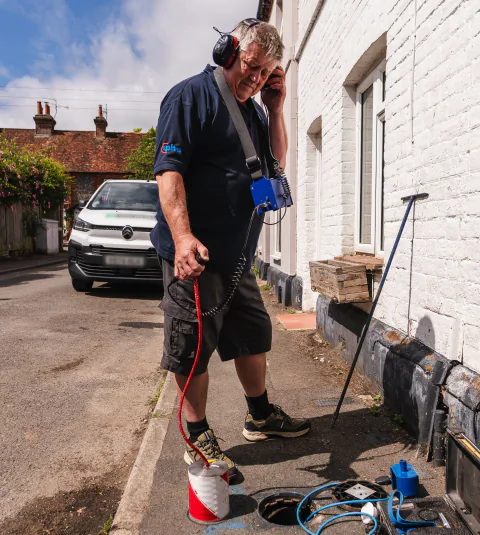
ADI engineer listening for a buried water pipe leak with an acoustic ground microphone on a tarmac road
Four-time Water Leak Detection Service of the Year

UNDERGROUND WATER LEAK DETECTION WITHOUT DIGGING UP YOUR DRIVE

  • Acoustic listening
  • Tracer gas
  • Pressure testing in sections
  • A written report for your insurer

Detecting hidden water leaks since 2011

Underground water leak detection finds a leak on a buried pipe from above ground, so the ground is opened only at the spot the engineer marks.

Once a test has shown which stretch is leaking, our engineers follow the escaping water with tracer gas and ground microphones. For a supply pipe, the search costs from £595 + VAT.

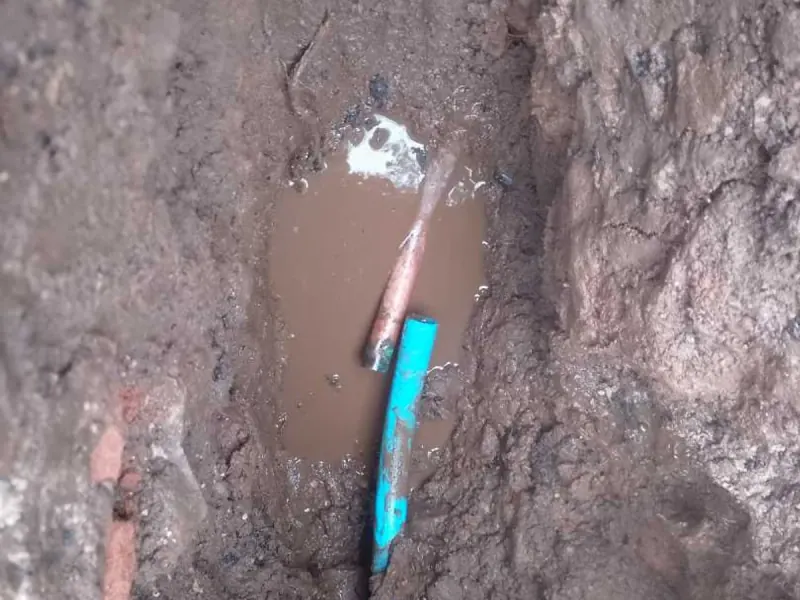
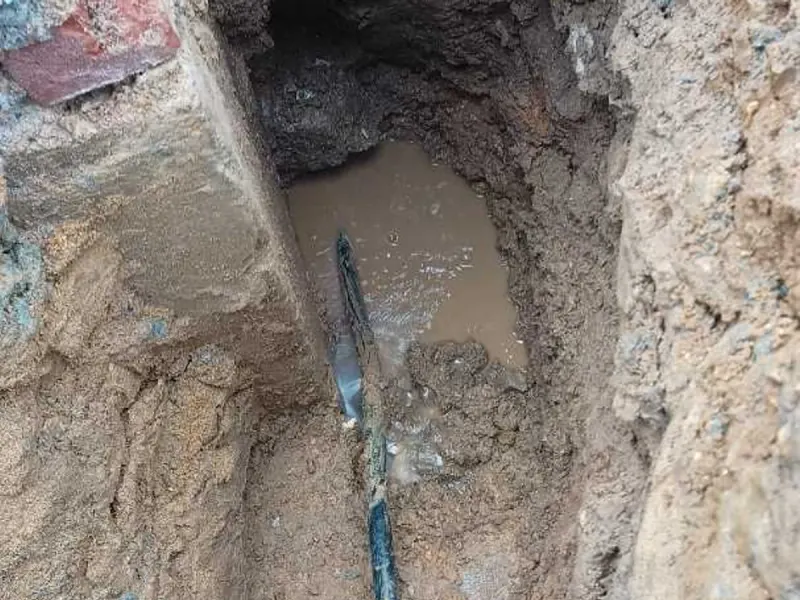
Blue water main and copper pipe exposed in a small flooded hole, where a buried leak was found

Ring 0800 731 3843 when a lawn stays wet, a drive puddles in dry weather or the meter won't stand still. We aim to attend the next day where availability allows, and can sometimes attend the same day.

How can you detect a water leak underground?

You detect a water leak underground by first checking that the buried pipe is leaking, with a meter reading or a pressure test. Tracer gas or acoustic listening then traces the escape from the surface.

You can make the first check yourself. With the inside stop tap shut, watch the meter.

Any movement means water is escaping somewhere on the supply, and our water meter leak test steps show how to read the dial.

Finding the spot under a drive or lawn takes equipment. There isn't one underground water leak detector that does the whole job.

Instead, the engineer carries a pressure test rig, a tracer gas detector and a ground microphone, and uses them in turn. Each is shown on our water main leak detection equipment page.

How can you tell a leak is underground?

You can tell a leak is underground when water is going missing but nothing indoors is wet. Outside, look for a soggy or greener patch of lawn, damp or cracked paving, and puddles on a dry day.

Other signs point to a leak somewhere on the supply:

  • The meter dial moves when no water is being used.
  • Your water bill climbs though you use no more than before.
  • Pressure at the taps drops.
  • You can hear water running with nothing turned on.

A wet lawn can lead straight to the fault. At a property in Bidford-on-Avon, water was seeping up through the grass.

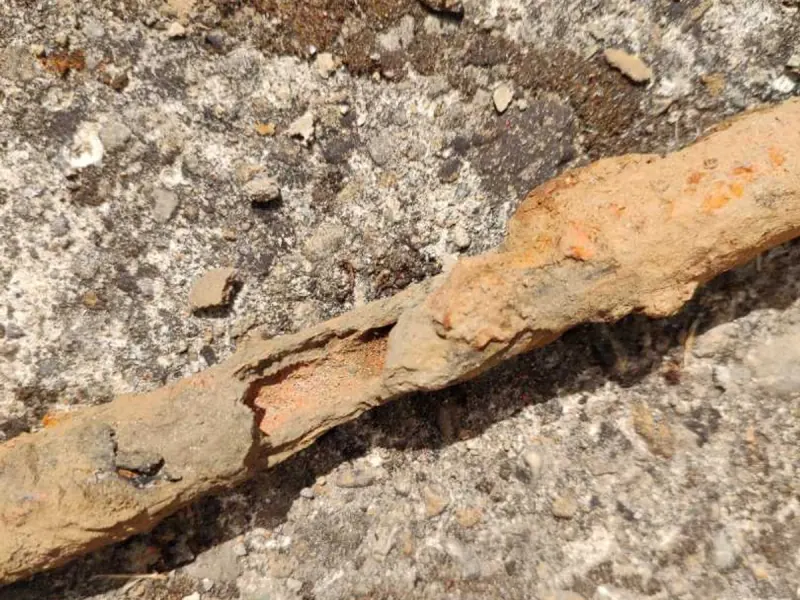
Richard Poberezniuk traced it to a large rock that had worn through the 28mm black alkathene supply pipe. Rocks, tree roots and corrosion are among the causes of water main leaks that our engineers find.

Some buried leaks give nothing away on the surface. At a semi-detached house in Longfield, there was no damp anywhere inside, and the only clue was a run of unusually high water bills.

If the stop tap is hard to find, the usual places are listed in how to turn off water supply to house. Then phone 0800 731 3843: a description of the signs, and where they are, often shows whether a buried pipe is to blame.

Which methods locate a leak on a buried pipe?

Three methods locate a leak on a buried pipe: pressure testing, tracer gas, and acoustic listening with ground microphones. Thermal imaging, moisture meters and borescope cameras add to them where the pipe runs under a floor indoors.

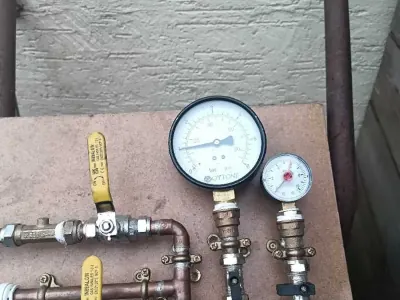
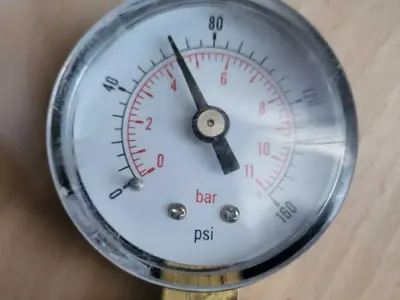
  • Pressure test rig with gauges and valves for testing pipework

    Pressure testing shows whether one length of pipe is leaking. The engineer isolates that length, pressurises it and reads the gauge, and a falling reading condemns it. Testing length by length narrows the search, though no gauge can show where along a length the water gets out.

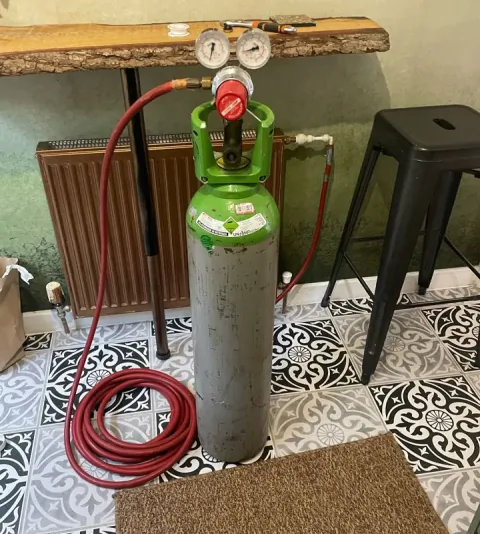
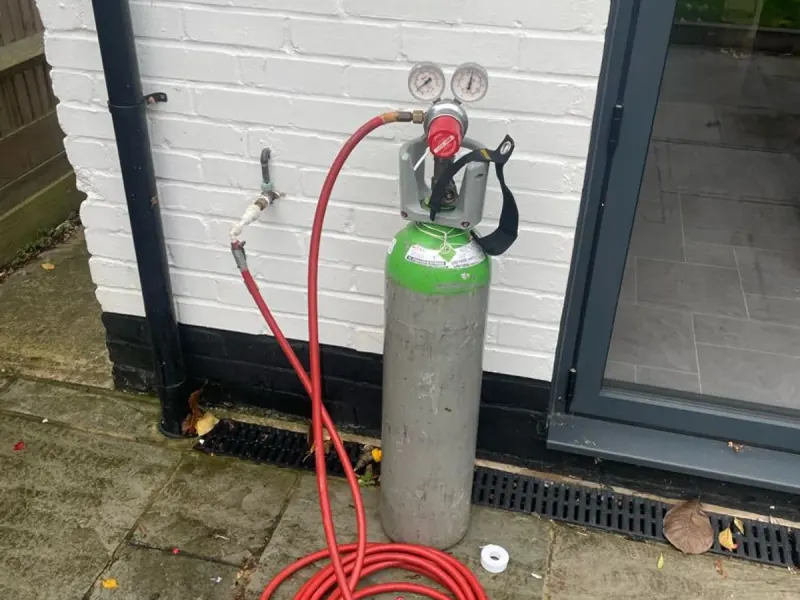
  • Tracer gas cylinder with its regulator and hose

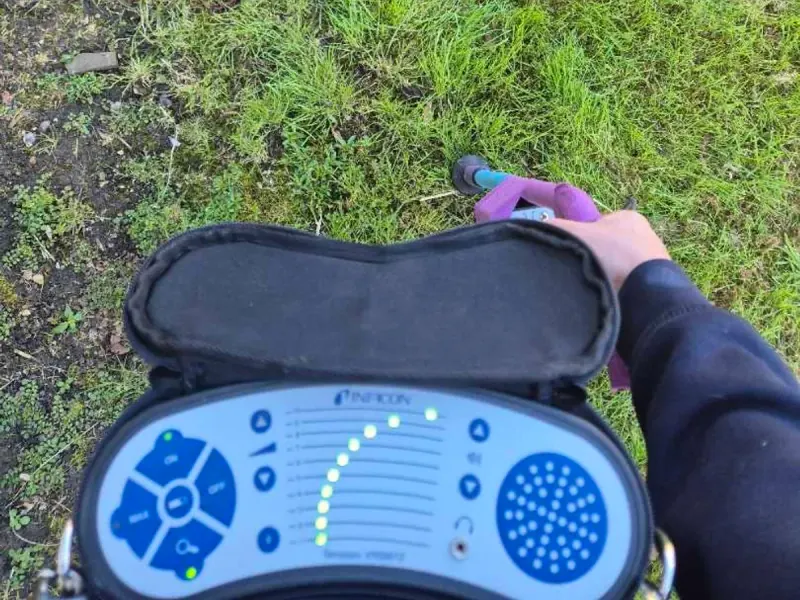
    Tracer gas is fed into the pipe, and some of it leaks out at the break. Where our case studies name the gas, it is hydrogen tracer gas. It rises from the leak through soil, concrete and tarmac to a detector swept along the route. Our tracer gas page covers the method, and is hydrogen tracer gas safe answers the safety question.

  • Engineer listening for a leak with an acoustic ground microphone

    Acoustic listening relies on sound: water forced out of a pipe at mains pressure makes a hiss that carries up through the ground. A ground microphone is set down at intervals along the route, and the sound is strongest above the leak. The equipment itself is described under acoustic water leak detector.

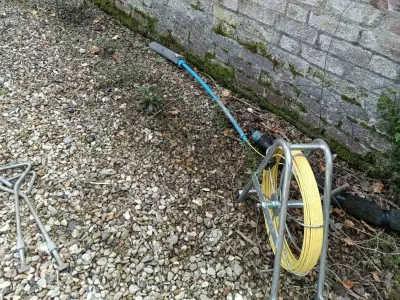
  • Pipe tracing rod and cable reel laid along a gravel path

    Route tracing shows where the pipe runs before the search starts, from the meter and stop taps, or with a tracer cable fed into the pipe and followed from above.

Questions about leak detection in general are answered under how does leak detection work.

When do our engineers use tracer gas, and when acoustic listening?

Our engineers use acoustic listening when the escaping water can be heard through the ground, and tracer gas when it can't, or to check a spot the microphone found. On buried leaks they often use both.

Listening alone found the leak at a house in Chippenham, where water was coming up through a tarmac drive. Artur Sowa's listening device picked up a strong signal over the buried pipe.

Lifting the tarmac there exposed the leak, on a 25mm metal supply pipe.

At the house in Longfield, tracer gas did the work on its own. The gas surfaced on the front lawn, over a pinhole in black alkathene pipe.

After the repair the pressure was still dropping, so Aaron Baker sent the gas through again and found a second leak on the same run.

The two methods can disagree, too. At a detached house in Probus, acoustic readings pointed to the side of an annex, where the pipe runs in concrete.

James Bexter's gas sniffer found nothing there. It picked up gas by the kitchen window instead, and inside the kitchen, rising from beneath the suspended floor.

James then pushed a tracer cable in from the inside stopcock, which showed a fitting about 1.2 metres along, and an endoscope camera confirmed it from inside the pipe.

Under the patio outside the kitchen was a 20mm tee fitting, failed by root ingress from nearby plants. His write-up, underground water mains leak detection in Probus, has the readings and photos.

Tracer gas detector swept across a front lawn over a buried water main
Tracer gas cylinder connected by a red hose to an outside tap, feeding gas into the buried supply pipe

Which methods found the buried leaks in our case studies?

Tracer gas, pressure testing and acoustic equipment found the buried leaks in our case studies. ADI has published 123 water mains case studies.

In 47 of the 123, the leak was buried outside, under a garden, drive or path, and in another 52 it was beneath a floor indoors. All 99 name their methods.

Method Buried outside (47) Under a floor inside (52)
Pressure testing 44 45
Tracer gas 41 39
Acoustic equipment 34 43
Moisture meter 4 39
Thermal imaging 2 25
Borescope or endoscope camera 3 14

Outside, every one of the 47 used tracer gas, acoustic equipment or both, and 28 used both. Pressure testing was on 44 of them, because it shows which stretch of pipe to search.

Moisture meters and thermal cameras read the surface of a floor or wall. Under a garden they turned up on 4 and 2 of the 47 outdoor write-ups, against 39 and 25 of the 52 under a floor.

So outdoors, the search rests on the gas and the microphone.

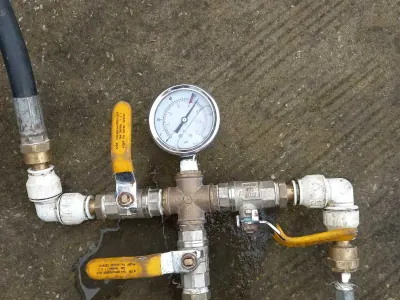
pressure test gauge holding about 4.4 bar on the internal pipework
Tested
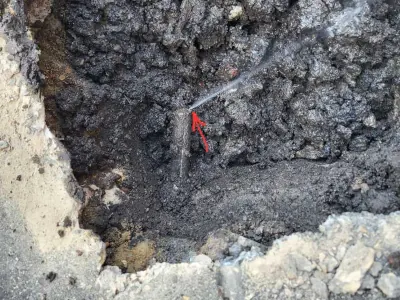
water spraying from an old lead supply pipe uncovered under a concrete patio
Found
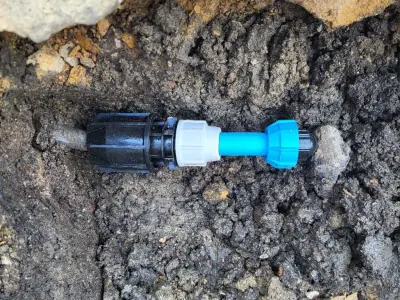
new blue plastic supply pipe with a universal coupling and end cap in the trench
Repaired

1. Wakefield: a lead supply pipe under a patio

The leak was a failed cap-off on an old lead supply pipe, buried under a concrete patio. Water was streaming from the wall by the patio. The internal pipework held 4.4 bar on test and the external supply failed, so the engineer fed tracer gas into the supply and found it at several points across the patio, with acoustic listening picking up water movement in the same area. A new section of 25mm blue MDPE pipe with a coupling and end cap replaced the failed lead.

Found with Pressure test Tracer gas Acoustic listening

Read the full case study
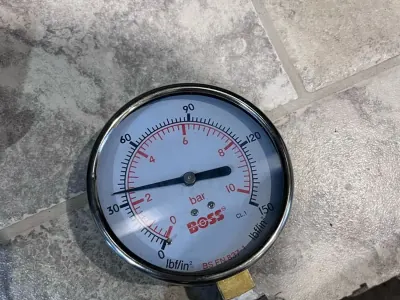
pressure gauge reading in bar on a tiled kitchen floor
Tested
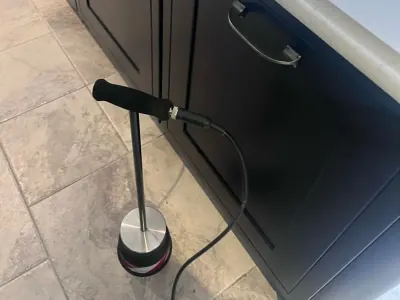
acoustic probe with a round foot on a tiled kitchen floor beside a kitchen unit
Traced
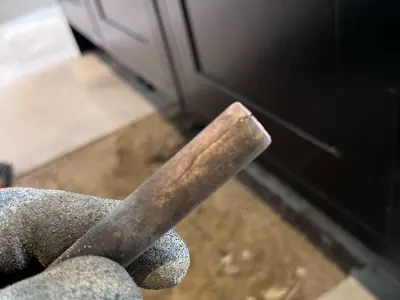
split end of a copper pipe held up in a gloved hand
Found

2. Holbeach: a split pipe under a kitchen floor

The leak was a split in the 15 mm copper pipe feeding the fridge, under the tiles and screed beside the kitchen island. Water was coming up from under the kitchen island. The engineer isolated the hot feeds and the WC, capped the open end in the airing cupboard and filled the cold pipe with compressed air, which couldn't hold its pressure. Listening through the floor found the sound loudest between the island and the fridge, where four or five tiles and the screed were lifted. Tracer gas was ruled out, because a hole already dug under the island would have let it escape.

Found with Meter check Compressed air Acoustic listening

"Scott was great he went above and beyond for us"

Megan Russell, February 2025, engineer Scott Read on Trustpilot
Read the full case study
pressure test rig with a gauge and valves connected to the supply pipe
Tested
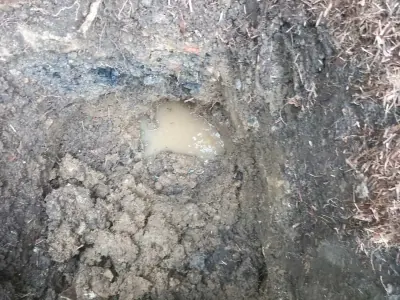
water pooling in a small excavation in a garden border
Found
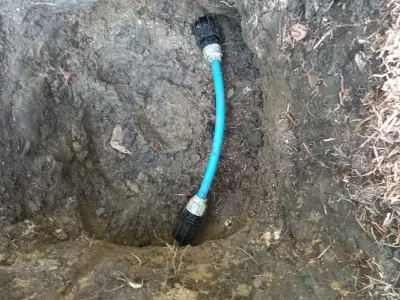
new blue plastic pipe joined with transition couplings in the excavation
Repaired

3. Enfield: a seized stop valve and an obsolete one

The leak was where the old lead supply pipe joined an obsolete stop valve in the back garden, about 1.5 metres from the meter. The meter showed a small, steady flow with everything off, and the internal stop valve had seized, so the pipework inside and outside couldn't be tested apart. Tracer gas went in through the garden tap, a pressure test on the whole supply lost all its pressure, and the tracer gas came up near where the supply enters the house. The failed joint and the obsolete valve were cut out and replaced with blue MDPE and two transition couplings.

Found with Flow metering Pressure test Tracer gas

"...undertook the repair and replaced everything as it was..."

Mark M, February 2025, engineer Darren Read on Trustpilot
Read the full case study

How do the methods work together on a long supply pipe?

On a long supply pipe, the methods work in sequence: pressure tests split the run into lengths, tracer gas finds the area, and ground microphones confirm the spot. A farm supply in Maidstone shows each step.

  1. The meter showed water escaping at about 250 litres an hour. The supply was mixed, with new blue MDPE across a field, joined to black Alkathene at one end and the existing steel at the other.
  2. Danny O'Mahony disconnected and capped the new MDPE length and pressure tested it from the meter. It held, and the meter showed no use.
  3. The rest of the run, up to the farmhouse and the troughs, slowly lost pressure, which put the leak in that stretch.
  4. Tracer gas went in at a garden tap by the office, and the yard, the barn and the walls of the house were swept with a gas analyser.
  5. Gas came up outside the kitchen window, near the soil stack, and the ground microphones were loudest in the same place.
  6. The dig exposed a lateral fracture in corroded thin-wall steel. Testing the repair showed a second fracture a couple of inches away, so the steel was cut back further and joined to blue MDPE with transition couplings.

Once the second repair was in, a final pressure test held and the meter stood still. Danny recommended replacing the rest of the thin-wall steel, which runs through the wall into the house and was the most corroded. His full write-up is underground water mains leak detection in Maidstone.

Badly corroded steel water main, exposed in the dig
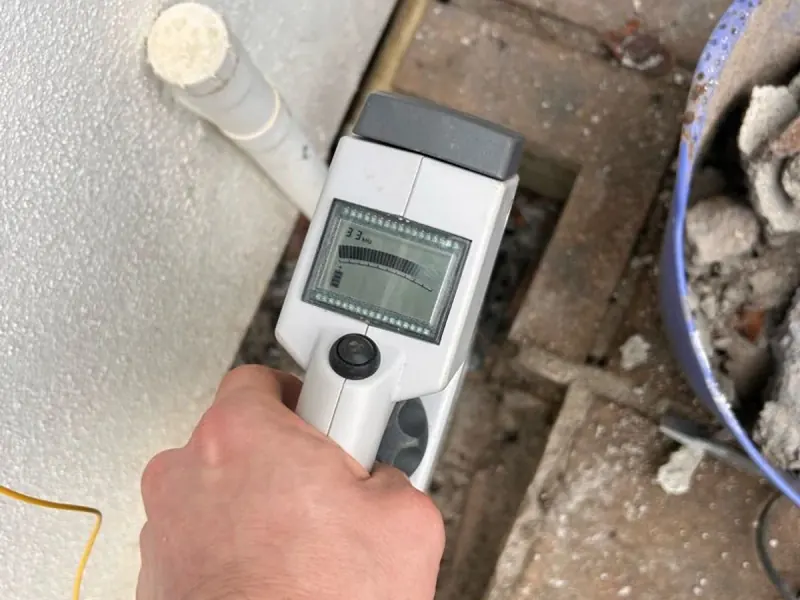
Tracer cable reader held over exposed pipework while mapping a supply pipe's route

How is the route of a buried pipe traced?

The route of a buried pipe is traced from what can be seen, the meter and the stop taps, and the line between them. Where that isn't enough, a tracer cable fed into the pipe is followed from above.

Pipes don't always run where the paperwork or the property owner expects. At Colnbrook, the meter showed a steady 1 litre a minute, and closing the stopvalve inside made no difference.

Darren Smith put tracer gas into the cold supply at the kitchen sink, and a strong trace at the front of the property led to the dig. There, the old main had been left connected, with its end open, when the supply was replaced.

Capping it didn't finish the job. The next pressure test still fell, and the second leak turned out to be an obsolete stopvalve hidden behind boxing in the kitchen.

For the depth the pipe is likely to lie at, read our guide on how deep is a water main.

Do thermal cameras and moisture meters work on buried pipes?

Thermal cameras and moisture meters work on pipes buried under a floor, where escaping water changes the temperature or dampness of the surface above. Outside, under a lawn or drive, our engineers seldom use either.

A thermal camera needs a temperature difference to show. For a hot water or heating leak to show warm, the system must be running and up to temperature.

Cold mains water works the other way: in our case studies, the camera picked out cold patches on concrete floors where the supply underneath was leaking.

When it works, and when it doesn't, is set out under thermal imaging leak detection.

A moisture meter maps the damp, reading by reading, over the floor and up the walls beside it. The wettest reading can sit well away from the pipe, so the meter shows where to search, and the gas or the microphone finds the leak.

More on the readings is under moisture meter leak detection on floors.

Under a suspended floor, a borescope camera passed into the void shows the pipe itself, as our page on digital borescope leak detection explains.

See how to find a water leak under floor for leaks indoors, or read about a water leak under concrete for a solid floor.

Can drains and irrigation pipes be checked underground?

Drains and irrigation pipes can be checked underground as well. ADI investigates leaks from drainage, with CCTV surveys for drains, and finds leaks on irrigation systems, though drainage repairs are not part of ADI's normal work.

Our drain leak detection and irrigation system leak detection pages cover each one.

A supply leak can show up in a drain, too. On a Chertsey park home site with up to 150 buildings, Mark Jones heard the water in the drains. Then he followed it down three roads, as far as a disused plot, and listening across the plot found the leak in its middle.

Business premises and managed sites can ask for RAMS, a risk assessment and method statement, through our commercial leak detection team.

How much does underground water leak detection cost?

Underground water leak detection on a supply pipe runs from £595 + VAT, at a price fixed for your pipe before booking. One engineer or two sets the price:

  • Up to 40 metres of pipe: one engineer, depending on the ground surface above it.
  • Over 40 metres, with each branch added in: two engineers.
  • A supply that more than 3 properties share: two engineers.

On our water main leak detection page, the supply pipe prices are the same.

  • Quotation: ADI gives free advice and a fixed quotation before any visit.
  • Guarantee: Our No find, no fee guarantee covers domestic pipework leak detection for a single leak at one property, on hot and cold feeds and water mains up to 30 m, for leaks of at least half a litre a minute, when we also carry out the access and repair. Exclusions apply.

For water leaks away from the supply pipe, see how much does leak detection cost.

Call 0800 731 3843 for the fixed price on your pipe, and mention any branches or neighbours on the same supply, since both count toward a second engineer.

What happens once the leak is found?

Once the leak is found, the engineer marks the spot, and the ground is opened at the mark to expose the pipe. The engineer aims to repair on the same day as the detection where it can be done.

A repair on the spot needs three things: enough of the day remaining, the materials for it, and a leak that can be reached. A same-day repair is £250 + VAT with one engineer, or £295 + VAT with two. ADI Leak Detection's repairs come with a 3-month guarantee.

Nothing is dug during the search itself: every method works from above the ground, which keeps the tracing non-destructive. ADI makes the repair itself, as a WaterSafe approved contractor.

Testing after each repair matters. At Longfield, Colnbrook and Maidstone, it found a second leak that the first repair had not touched.

Sometimes a new main is the better answer. At Longfield, both digs were full of rubble and rocks, and Aaron advised replacing that length of main if it leaks again.

A replacement main goes in by moling, not by drilling, from £1,390 + VAT, with digger transport at £300 + VAT.

Is underground leak detection covered by insurance?

Underground leak detection can be claimed on insurance when leak trace and access cover is part of your home or buildings policy. Insurers word this cover in different ways, so look at your own policy first.

Every ADI Leak Detection investigation ends with a written report by the attending engineer, with photographs and video. It states the cause of the damage at no extra cost, and it is sent within 48 hours, once the bill is paid in full.

For a buried pipe, the photographs record what no one can see once the dig is filled in.

When the water seems to come from next door, the tracing shows whose pipe it is.

Where the cost falls after that is covered in whose responsibility is a water leak, and the claim itself is set out in our water leak damage insurance claim guide.

CALL NOW ON 0800 731 3843
Cracked black plastic water main in a dig, with water pooling round it

Water leak found and fixed

"He kept me informed talking through the readings and only once we had ensured I had the right insurance cover he started digging where he thought the leak was coming from."

Rachel Dexter, March 2024 Read on Trustpilot
CALL NOW ON 0800 731 3843

Who carries out our underground water leak detection services?

Corporate LiveWire Prestige Awards trophies for Water Leak Detection Service of the Year

Our underground water leak detection services are carried out by ADI's own staff: more than 25 leak investigation engineers. Before joining ADI, each had worked in plumbing or heating for a minimum of three years.

During training, each learns acoustic listening, thermal imaging and tracer gas at ADI, and no one works alone until Mark Jones, Technical Manager, has signed them off.

Robert Gires, based in South Yorkshire, has spent 5 years on water mains leak detection. Darren Smith, who found the open-ended main at Colnbrook, holds Utility SHEA (Water). See each engineer's profile on meet our engineers.

The engineers' work has won ADI Leak Detection Water Leak Detection Service of the Year at the Corporate Livewire Prestige Awards four times, in 2019, 2021, 2023 and 2026.

ADI has been finding leaks since 2011, with over 50,000 leak investigations so far and over 5,000 engineer visits a year now. Customers back that up: ADI is rated 4.7 out of 5 across more than 1,600 Trustpilot reviews.

CALL NOW ON 0800 731 3843

Outstanding service

Not only was he diligent and friendly, he explained the process and found the leak on my drive with careful, meticulous investigation using scientific tools and equipment. He also did a fantastic job minimising damage to my new drive.

A Lombardi, February 2026
engineer: Matthew
Read on Trustpilot

External mains water supply leak

We had an external mains water supply leak with no idea where the break was. Vincent the engineer... used specialist equipment to detect the most likely point of the leak, which turned out to be situated under a concrete drive. It turned out to be absolutely pinpoint accurate, only requiring a small hole to fix the problem.

Mr Palmer, March 2025
engineer: Vincent
Read on Trustpilot

Excellent service

Robert was the engineer and he was brilliant. He was polite, very conscientious and kept us informed every step of the way what was happening. This was not an easy job. The outdoor water mains pipe is over a meter underground in thick clay and under a surface of tarmac and concrete. He cleaned up the site very well when finished with advice of what we should do next.

Jack Lynch, February 2022
engineer: Robert
Read on Trustpilot

Fixing the leak

You would not know they have been digging on path and patio and working on a new riser and stopcock in the kitchen.

P Potter, September 2022
engineer: Mark and Vince
Read on Trustpilot

Superb work

I work for a housing association and one of your new homes has a leak. Robert came along and found the leak outside. Took up the paving slabs and replace the failed connection which was partway under the drive. Very clean and tidy job.

BereHiot, March 2023
engineer: Robert
Read on Trustpilot

The Sherlock Holmes of plumbing

Frank... found the leak in a mysterious forgotten underground pipe no-one else could find, fixed it (along with another incidental leak he found from a water softener), converted the mysterious pipe to an outside tap, and then tidied everything up again.

Louise Hamilton, May 2025
engineer: Frank
Read on Trustpilot

Read all our reviews on Trustpilot

How do you book underground water leak detection?

To book underground water leak detection, phone 0800 731 3843, Monday to Friday, 7:30am to 6:30pm.

We cover mainland England, Scotland and Wales, the Scottish Highlands included, and islands joined to the mainland by a road or bridge, such as Anglesey and Skye.

When the engineers who cover an area are fully booked, we can bring in an engineer from outside the area who has availability, so the visit can still be the same day or the next day. That engineer's price is worked out from their own driving distance, which can make it dearer, and you're told before you book.

We do not cover Northern Ireland, the Republic of Ireland, or islands with no road or bridge link to the mainland. The Isle of Wight, the Isles of Scilly, the Isle of Man and the Channel Islands are not covered.

Scottish islands such as the Western Isles, Orkney, Shetland, Bute and Arran are not covered either.

Keep the details of the supply to hand when you call, as bookings are not taken through the contact form. Four details help the engineer plan the visit:

  • Where the meter is: outside at the boundary, in a pavement chamber, or inside.
  • What lies over the pipe, such as lawn, tarmac, block paving or concrete.
  • Whether the supply also feeds a garage, an outside tap or another property.
  • Any meter readings you've taken, and any letter from your water company.