
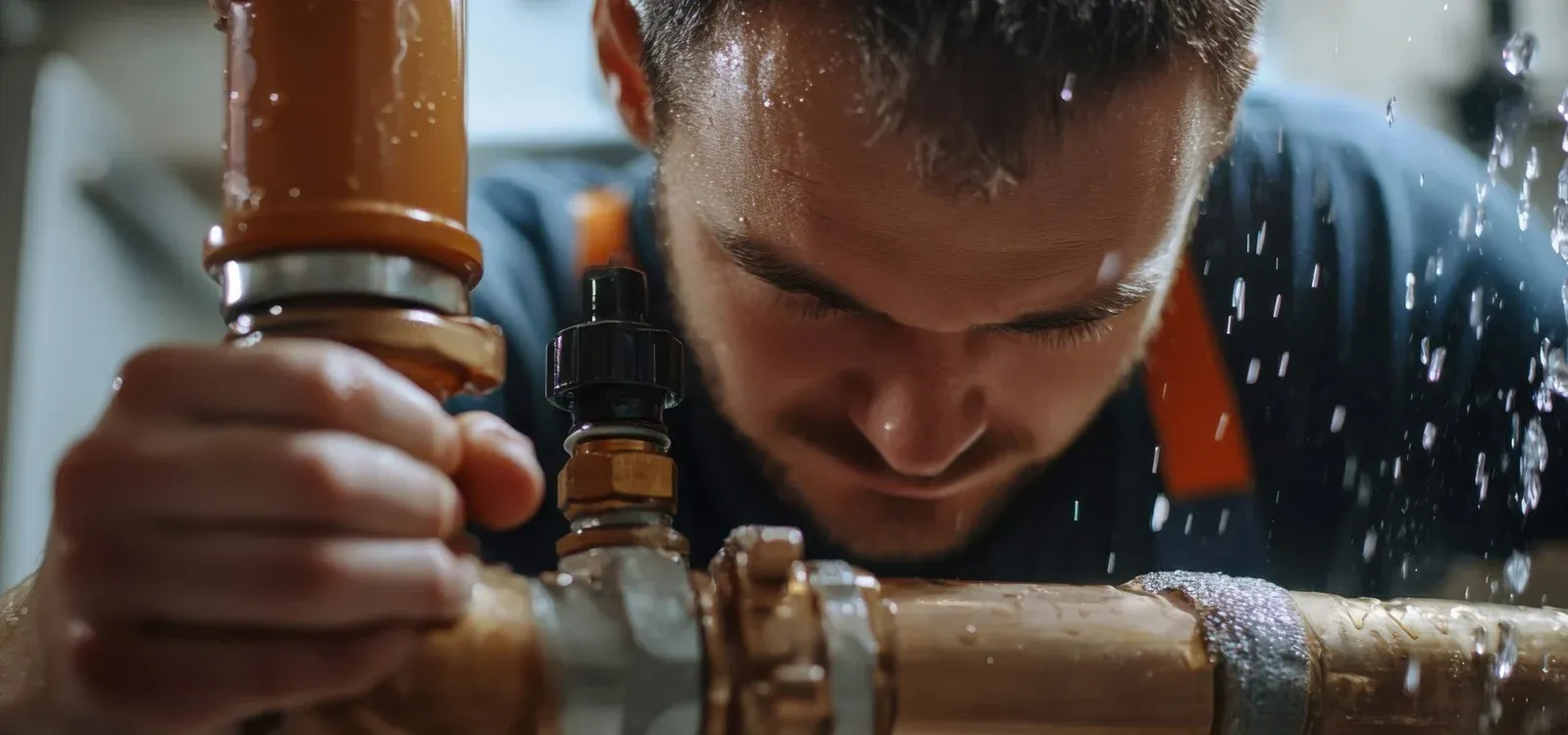
Underground Water Mains Leak Detection in Maidstone
A underground mains leak in Maidstone was located using tracer gas, acoustic correlation, and pressure testing, completing water mains leak detection at depth beneath the ground outside the plant room. Found by engineer Mark Pavitt.
 CIPHE accredited
 WIAPS member


Facts
| Location | Maidstone |
|---|---|
| County | Kent |
| Leak Type | Water Mains Leak Detection |
| Property Type | Residential property |
| Detection Method | Tracer Gas, Acoustic Correlation, Pressure Testing |
| Outcome | Failed mains riser exposed at 1.8m depth, renewed and pressure tested. |
Symptoms

A property in ME8 had a failing mains supply riser that required further trace and access work. The incoming 25mm black alkathene mains supply had failed, and before any repair could take place the exact extent and location of the failure needed to be established through investigation and excavation.
Access to the leak area presented significant challenges. The affected section of pipework ran outside a plant room and was located behind high-level metal boundary fencing, with the excavation zone complicated further by the presence of eight 50mm electric cables running through the area.
A water mains leak detection operation of this complexity required careful planning before any ground could be broken.
With the mains supply failing and the pipework buried at depth, the property faced an unresolved loss from the incoming supply until the failed section could be located precisely and a replacement installed.
Methods Used

Before any excavation could begin, the metal high-level boundary fencing was removed to allow a 1.5-ton digger to be brought through an adjacent property and positioned at the leak area outside the plant room. The mains supply was isolated and tracer gas was introduced into the pipework to allow the failed section to be traced and localised beneath the ground.
Excavation proceeded carefully around and beneath eight 50mm electric cables, reaching a depth of 1.8 metres and covering an area approximately six feet in diameter. This level of precision is standard practice in water mains leak detection where buried services are present and the risk of secondary damage must be managed throughout.
Once the failed alkathene pipe was exposed, the repair scope was confirmed and a new 25mm blue poly supply was prepared for installation.
Tracer Gas. Injected into the isolated mains supply to trace and localise the failure point in the buried 25mm alkathene pipework ahead of and during excavation.
Acoustic Correlation. Used as part of the detection process to help identify the area of the mains supply riser failure prior to targeted excavation.
Pressure Testing. Applied at 4.0 bar of tracer gas over one hour on completion of the new mains riser installation to confirm the repair was sound before backfilling.
Investigation Process
-
1Boundary fencing removed
Metal high-level fencing on the property boundary was removed to create an access route for the 1.5-ton digger, which was then driven through the adjacent property to the leak area outside the plant room.
-
2Mains supply isolated and tracer gas introduced
The incoming mains supply was shut off and tracer gas was added to the pipework to enable tracing and localisation of the failed section.
-
3Excavation carried out around electric cables
The digger was used to carefully excavate around and beneath eight 50mm electric cables, reaching a depth of 1.8 metres across an area six feet in diameter.
-
4Failed mains riser exposed
The 25mm black alkathene incoming mains supply was uncovered at the base of the excavation, confirming the location and extent of the failure.
-
5New 25mm blue poly supply installed
A new blue poly mains supply was run from the plant room into the excavation and connected externally to the existing incoming supply, then connected internally to the existing internal mains supply with appropriate adaptations.
-
6Pressure test completed
The new installation was tested at 4.0 bar using tracer gas held over one hour; all passed.
-
7Excavation backfilled and supply reinstated
The excavation was backfilled and the mains supply was reinstated, restoring normal water service to the property.
Result & Outcome

The failed 25mm black alkathene incoming mains supply riser was located outside the plant room at a depth of 1.8 metres. Tracer gas pinpointed the failure within the isolated pipework, and careful excavation — working around eight 50mm electric cables — exposed the defective section clearly.
A new 25mm blue poly mains riser was installed, connected at both the external incoming supply and the internal mains supply, and pressure tested at 4.0 bar over one hour with no issues found. For a water mains leak detection job of this complexity, completing a full pressure test before backfilling is the appropriate sign-off before the excavation is closed.
The property now has a renewed mains riser in serviceable condition. A report is to be sent to the water provider to ensure the relevant party is informed of the work carried out on the incoming supply.
Suspect a leak at your property?
ADI Leak Detection specialists investigate leaks like this across the UK every day. No find, no fee terms apply on qualifying jobs.