
Internal Cold Mains Leak Detection in Buckingham
A cold mains leak in Buckingham was located using a damp meter, pressure testing, thermal imaging, tracer gas, and acoustic listening, with water mains leak detection pinpointing the fault beneath the kitchen floor for targeted excavation and repair. The work was carried out by engineer Vincent Morgan.




The original leak detection company, est. 2011
Facts
| Location | Buckingham |
|---|---|
| County | Buckinghamshire |
| Leak Type | Water Mains Leak Detection |
| Property Type | Residential property |
| Detection Method | Damp Meter, Pressure Testing, Thermal Imaging, Tracer Gas, Acoustic Listening Equipment |
| Outcome | Leak found on 22mm copper pipe beneath kitchen floor, repaired. |
Symptoms
Water had been appearing on the kitchen floor at a property in MK17, and visible damage had developed on walls in the kitchen and lounge. The extent of the spread suggested water had been tracking beneath the floor for some time before becoming visible at the surface.
Internal leak detection was required to establish the source and extent of the problem before any remedial work could begin.
Methods Used
The investigation began with a damp meter survey, which confirmed moisture not only under the kitchen and utility tiled floor but also extending beneath the conservatory floor — indicating the water had spread considerably. Pressure testing isolated the fault to the internal cold water supply pipework.
From there, the internal leak detection process moved to thermal imaging to map the pipework routing under the kitchen floor, followed by the introduction of trace gas into the pipework. Tracing equipment detected escaping gas beneath the kitchen floor, and acoustic equipment was then used to pinpoint the specific section of pipework where the leak was present.
Damp Meter. Used to survey the tiled floors in the kitchen, utility room, and conservatory, revealing the extent of subsurface moisture spread.
Pressure Testing. Applied to the internal pipework to confirm that the cold water supply was the source of the leak, rather than drainage or another system.
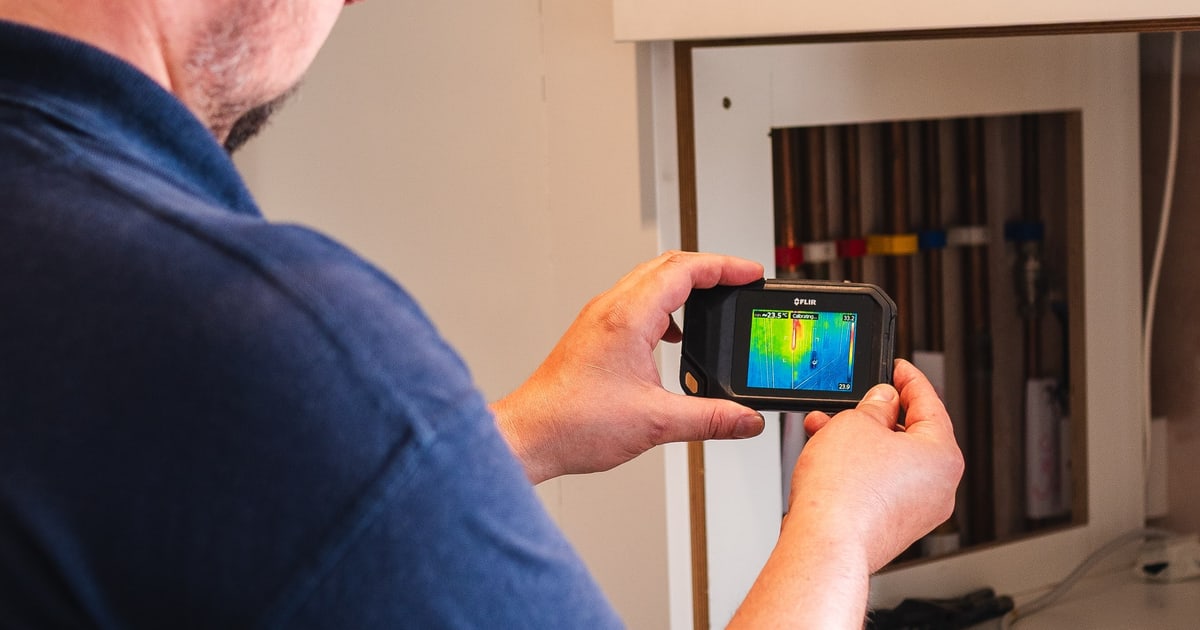
Thermal Imaging. Used to identify the route of the copper pipework running beneath the kitchen floor, guiding the subsequent gas trace.
Tracer Gas. Introduced into the cold water supply pipework; escaping gas was detected at the surface of the kitchen floor directly above the damaged section.
Acoustic Listening Equipment. Used to identify the specific run of pipework beneath the kitchen floor where the leak was located, narrowing the excavation point.
Investigation Process
-
1Initial Assessment
On arrival, water was visible on the kitchen floor. A damp meter survey confirmed moisture beneath the kitchen and utility tiled floors and under the conservatory floor, with visible water damage present in the kitchen and lounge.
-
2Water Meter Check
The water meter was checked and found to be continuously registering flow with no water in use, confirming an active leak on the supply.
-
3Pressure Testing
Pressure testing was carried out on the internal pipework and established that the leak was on the internal cold water supply pipework.
-
4Thermal Imaging
Thermal imaging was used to identify the route of the copper pipework running beneath the kitchen floor, providing a reference for the trace gas survey.
-
5Trace Gas Survey
Trace gas was introduced to the cold water supply pipework and tracing equipment detected escaping gas beneath the kitchen floor, indicating the leak location.
-
6Acoustic Pinpointing
Acoustic equipment was used to identify the precise run of pipework where the leak was present, minimising the area of floor requiring excavation.
-
7Excavation and Leak Found
Kitchen floor tiles were removed and the concrete substrate was excavated. The leak was found on a section of 22mm copper pipework that had sustained damage.
-
8Repair Completed
A new section of 22mm copper pipework was soldered in with new fittings, reinstating the cold water supply.
Result & Outcome
Excavation beneath the kitchen floor revealed a damaged section of 22mm copper pipework on the internal cold water supply. The combination of trace gas detection and acoustic listening had directed the dig to the correct location, and the fault was confirmed on exposure. A new section of 22mm copper was soldered in with new fittings, restoring the integrity of the supply pipework.
Suspect a leak at your property?
ADI Leak Detection specialists investigate leaks like this across the UK every day. No find, no fee terms apply on qualifying jobs.