
Internal Cold Mains Leak Detection in Attleborough
A cold mains leak in Attleborough was located using a damp meter, thermal imaging, pressure testing, tracer gas, and visual inspection as part of water mains leak detection, identifying the fault in the cold supply pipe beneath a concrete bathroom floor where it had no protective sleeving and had developed a hole. The work was carried out by engineer Grant Corney.




The original leak detection company, est. 2011
Facts
| Location | Attleborough |
|---|---|
| County | Norfolk |
| Leak Type | Water Mains Leak Detection |
| Property Type | Residential property |
| Detection Method | Damp Meter, Thermal Imaging, Pressure Testing, Tracer Gas, Visual Inspection |
| Outcome | Leak found in cold supply pipe beneath bathroom floor, repaired. |
Symptoms

The property in NR17 had concrete flooring throughout, with ceramic tiles, and visible water damage to the utility room floor adjacent to the bathroom. There was no external stop valve, so the only means of isolation was under the kitchen sink.
A leak noise could be heard somewhere between the sink and the bathroom, and damp was spreading across the utility concrete floor — a clear sign that water was escaping somewhere beneath the surface.
The heating system was a heat system boiler with water tanks in the loft supplying both gravity cold and hot water. The cold supply runs beneath the concrete floor to serve the bathroom and the washing machine in the utility room, and this buried pipework had no protective sleeving — leaving it directly exposed to the surrounding substrate.
This type of job sits firmly within internal leak detection, where a buried or concealed supply line is losing water and the source cannot be confirmed without systematic testing. The lack of an external stop valve, the depth of the pipework, and the concrete construction all made locating the leak without specialist equipment impossible.
Methods Used

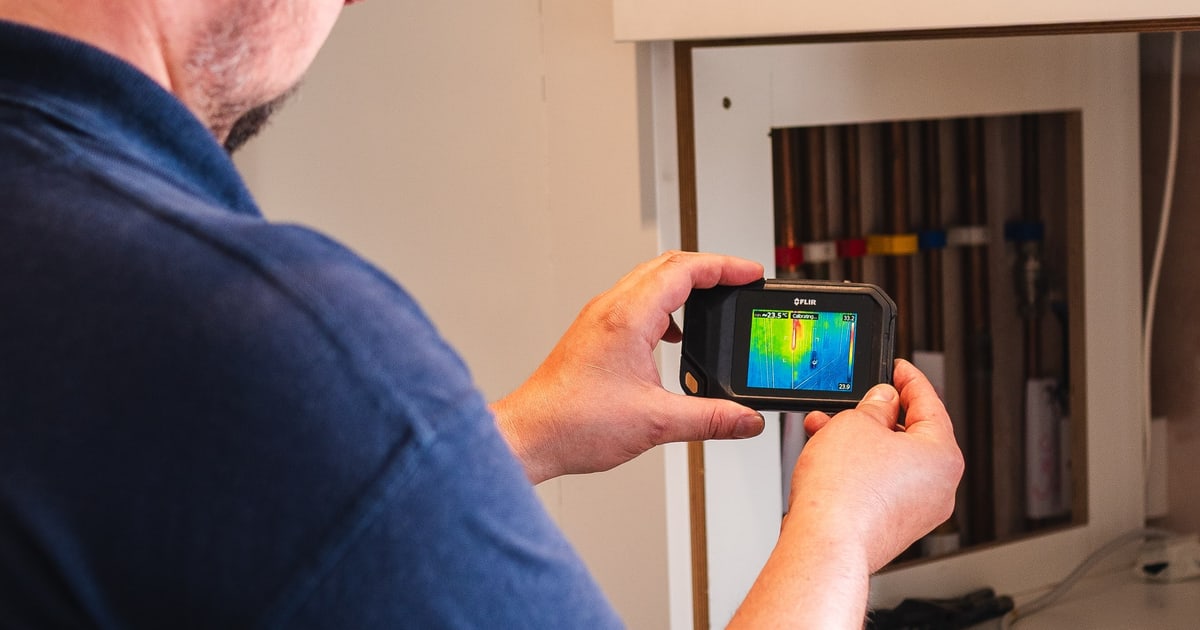
The investigation began with damp meter readings across the utility and bathroom floors, which confirmed elevated moisture levels in both areas. The thermal camera then identified a cold patch next to where the cold supply comes up through the concrete floor to serve the bathroom and the washing machine — giving a clear thermal indication of where water was escaping into the slab.
With a likely zone established, pressure testing was carried out via the isolation point under the kitchen sink, and the cold supply failed to hold pressure. Tracer gas was then introduced through the same connection, and readings were detected behind the boxing in the bathroom, directly above where the cold supply rises through the floor.
This combination of methods — consistent with a thorough internal leak detection process — pinpointed the leak with enough precision to justify a targeted excavation, which the customer approved. The leak was exposed and confirmed at that location.
Damp Meter. Used to take readings across the utility and bathroom floors, confirming elevated moisture levels that directed the initial search zone.
Thermal Imaging. Identified a cold patch at the point where the cold supply rises through the concrete floor, indicating water loss at or near that location.
Pressure Testing. Connected at the kitchen sink isolation valve, this confirmed the cold supply was actively losing pressure — dropping from 2 bar to 0 within five minutes.
Tracer Gas. Introduced into the cold supply through the kitchen connection; gas readings were detected behind the boxing in the bathroom, directly above the rising cold supply pipe.
Visual Inspection. Carried out once the area was excavated, confirming the exposed pipework had a hole in it and had no protective sleeving, leaving it in very poor condition.
Investigation Process
-
1Initial Assessment
The property was assessed on arrival. No external stop valve was present; the internal isolation under the kitchen sink was identified as the only usable isolation point. Water damage was visible on the utility concrete floor and a leak noise could be heard between the sink and bathroom.
-
2Damp Meter Survey
Damp meter readings were taken across the utility and bathroom floors. Elevated readings were confirmed in both areas, identifying the utility and bathroom zone as the focus for further investigation.
-
3Thermal Imaging
The thermal camera was used across the floor area and picked up a cold patch adjacent to where the cold supply comes up through the concrete to feed the bathroom and washing machine in the utility room.
-
4Pressure Testing
Pressure testing equipment was connected at the kitchen sink isolation valve. The cold supply pressure dropped from 2 bar to 0 within five minutes, confirming an active leak in the cold supply pipework beneath the floor.
-
5Tracer Gas Introduction
Tracer gas was introduced through the same connection point. Readings were detected behind the boxing in the bathroom, at the location where the cold supply rises through the concrete floor, confirming the leak position.
-
6Excavation and Leak Confirmation
With the customer's permission, the area behind the boxing was dug out. The cold supply pipe was exposed and a hole was found in it. The pipework had no protective sleeving and was in very poor condition throughout.
-
7Repair Carried Out
The damaged section was cut out. A soldered repair was not viable given the condition of the pipe, so a repair was made using 15mm plastic pipe and two push fit fittings. This was explained to the customer as a non-permanent repair.
-
8Post-Repair Pressure Test
Pressure testing was repeated after the repair. Pressure held, indicating no further active leaks. The system was turned on and monitored before the engineer left site.
Result & Outcome

The leak was found in the cold supply pipe beneath the concrete floor in the bathroom, at the point where it rises to serve the bathroom and the washing machine in the utility room. The pipe had a hole in it and no protective sleeving had been fitted, leaving it in direct contact with the surrounding substrate. The damaged section was cut out and a repair was completed using 15mm plastic pipe and two push fit fittings.
Post-repair pressure testing confirmed pressure was holding with no further leaks present. The push fit repair is not a permanent solution — this was explained clearly on site. Given that the surrounding pipework is in very poor condition and was already failing, further leaks from the same run are likely without more extensive work.
As part of this internal leak detection job, the engineer recommended that the cold supply be bypassed entirely — rerouted from the kitchen to the bathroom above ground behind the units, removing the buried run under the concrete floor. This would eliminate the ongoing risk posed by the deteriorated underground pipework and provide a durable, accessible solution.
Suspect a leak at your property?
ADI Leak Detection specialists investigate leaks like this across the UK every day. No find, no fee terms apply on qualifying jobs.