
Hot Water System Leak Detection in Wisbech
A hot water system leak in Wisbech was located using flow metering, pressure testing, a damp meter, tracer gas, and thermal imaging, with hot water leak detection confirming three fault points in the pipework beneath the utility room floor before any excavation took place. The work was carried out by engineer Danny O'Mahony.




The original leak detection company, est. 2011
Facts
| Location | Wisbech |
|---|---|
| County | Cambridgeshire |
| Leak Type | Hot Water Leak Detection |
| Property Type | Residential property |
| Detection Method | Flow Metering, Pressure Testing, Damp Meter, Tracer Gas, Thermal Imaging |
| Outcome | Three hot pipe leaks found under utility room floor, repaired. |
Symptoms

The occupants of a property in PE13 noticed their water meter was recording continuous usage of approximately 5–7 litres per hour, even when no water was being used inside. This pointed to an active leak somewhere in the internal pipework, though its exact location was unknown at the time of booking.
The water meter reading gave no indication of whether the leak was on the cold or hot water supply, or where in the property it might be occurring. The customer contacted us to carry out hot water leak detection and establish the source before further damage could develop.
Visually, there was no obvious sign of a burst pipe or surface water. The hidden nature of the leak made specialist detection equipment essential to pinpoint the fault without unnecessary disruption to the property.
Methods Used

The investigation began with a meter observation to confirm active usage, followed by isolation of the internal stopcock to determine whether the leak was on the internal or external supply. Once confirmed as internal, pressure testing was used to isolate the fault to the hot water pipework.
From there, moisture readings were taken to identify areas of elevated damp, and tracer gas was introduced into the hot pipes to pinpoint the precise location of the escape.
This combination of methods is standard practice in hot water leak detection where the leak is concealed beneath a floor with no visible surface indication. Each stage narrowed the search area before any invasive work was carried out, ensuring the customer could give informed consent before any lifting or cutting began.
Flow Metering. The water meter was observed live to confirm continuous usage, and again after closing the internal stopcock, which confirmed the leak was on the internal pipework rather than the external supply.
Pressure Testing. Pressure tests were applied separately to the cold and hot water circuits; the cold circuit held pressure while the hot circuit showed a measurable pressure drop, isolating the leak to the hot pipes.
Damp Meter. A moisture meter was used to take readings across the utility room floor and low-level wall behind the washing machine, identifying areas of high wet readings that directed the search area.
Tracer Gas. After clearing the hot pipes with an air compressor, tracer gas was introduced into the hot water circuit and a gas analyser was used to detect escaping gas, which was found in the floor to the left of the washing machine.
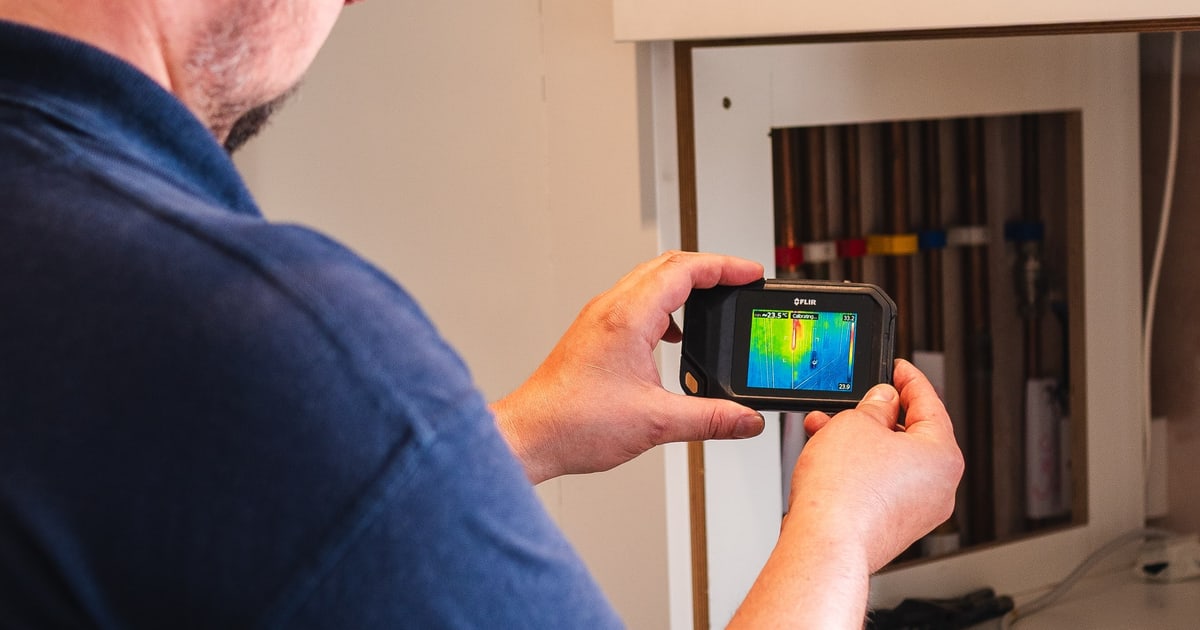
Thermal Imaging. Thermal imaging was used during the survey to assist in identifying temperature variations consistent with moisture or water movement within the structure.
Investigation Process
-
1Meter Observation
With all pipework live, the water meter was observed and confirmed to be recording usage. Closing the internal stopcock stopped the meter recording, confirming the leak was on the internal pipework.
-
2Pressure Testing — Cold Circuit
The internal cold pipework was pressure tested and found to be sound, with no measurable pressure loss.
-
3Pressure Testing — Hot Circuit
Pressure testing of the hot water pipes showed a loss of pressure, confirming the leak was on the hot water supply.
-
4Moisture Meter Survey
A moisture meter was used across the utility room floor and the wall at low level behind the washing machine. High wet readings were recorded in both areas, focusing the search on that zone.
-
5Tracer Gas Introduction
An air compressor was used to clear water from the hot pipes before tracer gas was added. A gas analyser tracked the escaping gas to the floor to the left of the washing machine.
-
6Customer Consent and Invasive Investigation
The gas and moisture evidence was presented to the customer and consent was given to carry out invasive work. The floor was opened in the identified area to trace the leak.
-
7Leaks Located
Two leaks were found approximately 6 inches apart in the floor beneath the washing machine. Further testing revealed a third leak approximately 10 inches from the first two.
-
8Pipework Repaired
All three leak points were cut out and the remaining pipework tested to confirm no further leaks. A section of pipe approximately 2 feet long was replaced with copper tube and soldered copper fittings.
-
9Final Pressure Test
The water supply was re-established and a mains pressure test was carried out at 3.2 bar. Pressure held with no measurable loss over a 30-minute test period, confirming the repair was sound.
Result & Outcome

Three leaks were located in the hot water pipework beneath the utility room floor, directly under the washing machine. Two were found approximately 6 inches apart, with a third a further 10 inches away. The combination of moisture meter readings and tracer gas detection identified the area precisely before any floor was opened, limiting disruption to the confirmed fault zone.
All three leak points were cut out and a section of pipe approximately 2 feet long was replaced using copper tube and soldered copper fittings. The repair was tested at mains pressure — 3.2 bar held with no measurable loss over 30 minutes — confirming the integrity of the new pipework.
This is a typical result for hot water leak detection where the leak is concealed beneath a solid floor with no surface evidence. The customer was advised to seek professional guidance on drying out the affected area, as residual moisture in the floor and wall structure will require managed drying before reinstatement.
Suspect a leak at your property?
ADI Leak Detection specialists investigate leaks like this across the UK every day. No find, no fee terms apply on qualifying jobs.