
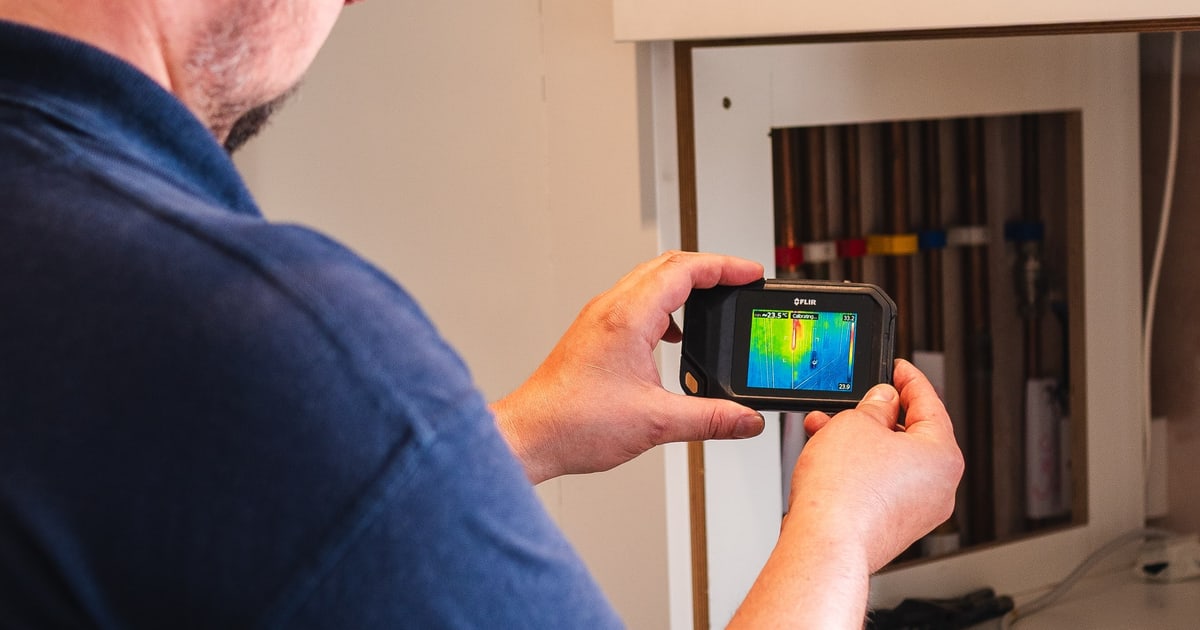
Hot Water System Leak Detection in Boston
A hot water system leak in Boston was located using tracer gas, a damp meter, pressure testing, and sectional isolation, with hot water leak detection confirming the source beneath the tiled kitchen floor on the hot water pipe. Found by engineer Scott Hardcastle.




The original leak detection company, est. 2011
Facts
| Location | Boston |
|---|---|
| County | Lincolnshire |
| Leak Type | Hot Water Leak Detection |
| Property Type | Residential property |
| Detection Method | Tracer Gas, Damp Meter, Pressure Testing, Sectional Isolation |
| Outcome | Hot water leak found under kitchen floor, pipe rerouted. |
Symptoms

The occupant of a detached bungalow in the PE22 area had been notified by their water company that a leak was present on the property. The timing of this notification coincided closely with the recent installation of a new oil combi boiler, which had replaced a gravity-fed hot water system.
With the system now operating under mains pressure rather than gravity low pressure, the change in conditions appeared to have exposed a weakness somewhere in the existing pipework.
A hot water leak detection visit was arranged to establish whether the leak was on the supply coming into the property or on the internal pipework, and if internal, to pinpoint its precise location. The boiler was sitting at 1 bar and there were no signs of a fault on the heating circuit itself, so attention turned to the domestic hot water pipework running through the property.
A damp patch was visible on the kitchen wall, and the pipework in that area ran down the wall, through the wall, and then beneath the tiled kitchen floor toward the sink — a route that would be difficult and costly to access without a precise location first.
Methods Used

The investigation began at the water meter, using stopcock isolation to confirm the leak was internal rather than on the supply pipe between the meter and the property. Once that was established, the engineer focused on a damp patch found on the kitchen wall and traced the route of the hot water pipework — down the wall, through into the floor, and beneath the tiled surface toward the kitchen sink.
Tracer gas was introduced into the pipework and a gas detector was used to sweep the floor area where the pipe ran, concentrating the search around the zone where the damp had appeared.
To confirm the hot pipe as the source, an isolation valve was fitted to it and the valve was closed. The water meter was then checked again and showed no movement, which directly identified the hot water pipe under the kitchen floor as the origin of the leak.
This sectional isolation approach — standard practice in hot water leak detection — removed any ambiguity about which circuit or pipe was responsible before any further work was considered.
Tracer Gas. Introduced into the hot water pipework to migrate to the point of escape beneath the tiled kitchen floor, allowing the engineer to pinpoint the leak location without lifting tiles.
Damp Meter. Used to assess the extent of moisture in the kitchen wall and confirm the damp patch was consistent with a leak in the adjacent pipework.
Pressure Testing. Used alongside sectional isolation to verify that the change from gravity low pressure to mains pressure had created the conditions for the leak in the hot pipe.
Sectional Isolation. An isolation valve was fitted to the hot pipe and closed; a subsequent meter check showed no movement, confirming the leaking pipe had been positively identified and isolated.
Investigation Process
-
1Meter check with stopcock closed
The internal stopcock was turned off and the water meter was checked. No movement was observed, which ruled out a leak on the supply pipe between the meter and the property.
-
2Meter confirms internal leak
The internal stopcock was turned back on and the meter was observed running continuously with no water in use, confirming the leak was somewhere inside the property.
-
3Damp patch identified in kitchen
A damp patch was found on the kitchen wall. The engineer traced the hot water pipework running down the wall, through it, and beneath the tiled floor toward the kitchen sink.
-
4Tracer gas deployed
Tracer gas was introduced into the pipework and the floor area was swept with a detector, with readings concentrating around the same zone as the damp patch on the wall.
-
5Isolation valve fitted to hot pipe
An isolation valve was fitted to the hot water pipe and closed. The water meter was checked again and showed no movement, positively confirming the hot pipe under the kitchen floor as the source of the leak.
-
6Cause identified
The conversion from a gravity-fed low-pressure system to a mains-pressure combi system had subjected the existing underfloor hot pipe to significantly higher pressure, which had caused it to fail at a point beneath the tiled kitchen floor.
-
7Pipe rerouted through garage
Rather than excavating the tiled and concrete floor, the engineer discussed options with the customer and rerouted the hot water supply by teeing into the hot pipe in the garage, drilling through into the kitchen sink unit, and connecting the supply directly. The original underfloor pipe was capped off.
-
8Additional observations noted
The kitchen tap was found to be very loose and in disrepair; replacement was advised. The gland on the stopcock was found to be slightly weeping on arrival and was tightened and left dry. The customer was also advised to remove the resulting dead leg on the hot pipe when future plumbing work is carried out.
Result & Outcome

The leak was located beneath the tiled kitchen floor on the hot water pipe, in the area directly corresponding to the damp patch on the kitchen wall. Tracer gas confirmed the zone, and sectional isolation of the hot pipe — with a subsequent meter check showing zero movement — gave a definitive confirmation. The cause was clear: the recent conversion from a gravity-fed system to a mains-pressure combi boiler had increased the operating pressure on pipework that had previously run at gravity pressure, and the underfloor section had failed as a result.
For a hot water leak detection job of this type, getting a precise location before any floor was opened up was critical. The combination of tracer gas and sectional isolation meant the engineer could act with confidence rather than excavating speculatively across the kitchen. With the leak confirmed to the hot pipe under the floor, the most practical repair was to avoid the floor entirely.
The hot water supply to the kitchen sink was rerouted by teeing into the hot pipe in the garage and running a new pipe through into the sink unit. The original underfloor pipe was capped. The floor was left completely intact, and the kitchen sink was restored to full hot water supply without any tile or concrete work being required.
Suspect a leak at your property?
ADI Leak Detection specialists investigate leaks like this across the UK every day. No find, no fee terms apply on qualifying jobs.