
Central Heating Leak Detection in Portsmouth
A central heating leak in Portsmouth was located using a Thermal Imaging Camera, Damp Meter, Tracer Gas, Gas Analyser, and Endoscope Camera, with central heating leak detection confirming the source at the rear of the lounge through tracer gas introduced via an existing access hole. Found by engineer James Hunter.




The original leak detection company, est. 2011
Facts
| Location | Portsmouth |
|---|---|
| County | Hampshire |
| Leak Type | Central Heating Leak Detection |
| Property Type | Residential property |
| Detection Method | Thermal Imaging Camera, Damp Meter, Tracer Gas and Gas Analyser, Endoscope Camera |
| Outcome | Leak found at rear of lounge; defective pipe installation replaced. |
Symptoms

The customer at a property in PO5 reported that, following recent building works, the boiler pressure had begun dropping within approximately one hour of being restored. As the property has a combination boiler, any sustained pressure loss causes the unit to shut down entirely, leaving the heating and hot water inoperable.
The timing of the pressure drops — directly linked to the recent building works — pointed strongly to a breach somewhere in the newly installed heating pipework. However, the exact location of any leak was unknown, and the pipework had been run concealed inside the walls, making visual inspection impossible without opening the structure.
Central heating leak detection was required to trace the hidden pipework, identify where the pressure loss was originating, and establish what access would be needed to carry out a repair.
Methods Used

The investigation began with thermal imaging to trace the heating pipework routes through the property. The pipe runs were successfully identified, but no thermal hotspots indicating an active leak were visible at the surface.
A moisture-meter survey was then conducted throughout the property, which revealed elevated readings in the back bedroom and the main bathroom — flagging areas of concern but not pinpointing the leak source.
With no definitive leak location established from non-invasive methods, the system was drained down, the remaining water compressed out, and tracer gas injected into the heating pipework. A gas analyser was used to take readings across the property, and a high concentration of tracer gas was detected at the rear of the lounge when the probe was placed into an existing access hole.
This directed the physical access investigation to that specific area. The builder who had carried out the recent works confirmed the pipework routes and provided photographs of the installation, agreeing to reinstate any walls opened during the central heating leak detection process.
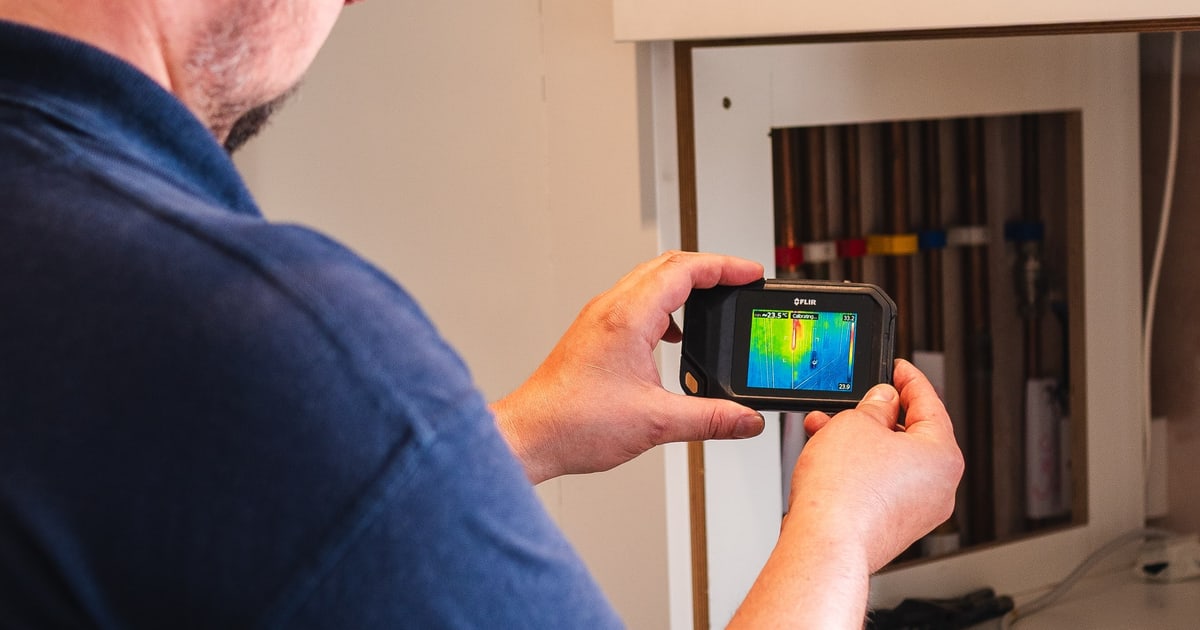
Thermal Imaging Camera. Used to trace the heating pipework routes through the walls; pipe runs were identified, but no thermal hotspots indicating a leak were visible at the surface.
Damp Meter. Deployed throughout the property to detect elevated moisture levels; readings were elevated in the back bedroom and the main bathroom.
Tracer Gas and Gas Analyser. Injected into the drained and compressed heating system; the gas analyser detected high concentrations at the rear of the lounge via an existing access hole, identifying the leak zone.
Endoscope Camera. Available for internal inspection of cavities during the investigation process.
Investigation Process
-
1Thermal Imaging Survey
Thermal imaging cameras were used to trace the heating pipework through the walls. The pipe routes were identified, but no hotspots suggesting an active leak were visible at the surface.
-
2Moisture-Meter Survey
A moisture-meter survey was carried out throughout the property. Elevated readings were found in the back bedroom and the main bathroom, indicating areas of dampness but not confirming the precise leak location.
-
3System Drained and Compressed
The heating system was fully drained down and the remaining water compressed out of the pipework in preparation for tracer gas injection.
-
4Tracer Gas Injection and Analysis
Tracer gas was injected into the heating pipework and a gas analyser was used to take readings throughout the property. High tracer-gas concentrations were detected at the rear of the lounge when the probe was placed into an existing access hole.
-
5Builder Confirmation and Access Agreement
The builder who had recently carried out work at the property confirmed the pipework installation and provided photographs. He agreed to reinstate any walls that needed to be opened to access the leak.
-
6Access Made and Leak Located
Access was made at the rear of the lounge. The leak was found to have been caused by pipework coated in a paint or tar-like substance, which prevented the pipe from sealing correctly inside the fitting.
-
7Repair Carried Out
The affected section of pipe and the faulty fitting were removed and replaced with new pipe, fitting, and inserts.
-
8System Refilled and Checked
The system was re-pressurised and refilled with central-heating inhibitor. No further leaks were detected.
Result & Outcome

The leak was located at the rear of the lounge, identified through tracer gas detection via an existing access hole. Once access was made to the wall, the cause became clear: the pipework installed during the recent building works had been coated in a paint or tar-like substance, which prevented the pipe from seating and sealing correctly inside the push-fit or compression fitting. This is an installation defect — not material failure or general wear.
The defective section of pipe and fitting were replaced, the system was re-pressurised, and central-heating inhibitor was added before the system was returned to service. No further pressure loss was detected after the repair.
For a central heating leak detection case like this, establishing liability is as important as finding the fault. The cause is directly attributable to the recent building works, and the customer has been advised to pass the invoice to the builder responsible for the defective installation. The builder has already agreed to reinstate any wall access made during the investigation.
Suspect a leak at your property?
ADI Leak Detection specialists investigate leaks like this across the UK every day. No find, no fee terms apply on qualifying jobs.