
Central Heating Leak Detection in Colchester
A central heating leak in Colchester was located using tracer gas, acoustic listening, a damp meter, and visual inspection, with central heating leak detection confirming the source behind the fridge freezer at a deteriorated push fit fitting on the heating pipework. The work was carried out by engineer Grant Corney.




The original leak detection company, est. 2011
Facts
| Location | Colchester |
|---|---|
| County | Essex |
| Leak Type | Central Heating Leak Detection |
| Property Type | Residential property |
| Detection Method | Tracer Gas, Acoustic Listening, Damp Meter, Visual Inspection |
| Outcome | Leak found behind fridge freezer at push fit fitting, repaired. |
Symptoms
The property in CO6 had a pressurised central heating system that was not performing correctly. The setup included a boiler in the utility room, a pressurised hot water tank in an upstairs bedroom, and 15 radiators throughout.
Concrete floors ran throughout, covered by a mix of tiles, wood, and carpet, making any subsurface pipework difficult to access without targeted investigation.
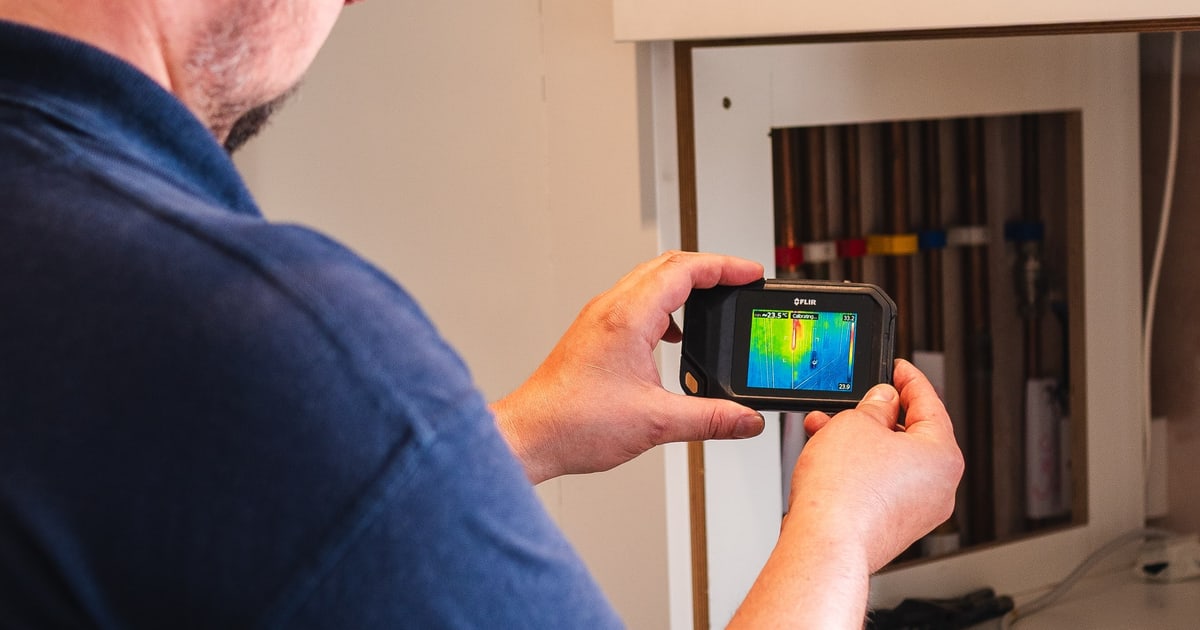
A central heating leak detection was needed to identify where the system was losing pressure or water. Prior to the visit, the heating had not been functioning well enough to use thermal imaging as a diagnostic tool, which meant the investigation would rely on other methods to trace the fault.
Visible signs of a problem were present before any testing began — skirting board behind the fridge freezer had started to pull away from the wall, consistent with sustained moisture exposure beneath or behind it.
Methods Used
With thermal imaging ruled out due to insufficient heating performance, the approach shifted to tracer gas combined with acoustic listening and damp metering. The heating system was fully drained via the two drain points — one at the front of the property, one at the rear — before tracer gas was introduced through the filling loop.
This allowed the engineer to walk the property methodically and detect where gas was escaping through the structure.
For a central heating leak detection job of this type — concrete floors, multiple radiators, and pipework in poor condition — tracer gas is well-suited because it can penetrate floor and wall materials to identify a leak zone without unnecessary exposure work. Once the gas readings pointed to a specific area and acoustic and damp meter readings confirmed moisture, the wall was opened to expose the pipework directly.
Tracer Gas. Introduced to the drained heating pipework via the filling loop, it migrated through the structure and produced a positive reading behind the fridge freezer, directing the engineer to the leak zone.
Acoustic Listening. Used in the area of the tracer gas reading to detect audible leak noise from the pipework behind the fridge freezer wall.
Damp Meter. Confirmed elevated moisture levels in both the wall surface and floor around the suspect area, corroborating the tracer gas and acoustic findings.
Visual Inspection. Identified the skirting board separation behind the fridge freezer as a physical indicator of prolonged water damage before any equipment was deployed, and confirmed the condition of the push fit fitting once the area was exposed.
Investigation Process
-
1System drained down
The heating system was fully drained using both drain points — one at the back of the property and one at the front — in preparation for tracer gas introduction.
-
2Tracer gas introduced
Tracer gas was connected to the heating pipework via the filling loop and allowed to pressurrise through the system.
-
3Positive gas reading behind fridge freezer
After a short period, tracer gas readings were detected behind the fridge freezer. The skirting board in the same area was also visibly lifting away from the wall.
-
4Acoustic and damp meter confirmation
A leak noise was audible in the area, and the damp meter returned elevated readings on both the adjacent wall and floor, confirming the leak location.
-
5Area exposed and leak found
The wall was opened along the skirting to access the pipework, revealing a leaking push fit fitting in very poor condition.
-
6Repair carried out
The failed fitting was cut out and replaced using two push fit couplers and 15mm copper pipe work; a soldered repair was not possible given the deteriorated state of the existing pipework.
-
7System cleared and refilled
Tracer gas was pushed through the full system with no further leaks detected and pressure holding. The heating system was then refilled and checked to confirm everything was working before the engineer left site.
Result & Outcome
The leak was found behind the fridge freezer, coming from a push fit fitting on the heating pipework running along the wall. The fitting had deteriorated to the point where a soldered repair was not viable, so it was cut out entirely and replaced with two push fit couplers and 15mm copper pipe work.
Following the repair, tracer gas was run through the full system again with no further leaks identified and pressure holding. The system was refilled and confirmed to be in working order before the engineer left. For a central heating leak detection job with this many radiators and concrete floors throughout, achieving a clean gas pass after repair gives a reliable confirmation that no additional faults are present in the accessible pipework.
The engineer noted that the pipework across the property is in poor condition and recommended replacing as much of the copper pipe work as possible to reduce the risk of further leaks developing at other fittings.
Suspect a leak at your property?
ADI Leak Detection specialists investigate leaks like this across the UK every day. No find, no fee terms apply on qualifying jobs.