
Central Heating Leak Detection in Bracebridge Heath
A central heating leak in Bracebridge Heath was located using thermal imaging, a damp meter, acoustic listening, and sectional isolation, with central heating leak detection confirming the source beneath the living room floor. The work was carried out by engineer Scott Hardcastle.




The original leak detection company, est. 2011
Facts
| Location | Bracebridge Heath |
|---|---|
| County | Lincolnshire |
| Leak Type | Central Heating Leak Detection |
| Property Type | Residential property |
| Detection Method | Thermal Imaging, Damp Meter, Acoustic Listening Equipment, Sectional Isolation |
| Outcome | Leak found on 15mm elbow beneath living room floor, pipe replaced. |
Symptoms

The customer at a property in LN4 noticed a recurring loss of pressure in the heating system over a 12-hour period. The oil combi boiler was repeatedly losing pressure, pointing to an active leak somewhere within the heating circuit rather than a minor system bleed issue.
On arrival, lever valves fitted to the flow and return pipes allowed the downstairs radiators to be isolated as a diagnostic step. With those radiators isolated, the system held pressure — narrowing the source to somewhere beneath the ground floor.
This kind of systematic isolation is a standard starting point in central heating leak detection, helping to establish which part of the circuit is responsible before any intrusive work begins.
The ground floor configuration meant the leak was likely concealed beneath the floor structure, with no visible signs of water at the surface to indicate exactly where it was originating.
Methods Used

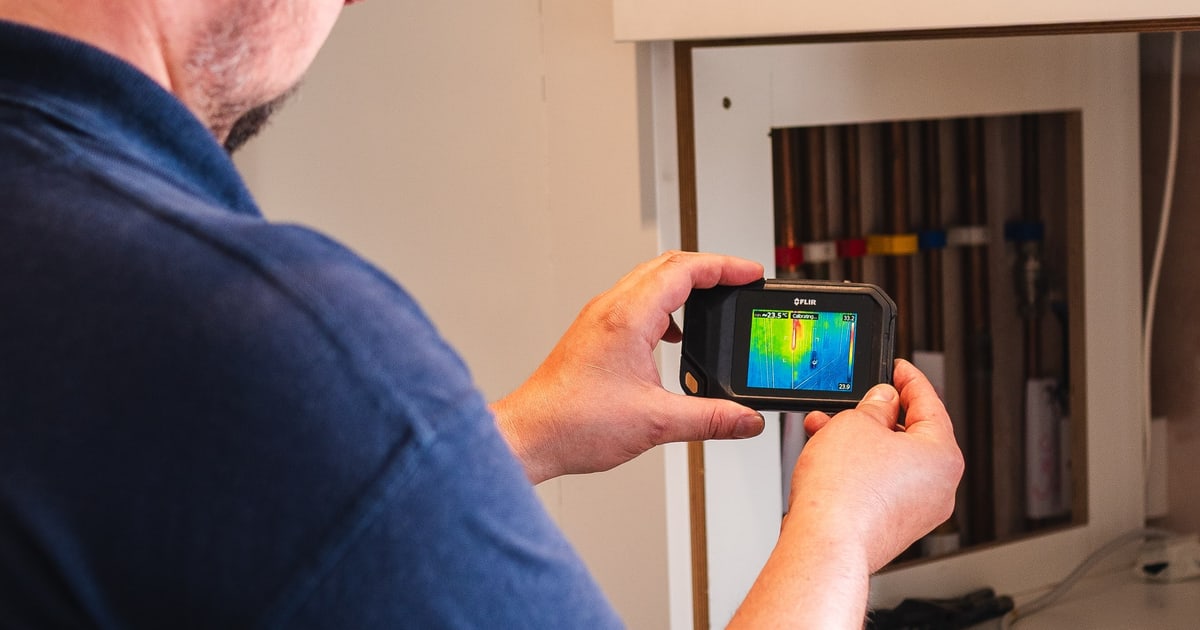
The heating system was topped up and run so that conditions were live during inspection. A thermal imaging camera was used first to trace the pipe routes, revealing that the heating pipes run along a channel at the rear of the wall.
A damp meter was then used around the living room radiator, detecting elevated moisture readings in the surrounding area — identifying it as the most likely zone of interest.
Acoustic equipment was deployed next, picking up a distinct hissing sound beneath the floorboards in that area. With the location confirmed, a section of floor was carefully cut away with the customer's permission, exposing the leak directly.
This multi-tool approach is what makes central heating leak detection effective when pipes are buried beneath floor structures — each piece of equipment progressively narrowed the search zone before any significant opening-up work was needed.
Thermal Imaging. Used to trace the route of the heating pipes through the wall structure, revealing that they run along a channel at the rear of the wall.
Damp Meter. Detected elevated moisture readings in the floor area surrounding the living room radiator, focusing the search on that zone.
Acoustic Listening Equipment. Identified a distinct hissing sound beneath the floorboards, pinpointing the leak location before any floor was opened.
Sectional Isolation. Isolation of the downstairs radiators via lever valves confirmed the leak was contained within the ground floor heating circuit.
Investigation Process
-
1System pressure noted and isolation performed
On arrival, the customer reported pressure loss over a 12-hour period. The downstairs radiators were isolated using the lever valves on the flow and return pipes — with pressure holding under isolation, the leak was confirmed as originating beneath the ground floor.
-
2System topped up and thermal imaging carried out
The heating system was topped up and run live. A thermal imaging camera was used to inspect the pipe runs, identifying that the heating pipes are routed along a channel at the rear of the wall.
-
3Damp readings taken around living room radiator
A damp meter was used to check the floor and surrounding area near the living room radiator, returning elevated moisture readings that concentrated the investigation on that location.
-
4Acoustic equipment deployed beneath the floor
Acoustic equipment detected a clear hissing sound beneath the floorboards in the identified area, confirming an active leak in that specific zone.
-
5Floor opened and leak exposed
With the customer's permission, a section of floor was carefully cut away, exposing a leak on a 15mm end-feed elbow within the heating pipework beneath the living room.
-
6Leaking section cut out and replaced
The faulty elbow and surrounding pipe section were cut out and replaced using a short length of 15mm copper pipe and the necessary fittings.
Result & Outcome

The leak was found on a 15mm end-feed elbow in the heating pipework beneath the living room floor. The faulty section was cut out and replaced with a short length of 15mm copper pipe and associated fittings. The repair was carried out directly at the source without any wider disruption to the heating circuit.
The channel in which the pipes are routed had taken on water and will need adequate time to dry out before any reinstatement work is done. The customer has been advised to arrange for a builder to re-board the floor and refit the laminate once drying is complete.
For any central heating leak detection job where pipes are buried beneath a floor, locating the fault precisely before cutting is essential — it limits the area that needs to be opened and keeps reinstatement work to a minimum. In this case, the combination of thermal imaging, damp metering, and acoustic equipment meant only a single targeted section of floor needed to be removed.
Suspect a leak at your property?
ADI Leak Detection specialists investigate leaks like this across the UK every day. No find, no fee terms apply on qualifying jobs.