
Water Mains Leak Detection in Wallasey
A water mains leak in Wallasey was located underground in the back garden using acoustic listening, a damp meter, thermal imaging, pressure testing, and tracer gas, completing water mains leak detection that also revealed escaping water had tracked beneath a concrete slab and toward an internal wall. Found by engineer Paul Hope.




The original leak detection company, est. 2011
Facts
| Location | Wallasey |
|---|---|
| County | Merseyside |
| Leak Type | Water Mains Leak Detection |
| Property Type | Residential property |
| Detection Method | Acoustic Listening Equipment, Damp Meter, Thermal Imaging, Pressure Testing, Tracer Gas |
| Outcome | Underground mains leak located in back garden, excavated and repaired. |
Symptoms
A property in CH45 had a suspected water mains leak, with the meter recording a continuous usage of 25 litres per hour — indicating a steady loss even when no water was being used inside the property. The plumbing layout was assessed alongside the meter reading to begin forming a picture of where the leak might be originating.
Damp readings on the walls of the dining room and bathroom pointed to water ingress within the structure, though the cause and route of the water were not immediately clear. A water mains leak detection job of this nature — with both meter evidence and internal damp present — required a methodical approach to trace the leak accurately before any excavation could be justified.
The combination of an active meter loss and elevated moisture levels across two rooms suggested that water had been escaping underground for some time and had begun to track toward the building.
Methods Used
The investigation began with an acoustic survey following assessment of the meter and internal plumbing layout. A strong leak profile was identified at the stopcock in the downstairs bathroom, which directed the focus of subsequent testing.
A protimeter was used to measure moisture levels, returning maximum readings on the walls of both the dining room and bathroom.
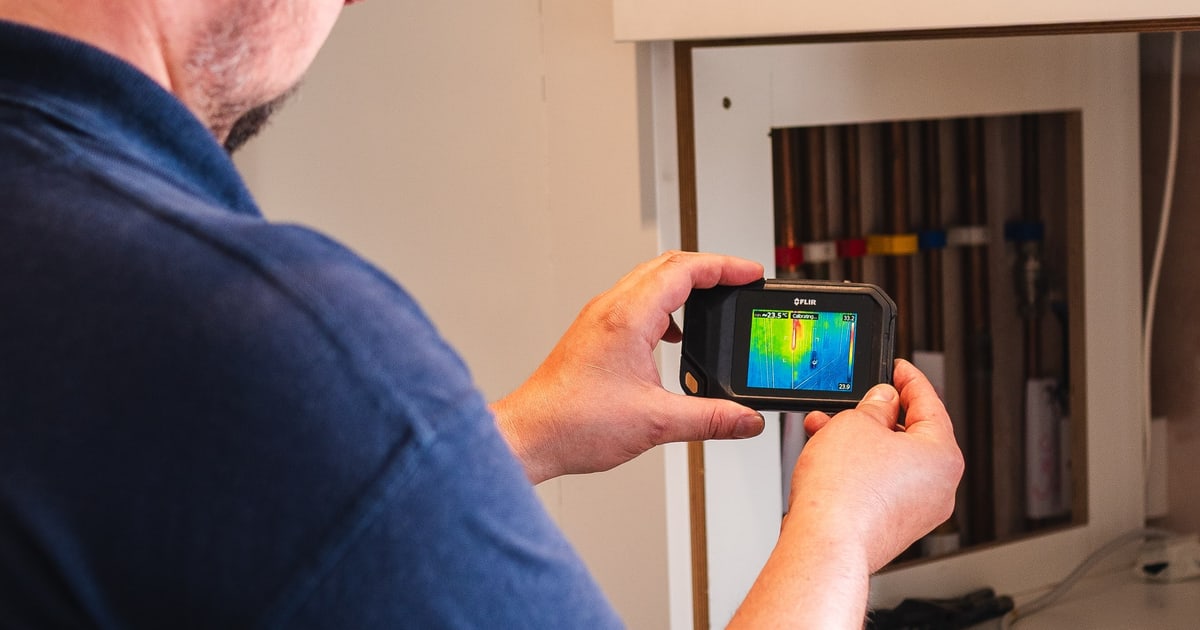
Thermography was then used in an attempt to trace the cold water pipe route through the bathroom, but no usable images were captured — likely due to the depth of the pipes or their position behind the bath or boxing. A pressure test using a compressor set to 3 bar confirmed an active leak when pressure dropped to zero within 20 minutes.
Tracer gas was then introduced into the pipework, and gas was detected escaping in the back garden — a standard and reliable method in water mains leak detection for pinpointing underground leaks beneath hard or soft ground.
Acoustic Listening Equipment. Used to survey the pipework and identify a strong leak profile at the stopcock in the downstairs bathroom.
Damp Meter. A protimeter was used to measure moisture levels on the walls of the dining room and bathroom, returning maximum readings in both locations.
Thermal Imaging. Employed to trace the cold water pipe route through the bathroom, though no images were captured, likely due to pipe depth or positioning behind the bath or boxing.
Pressure Testing. A compressor was used to pressurise the pipework to 3 bar; pressure dropped to zero within 20 minutes, confirming an active leak in the system.
Tracer Gas. Introduced into the pipework after the pressure test failed; gas was detected escaping in the back garden, pinpointing the leak location underground.
Investigation Process
-
1Meter assessment and plumbing survey
The meter was observed recording 25 litres per hour of continuous usage. The internal plumbing layout was assessed to inform the direction of the investigation.
-
2Acoustic survey
An acoustic survey was conducted across the property. A strong leak profile was recorded at the stopcock in the downstairs bathroom.
-
3Damp meter readings
A protimeter survey was carried out on the internal walls. Maximum moisture levels were recorded on the walls of both the dining room and bathroom.
-
4Thermal imaging attempted
The cold taps in the bathroom were opened and thermography was used to attempt to trace the pipe route. No images were captured, possibly due to pipe depth or their position behind the bath or boxing.
-
5Pressure test
The system was pressurised to 3 bar using a compressor. Pressure dropped to zero within 20 minutes, confirming an active leak.
-
6Tracer gas detection
Tracer gas was introduced into the pipework and detected escaping in the back garden, confirming the underground leak location.
-
7Excavation and pipe exposure
At the customer's request, the ground in the back garden was excavated and the leaking pipe was exposed. It was observed that escaping water had washed away ground beneath the concrete and had tracked toward the dining room wall, explaining the damp readings inside.
-
8Repair carried out
The damaged section of pipe was removed. A Philmac transitional coupling and stop end were used to carry out the repair.
-
9Repair tested
The repaired pipework was pressure tested on the day and showed no further loss of pressure, confirming the repair was sound.
Result & Outcome
The leak was located underground in the back garden, confirmed by tracer gas detection following a failed pressure test. Excavation exposed the damaged pipe and revealed that the escaping water had washed away ground beneath the concrete slab and had tracked toward the dining room wall — directly accounting for the maximum damp readings recorded inside the property.
The damaged section of pipe was removed and repaired using a Philmac transitional coupling and stop end. The repair was pressure tested on the same day and held without any further loss of pressure, confirming a complete fix.
For water mains leak detection cases where internal damp is present alongside an underground loss, tracing the route of water migration is as important as locating the leak itself — and in this case, it provided a clear explanation for the internal damage. The damp in the dining room and bathroom walls may dry out over time, but a specialist damp company should assess the extent of the damage before any remedial work is undertaken.
Suspect a leak at your property?
ADI Leak Detection specialists investigate leaks like this across the UK every day. No find, no fee terms apply on qualifying jobs.