
Underground Water Mains Leak Detection in Witney
A water mains leak in Witney was located using acoustic listening, a damp meter, pressure testing, thermal imaging, and tracer gas, carrying out water mains leak detection beneath a kitchen floor to pinpoint a failed pipe buried under tiles, chipboard, and insulation. The work was completed by engineer Mark Pavitt.




The original leak detection company, est. 2011
Facts
| Location | Witney |
|---|---|
| County | Oxfordshire |
| Leak Type | Water Mains Leak Detection |
| Property Type | Residential property |
| Detection Method | Acoustic Listening Equipment, Damp Meter, Pressure Testing, Thermal Imaging, Tracer Gas |
| Outcome | Mains supply leak found and repaired beneath kitchen floor. |
Symptoms

A property in OX29 had a confirmed leak on the mains supply. The leak was active enough that the mains supply had to be isolated prior to the engineer's arrival, leaving the property without water until the source could be traced and accessed.
The location of the fault was not immediately obvious. There were no exposed pipework runs to inspect, meaning the leak was concealed somewhere beneath the kitchen floor — a situation that required a structured water mains leak detection approach to establish exactly where the failure had occurred before any opening up of the floor could be justified.
Two blown tiles near the kitchen sink unit were visible at the surface, and damp meter readings in the area were at maximum — both consistent with a prolonged, active leak beneath the floor structure.
Methods Used

On arrival, the engineer reinstated the mains supply to allow active testing to begin. Acoustic testing was carried out internally and identified an irregularity beneath the floor directly in front of the kitchen sink unit.
Damp meter readings across the area returned maximum results, supporting the acoustic finding. To narrow the leak location further, an air compressor was connected to the mains supply and 4.0 bar of continuous compressed air was introduced to the pipework to help localise the fault under pressure.
A tile was lifted to reveal wet wooden flooring beneath, with further maximum damp meter readings confirming the leak path. A section of chipboard was then removed, exposing a thick layer of insulation which was cleared to reach the concrete sub-floor level.
This methodical approach — standard in a water mains leak detection investigation where the leak is concealed beneath multiple layers — allowed the engineer to reach the failed pipework without unnecessary damage.
Acoustic Listening Equipment. Used internally to detect an acoustic irregularity beneath the kitchen floor in front of the sink unit, directing the investigation to a specific area.
Damp Meter. Returned maximum readings throughout the kitchen floor area and confirmed wet conditions below the tile and chipboard layers as each was removed.
Pressure Testing. An air compressor was connected to the mains supply and 4.0 bar of continuous compressed air applied to localise the leak under controlled pressure, and then used again on completion over one hour to confirm no pressure drop after the repair.
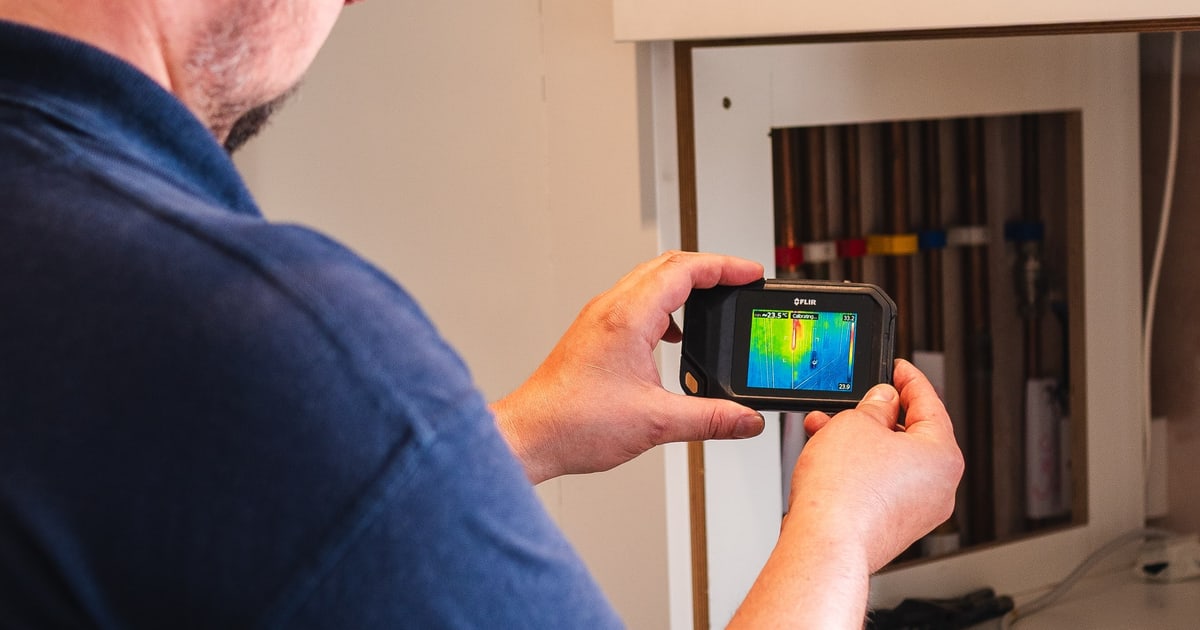
Thermal Imaging. Deployed as part of the investigation to assist in identifying temperature variation consistent with moisture or leak activity beneath the floor surfaces.
Tracer Gas. Listed as part of the detection equipment available for this water mains leak detection job.
Investigation Process
-
1Mains supply reinstated
On arrival, the mains supply was reinstated to allow active acoustic and pressure testing to proceed.
-
2Acoustic test carried out
An acoustic test was conducted internally across the kitchen area. An irregularity was detected beneath the floor directly in front of the kitchen sink unit.
-
3Damp meter readings taken
Damp meter testing returned maximum readings throughout the area. Two blown tiles were also noted, consistent with prolonged moisture beneath the floor.
-
4Compressed air applied to mains supply
An air compressor was connected to the mains supply and 4.0 bar of continuous compressed air introduced to localise the leak area under pressure.
-
5Tile removed, wet flooring found
A tile was lifted to reveal wooden flooring below that was wet, with further maximum damp meter readings confirming the moisture path.
-
6Chipboard and insulation removed
A section of chipboard flooring was removed, followed by a thick layer of insulation beneath it, eventually exposing the concrete sub-floor level and the failed pipework above it.
-
7Failed pipe identified and replaced
A failed 15mm copper mains supply was found on top of the concrete. The failed section was renewed and lagged accordingly.
-
8Completion test passed
The repaired pipework was tested at 4.0 bar of compressed air held for one hour. No pressure drop was recorded — all passed.
-
9Customer advised on next steps
The customer was advised to contact their insurance company to arrange remedial works, including professionally drying all affected areas as necessary.
Result & Outcome

The leak was located on a 15mm copper mains supply pipe sitting on top of the concrete sub-floor, beneath the kitchen floor in front of the sink unit. The pipe had failed and was accessed by lifting a tile, removing a section of chipboard, and clearing a thick layer of insulation. The failed section of pipe was renewed and lagged before the floor was reinstated.
The repair was verified using 4.0 bar of compressed air held over one hour with no recorded pressure drop, confirming the integrity of the new pipework. For a water mains leak detection job like this — where the fault is hidden beneath multiple floor layers — pressure testing on completion is the definitive confirmation that the source has been fully resolved.
The customer was advised to forward the engineer's report to their insurance company to arrange professional drying of all affected areas and any further remedial works required as a result of the leak.
Suspect a leak at your property?
ADI Leak Detection specialists investigate leaks like this across the UK every day. No find, no fee terms apply on qualifying jobs.