
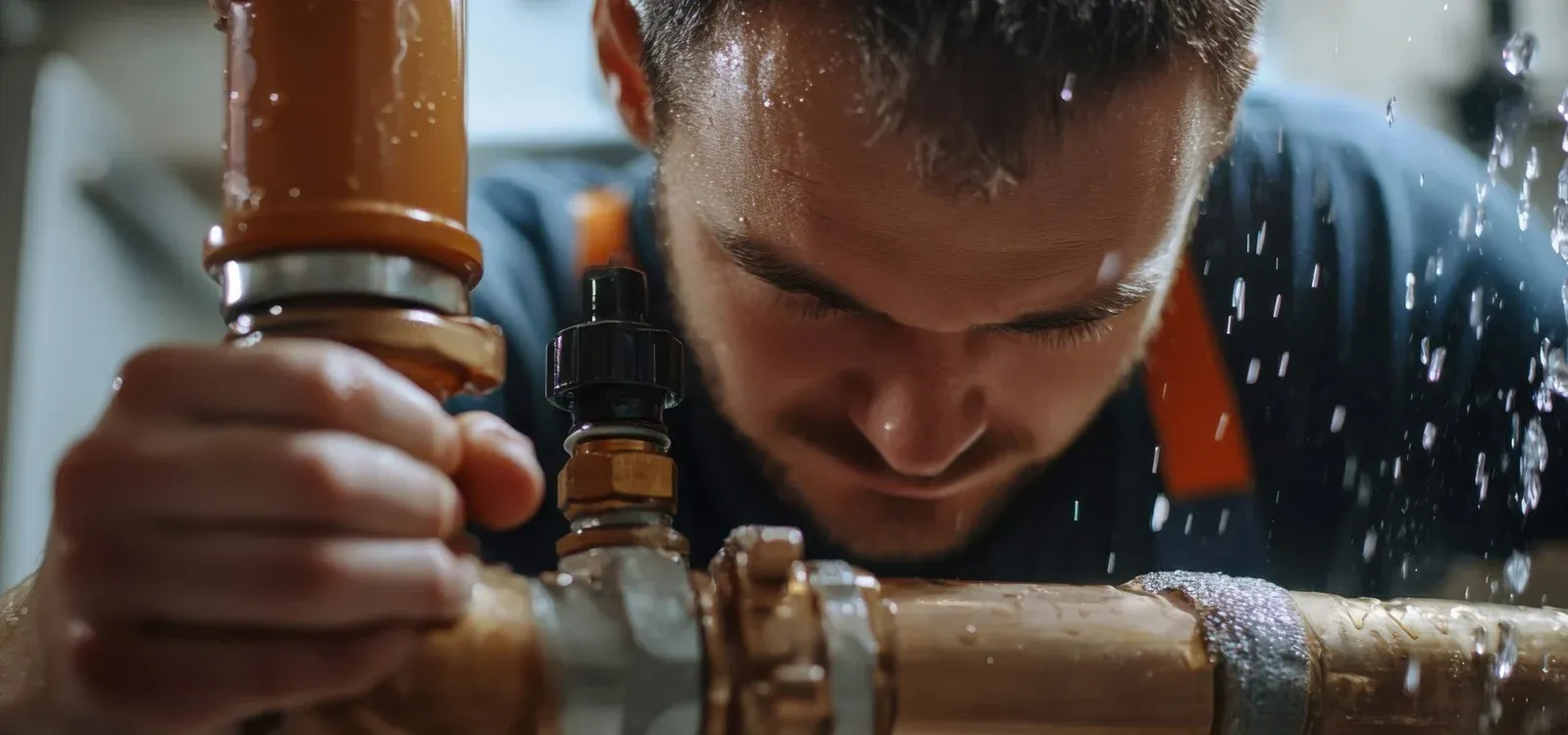
Internal Cold Mains Leak Detection in Lowestoft
An internal cold mains leak in Lowestoft was located beneath a kitchen floor using pressure testing, tracer gas, acoustic correlation, visual inspection, and an endoscope camera, with water mains leak detection confirming a concealed pipe connection that left no trace at the surface. The work was carried out by engineer Ferenc Gulyas.
 CIPHE accredited
 WIAPS member


Facts
| Location | Lowestoft |
|---|---|
| County | Suffolk |
| Leak Type | Water Mains Leak Detection |
| Property Type | Residential property |
| Detection Method | Visual Inspection, Pressure Testing, Tracer Gas, Acoustic Correlation, Endoscope Camera |
| Outcome | Leak found beneath kitchen floor on MDPE connection, repaired. |
Symptoms
The occupant of a property in NR32 had been receiving unexpectedly high water bills despite no obvious increase in water use. With no internal stopcock fitted inside the property and the water meter located in the driveway, there was no simple way to isolate the supply or confirm whether water was passing through the meter continuously.
The system comprised a gas boiler in the kitchen, an indirect vented hot water cylinder, a header tank in the loft, two bathrooms and a kitchen — none of which showed any visible signs of a leak on initial inspection.
The absence of an internal stopcock made early isolation checks impractical, and there was no visible water damage anywhere inside the property to indicate where a leak might be occurring. The situation called for a structured internal leak detection process to determine whether the problem lay within the internal cold water pipework and, if so, to locate it precisely enough to allow targeted intervention.
Internal leak detection in a property of this layout — with buried pipework running beneath a floor extension — requires a layered approach. Visual checks and simple isolation are not sufficient when there is no surface evidence, which is why pressure testing and specialist equipment were required to confirm and then pinpoint the fault.
Methods Used
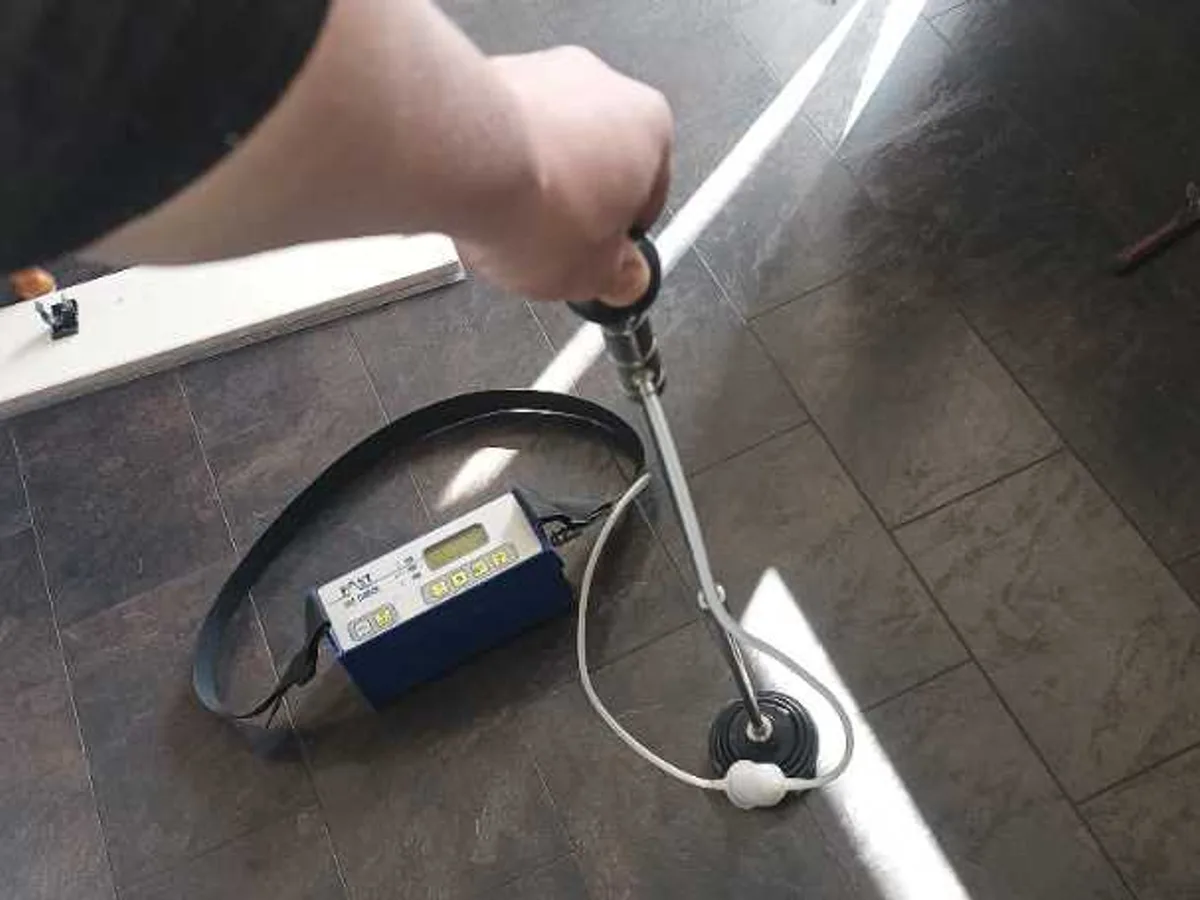
The investigation followed a staged approach, beginning with a full visual inspection of the property and checks of all visible plumbing components — taps, toilets, the loft ball valve, and the cylinder. None of these yielded any obvious fault.
A pressure test was then applied to the internal cold water pipework, which confirmed a loss of pressure and indicated that a leak existed somewhere within the system. This moved the job from suspicion to confirmed fault and justified the use of more targeted equipment.
Tracer gas was introduced into the pipework and a gas detector was used to identify a probable leak location in the kitchen area — specifically towards the middle of the kitchen floor. Acoustic equipment was then deployed to refine this further, pinpointing the leak beneath the kitchen floor.
Once the customer was informed, the laminate and chipboard floor was lifted, and an endoscope camera was passed through the exposed pipework to check for any additional fittings or undisclosed stopcocks hidden beneath the floor before any repair work began. This is a thorough but targeted sequence typical of internal leak detection work where the fault is non-visible and below a finished floor surface.
Visual Inspection. Used to check all accessible plumbing components — loft ball valve, taps, toilets, cylinder and pipework — before any intrusive investigation was undertaken.
Pressure Testing. Applied to the internal cold water pipework to confirm that a leak was actively present within the system, even with no surface evidence visible.
Tracer Gas. Introduced into the pipework and detected at surface level to identify the kitchen area — and specifically the middle of the kitchen floor — as the probable leak zone.
Acoustic Correlation. Used after tracer gas to reduce the search area and pinpoint the exact location of the leak beneath the kitchen floor.
Endoscope Camera. Passed through the exposed pipework under the floor to confirm there were no additional fittings, junctions or hidden stopcocks before the repair was made.
Investigation Process
-
1Visual inspection on arrival
A full visual inspection of the property was carried out, covering all accessible plumbing: loft ball valve, taps, toilets, kitchen boiler, hot water cylinder, and pipework. No visible evidence of a leak was found.
-
2Pressure test applied to cold water pipework
A pressure test was carried out on the internal cold water pipework. The test indicated a loss of pressure, confirming a leak was present somewhere within the system.
-
3Tracer gas investigation
Tracer gas was introduced into the pipework and a detector was used to trace its escape point. The detector identified a probable leak location in the kitchen area, towards the middle of the kitchen floor.
-
4Acoustic equipment deployed
Acoustic equipment was used to narrow the location further. It pinpointed the leak beneath the kitchen floor, confirming the tracer gas finding with greater precision.
-
5Customer informed and floor lifted
The customer was briefed on the findings and the proposed course of action. The laminate and chipboard floor was then lifted to expose the pipework below.
-
6Endoscope camera check
Before any repair work was attempted, an endoscope camera was used to inspect the pipework running beneath the floor. This confirmed there were no other fittings, junctions or hidden stopcocks present.
-
7Leak identified and repaired
A leak was found on a 25mm MDPE connection where the external mains pipework enters the property through ducting beneath the kitchen floor. The leaking section was replaced using Philmac fittings, a 25mm to 15mm reducer, a push-fit coupling, 15mm copper pipework, and pipe insulation.
-
8Retest carried out
Following the repair, the pipework was retested under pressure. The retest passed, confirming no leak remained. Water pressure was recorded at 50psi.
Result & Outcome

The leak was located on a 25mm MDPE connection beneath the kitchen floor, at the point where the external mains supply enters the property through a duct running under the kitchen extension. This was a concealed joint with no surface evidence of failure — only accessible through the combination of pressure testing, tracer gas and acoustic equipment that characterises a thorough internal leak detection investigation.
The leaking connection was replaced with Philmac compression fittings, a 25mm to 15mm 3G reducer, a push-fit straight coupling, 15mm copper pipework and pipe insulation. The floor was reopened only where necessary. A retest confirmed no residual leak, with system pressure holding at 50psi.
For the customer, this outcome means the source of the unexplained high water bills has been identified and repaired. The repair was made on the same visit, and the recommendation to contact a claims management company has been provided to support any insurance or compensation process arising from the leak.
Suspect a leak at your property?
ADI Leak Detection specialists investigate leaks like this across the UK every day. No find, no fee terms apply on qualifying jobs.