
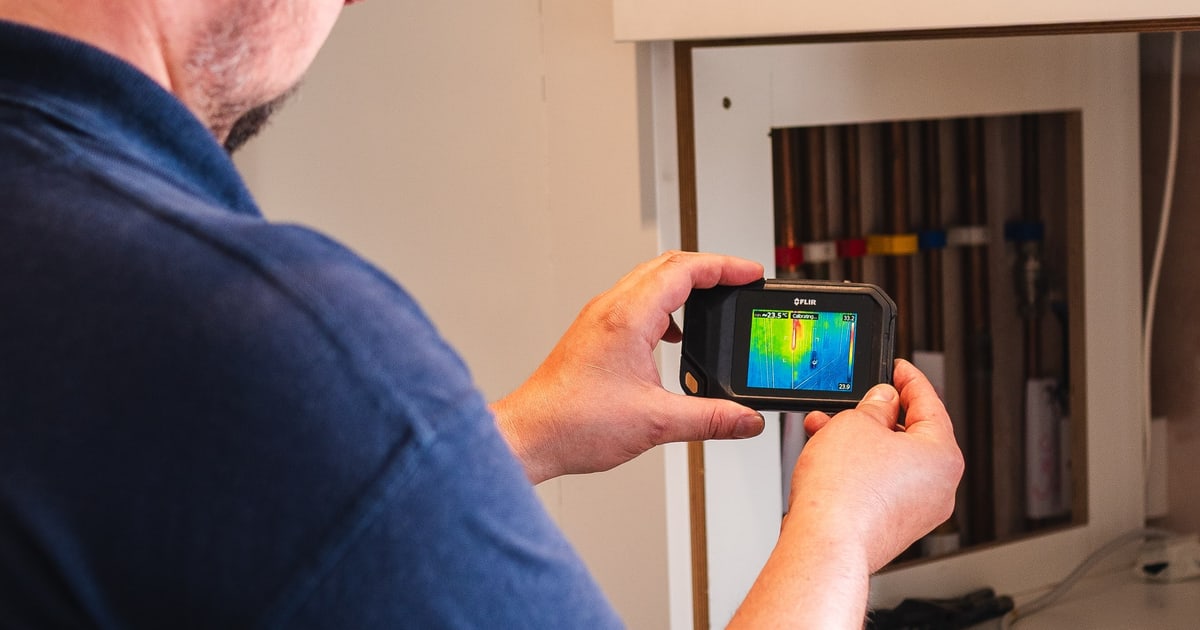
Underground Water Mains Leak Detection in Derby
A underground mains leak in Derby was located using pressure testing, tracer gas, acoustic listening, and flow metering, with water mains leak detection confirming the fault at the transfer couplers on the incoming mains supply at the front of the property. Found by engineer Phillip Whitehouse.




The original leak detection company, est. 2011
Facts
| Location | Derby |
|---|---|
| County | Derbyshire |
| Leak Type | Water Mains Leak Detection |
| Property Type | Residential property |
| Detection Method | Pressure Testing, Tracer Gas, Acoustic Listening Equipment, Flow Metering |
| Outcome | Mains leak found at transfer couplers, front of property, repaired. |
Symptoms
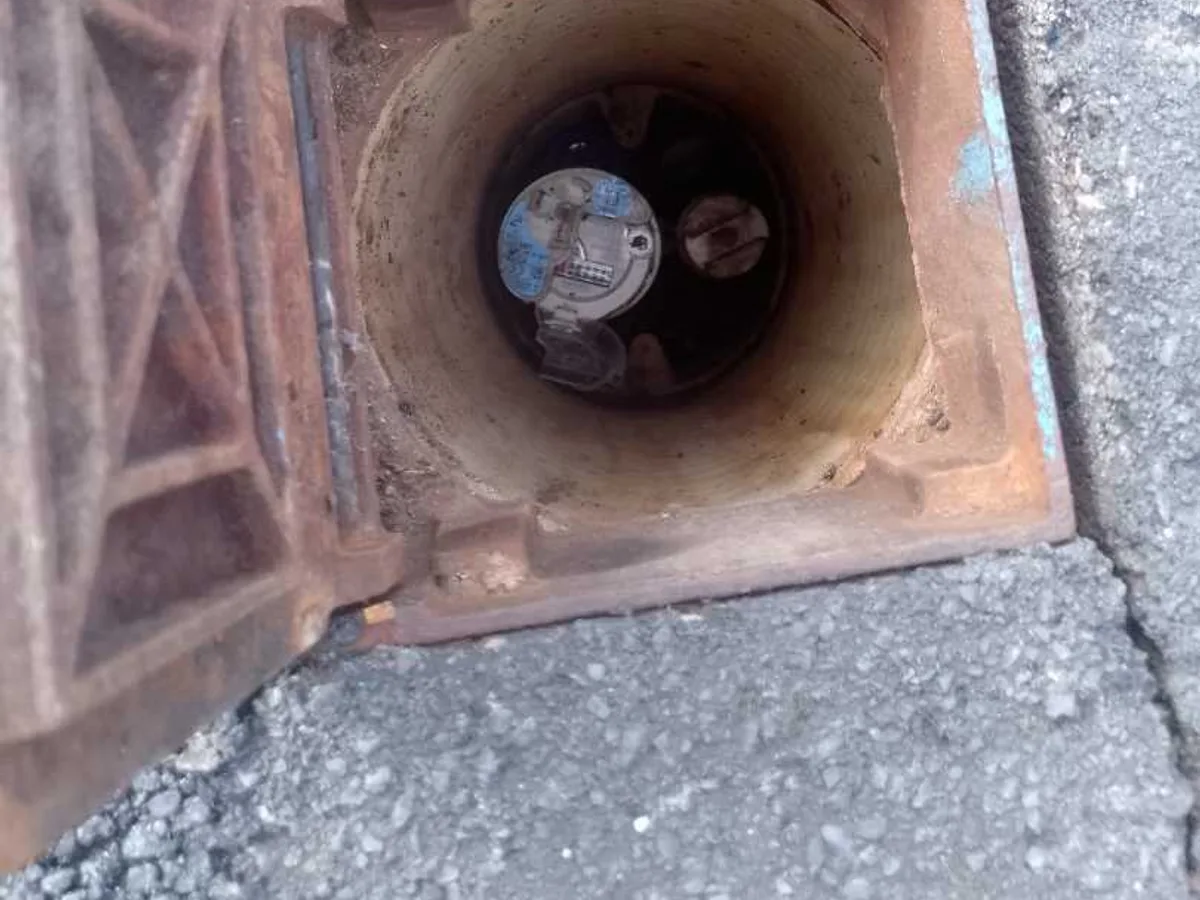
The customer at a semi-detached bungalow in DE23 had noticed an unexplained rise in water usage. The property is served by a combi boiler, with the main stop tap positioned at the end of the driveway.
Unusually high consumption was the presenting concern, pointing to a possible loss somewhere on the incoming mains supply.
High water usage of this kind — without any obvious visible leak inside the property — is a consistent indicator of an underground mains leak. In water mains leak detection, these losses often go unnoticed for extended periods because the escaping water disperses into the ground rather than appearing at a surface.
The absence of any internal sign made it necessary to investigate the external incoming supply systematically.
Because the stop tap is located at the front of the property, the incoming mains pipework runs beneath the driveway area, making a ground-level visual inspection insufficient. A structured leak detection process was required to confirm whether a leak existed, identify its location, and allow a targeted repair.
Methods Used

The investigation followed a logical sequence, starting with a meter test to confirm that a leak was present on the incoming mains. Once confirmed, pressure testing equipment was connected to the incoming mains pipework.
The system was unable to hold pressure, which ruled out any possibility that the high usage was an anomaly or meter error, and confirmed an active loss on the supply pipe.
With pressure loss confirmed, tracer gas was introduced into the pipework and acoustic detection equipment was deployed across the front of the property. Both methods independently indicated the same suspect area at the front of the property, giving a high-confidence target location before any excavation was undertaken.
This combined approach is standard practice in water mains leak detection where the pipe runs underground and a precise pinpoint is essential to avoid unnecessary disruption.
Pressure Testing. Connected to the incoming mains to confirm the system could not hold pressure, establishing that a live leak was present on the supply pipe.
Tracer Gas. Introduced into the pressurised mains pipework to migrate through the ground and indicate the surface position of the leak at the front of the property.
Acoustic Listening Equipment. Used across the front of the property to detect the sound signature of escaping water, corroborating the tracer gas findings and confirming the suspect leak area.
Flow Metering. Applied as part of the initial meter test to confirm water was being lost on the incoming mains supply with no water in use inside the property.
Investigation Process
-
1Arrival and initial assessment
The property was identified as a semi-detached bungalow with a combi boiler. The main stop tap location at the end of the driveway was noted, and the customer's reported high water usage was taken as the starting point for investigation.
-
2Meter test
A meter test was conducted, which confirmed an active leak on the incoming mains supply.
-
3Pressure testing
Pressure testing equipment was connected to the incoming mains pipework. The system was unable to hold pressure, confirming a live loss on the supply pipe.
-
4Tracer gas introduction
Tracer gas was introduced into the mains pipework. Detection at the surface indicated the front of the property as the suspected leak area.
-
5Acoustic detection
Acoustic listening equipment was deployed across the front of the property. Results aligned with the tracer gas findings, strongly indicating the same location.
-
6Excavation and leak found
Access was gained to the indicated area at the front of the property, where the leak was found to be at the transfer couplers on the incoming mains pipe.
-
7Repair carried out
The faulty transfer couplers were replaced with new ones, and a new section of pipe matching the original mains pipe size was installed between them.
-
8Post-repair pressure test
The repaired system was pressure tested at 3.3 bar. A drop of 0.01 bar was recorded over 8 minutes, which was determined not to originate from the repaired section.
Result & Outcome

The leak was located at the transfer couplers on the incoming mains supply at the front of the property. Both tracer gas and acoustic detection had independently identified this area, and excavation confirmed the finding precisely. The faulty couplers were replaced with new units and a new section of pipe, matching the original mains pipe size, was fitted between them.
Following the repair, the system was pressure tested at 3.3 bar. A minor pressure drop of 0.01 bar was recorded over an 8-minute test period. This residual loss was assessed and determined not to originate from the newly repaired section, indicating that a separate minor issue may exist elsewhere on the supply — most likely on the water authority's section of the main.
For water mains leak detection jobs where a residual pressure loss is identified after a confirmed repair, the appropriate next step is for the customer to notify the local water authority. This has been recommended so they can investigate the integrity of their section of the supply pipe. The repair has addressed the identified defect, and the customer now has clear, evidence-based information to pass on to the water authority.
Suspect a leak at your property?
ADI Leak Detection specialists investigate leaks like this across the UK every day. No find, no fee terms apply on qualifying jobs.