
Internal Cold Water Leak Detection in Wath upon Dearne
A cold mains leak in Wath upon Dearne was located using thermal imaging, acoustic listening, damp meter readings, and pressure testing as part of water mains leak detection carried out on the internal supply pipework. Found by engineer Robert Gires.




The original leak detection company, est. 2011
Facts
| Location | Wath upon Dearne |
|---|---|
| County | South Yorkshire |
| Leak Type | Water Mains Leak Detection |
| Property Type | Residential property |
| Detection Method | Thermal Imaging, Acoustic Listening Equipment, Damp Meter, Pressure Testing |
| Outcome | Two cold water leaks located and repaired beneath kitchen floor. |
Symptoms
The scale of the leak was serious enough that pressure testing the system proved difficult — the loss rate was simply too high to hold pressure. With a care home environment to consider, identifying and resolving the leak quickly was essential.
An internal leak detection was required to map the pipework, locate the source, and establish the extent of the damage.
Methods Used

With pressure testing unable to isolate the source, acoustic equipment was deployed. Acoustic evidence was picked up at the front of the dishwasher, confirming that location as the primary leak point.
The internal leak detection process then moved into the repair phase, with floor coverings removed to expose the pipework and confirm the findings on the ground.
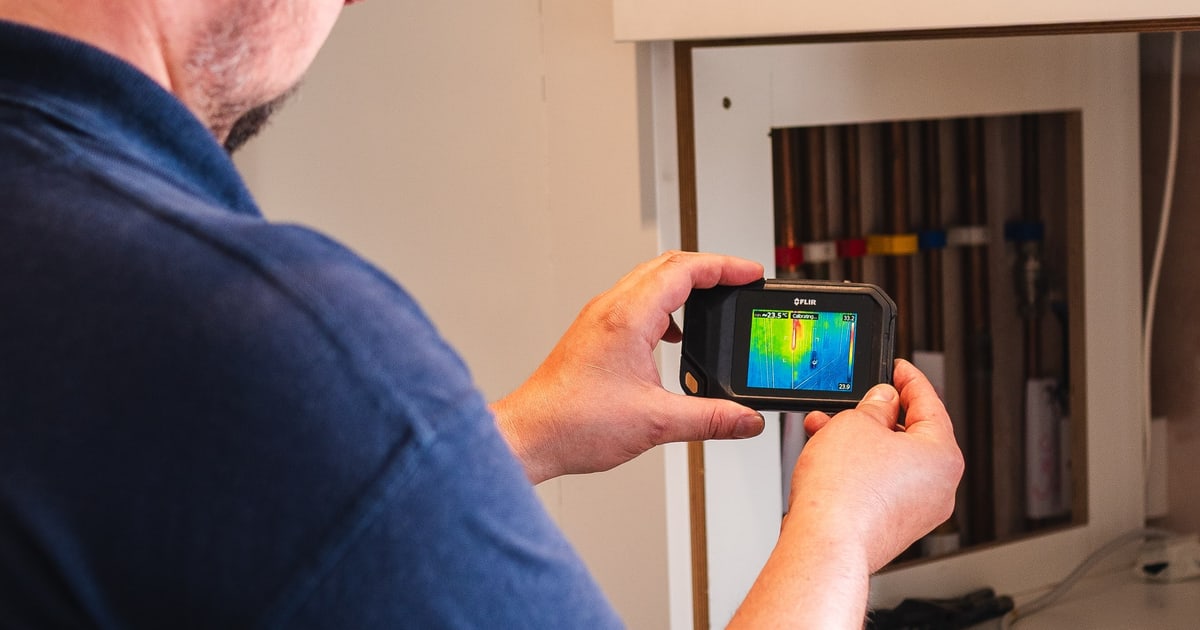
Thermal Imaging. Used to map the cold water pipework layout beneath the kitchen floor and identify two suspect areas — one in front of the dishwasher and one beside the fridge freezer.
Acoustic Listening Equipment. Deployed after pressure testing proved unviable due to leak volume; picked up acoustic evidence confirming the leak at the front of the dishwasher.
Damp Meter. Used to assess the extent of moisture saturation in the kitchen floor once the vinyl was lifted and the wet subfloor was exposed.
Pressure Testing. Attempted to isolate and confirm the leak location but could not be sustained due to the severity of the water loss; used again after repairs to retest the full pipework.
Investigation Process
-
1Initial Assessment
The property was assessed and the water meter confirmed to be spinning rapidly. The kitchen floor was visibly wet, indicating an active and significant internal cold water leak.
-
2Thermal Imaging Survey
Thermal imaging was carried out across the kitchen floor to map the cold water pipework. Two cold pipes were identified: one in front of the dishwasher and one next to the fridge freezer.
-
3Pressure Test Attempted
A pressure test was attempted on the cold water pipework, but the leak was too large to allow pressure to build or hold, making isolation by this method alone impossible.
-
4Acoustic Investigation
Acoustic equipment was used across the suspect areas identified by thermal imaging. A clear acoustic signal was detected at the front of the dishwasher, confirming this as a leak location.
-
5Floor Opened — First Leak
The vinyl floor covering was removed, revealing a fully saturated subfloor. The copper pipe beneath the floor at the front of the dishwasher was found to be leaking and was repaired.
-
6Second Leak Identified
After the first repair, pressure testing still could not be held, confirming a second leak at the location beside the fridge freezer identified by thermal imaging. This leak was traced to a faulty fitting.
-
7Second Repair Carried Out
The faulty fitting next to the fridge freezer was replaced. The pipe in that section was also replaced and the full pipework system was retested and confirmed holding pressure.
-
8Dishwasher Disconnected
The dishwasher was found to have damaged pipework consistent with rodent activity — mouse or rat damage was identified — and was disconnected as a result.
Result & Outcome

Going forward, it is recommended that the internal stopcock be replaced and a pressure reduction valve be installed on the cold water supply, as high water pressure is considered a contributing factor to the damage. The kitchen floor will need to be fully replaced due to the extent of water damage sustained. This internal leak detection job highlights how a single undetected pipe failure in a high-pressure system can cause cascading damage across a large commercial property.
Suspect a leak at your property?
ADI Leak Detection specialists investigate leaks like this across the UK every day. No find, no fee terms apply on qualifying jobs.