
Internal Cold Mains Leak Detection in Cardiff
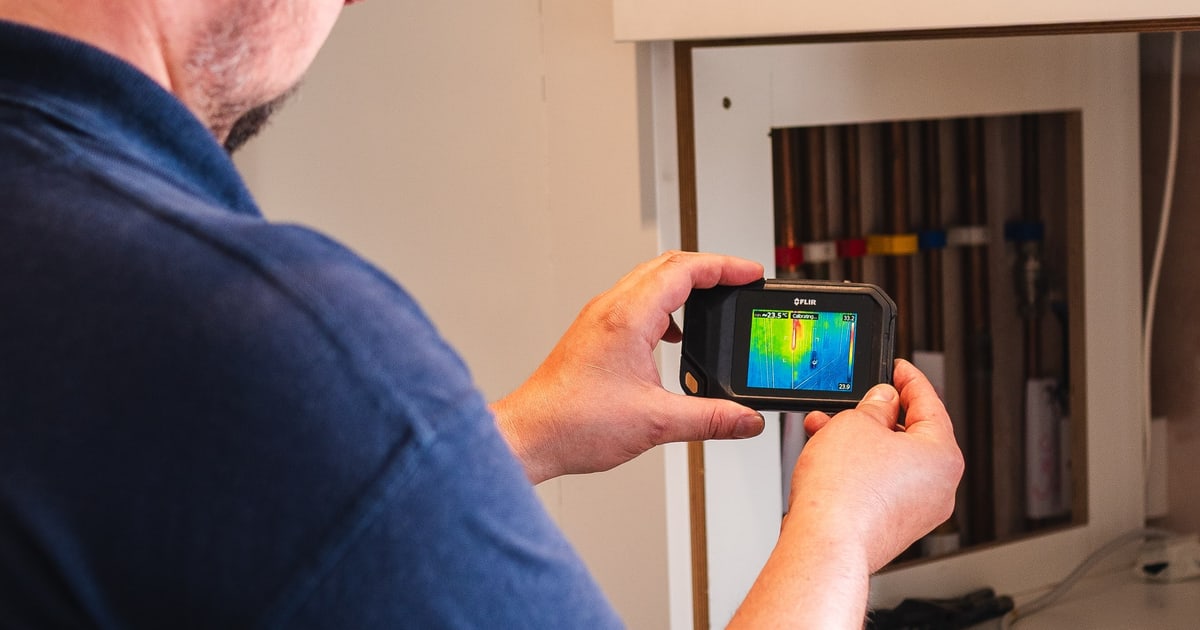
A cold mains leak in Cardiff was located using pressure testing, tracer gas, a damp meter, and visual inspection, with water mains leak detection confirming the fault beneath the hallway floor where the supply pipe had failed at a transition coupling. The work was carried out by engineer Richard Poberezniuk.




The original leak detection company, est. 2011
Facts
| Location | Cardiff |
|---|---|
| County | South Glamorgan |
| Leak Type | Water Mains Leak Detection |
| Property Type | Residential property |
| Detection Method | Pressure Testing, Tracer Gas, Damp Meter, Visual Inspection |
| Outcome | Leak found in lead supply pipe beneath hallway floor, repaired. |
Symptoms
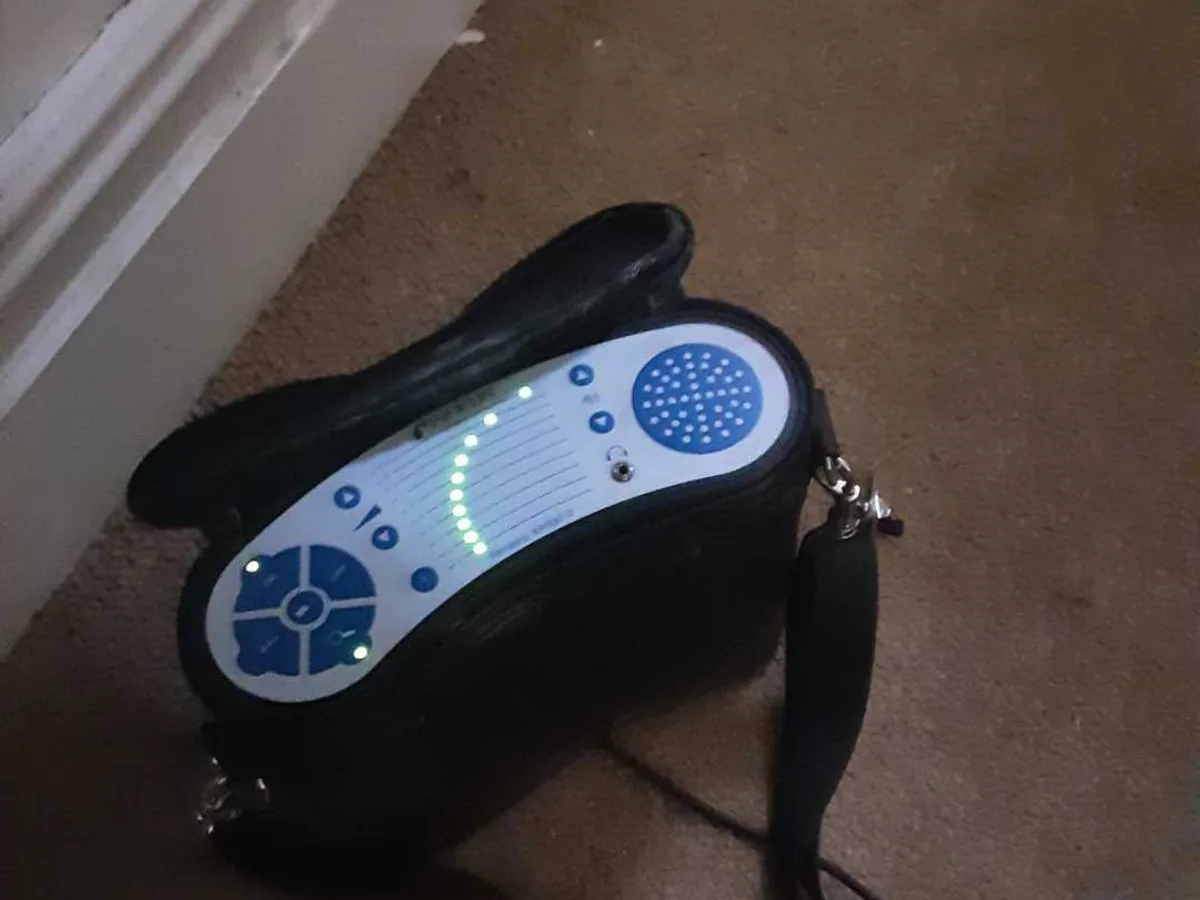
The owner of a property in CF5 had noticed flow registering at the water meter even with the internal stopcock turned off — a clear sign that water was escaping somewhere on the supply pipe. The combination boiler serving heating and hot water had not required any topping up in recent months, which ruled out the heating system as a source and pointed firmly toward the cold mains supply as the origin of the loss.
With the stopcock closed and flow still present at the meter, the leak had to be on the section of pipework between the meter and the stopcock — either on the external mains run or somewhere along the internal cold mains. Internal leak detection was the appropriate response to establish exactly where the water was being lost and whether the problem lay inside or outside the building.
Left unaddressed, a leak of this kind continues to run regardless of water use inside the property, accumulating waste and — depending on location — potentially causing ground movement or damage to the fabric of the building over time.
Methods Used

The investigation began with a flow test at the meter to confirm the leak was active, followed by sequential pressure testing to isolate whether the fault lay on the internal or external section of the cold mains. The internal cold mains held pressure at 1.5 bar over 15 minutes, but the external cold mains failed a 2.5 bar test within 5 minutes, narrowing the fault to the external supply pipe entering the property.
Tracer gas was then introduced to pinpoint the precise location without unnecessary excavation.
For an internal leak detection job of this type — where pipework runs beneath floors and the entry point of the supply is not exposed — tracer gas provides the most targeted route to finding the fault. A high reading directly in the hallway adjacent to the living room door gave the engineer a clear location to investigate, at which point carpet, floorboards, and sub-floor material were lifted to expose the pipework beneath.
Pressure Testing. Used to test the internal cold mains at 1.5 bar and the external cold mains at 2.5 bar, isolating the fault to the external supply section when the external test failed.
Tracer Gas. Introduced into the pipework after pressure testing to pinpoint the leak location, producing a high reading in the hallway adjacent to the living room door.
Damp Meter. Used during the investigation to check for moisture in floor and wall materials around the suspected leak area.
Visual Inspection. Carried out once floorboards and sub-floor material were lifted, confirming the blown-out hole in the lead pipe and the condition of the transition coupling.
Investigation Process
-
1Flow test at meter
A flow test at the water meter confirmed that water was still moving through the supply with the internal stopcock turned off, establishing that an active leak was present.
-
2Internal cold mains pressure test
The internal cold mains was pressure tested at 1.5 bar for 15 minutes. The pipe held pressure and passed at the time of testing.
-
3External cold mains pressure test
The external cold mains was pressure tested at 2.5 bar for 5 minutes. The test failed, confirming the leak was on the external supply section entering the property.
-
4Tracer gas investigation
Tracer gas was introduced into the pipework. A high reading was recorded in the hallway adjacent to the living room door, identifying the leak location without requiring speculative excavation.
-
5Floor lifted and leak exposed
Carpet and floorboards were lifted in the hallway, followed by excavation beneath the floor. A hole blown out in the original ½" lead pipe was found adjacent to a transition coupling connecting the lead to 25mm MDPE pipe.
-
6Repair carried out
The damaged lead pipe was repaired using a transition coupling from lead to 25mm MDPE and a short length of 25mm MDPE pipe.
-
7Further leak identified on retest
Post-repair testing revealed a further leak present along the hallway, indicating an additional fault on the lead pipe run beyond the repaired section.
Result & Outcome

The leak was located beneath the hallway floor at a property in CF5, specifically at a point where the original ½" lead supply pipe had blown out a hole adjacent to a transition coupling connecting it to 25mm MDPE pipe. The tracer gas reading directed the investigation precisely to this area, and excavation beneath the floorboards confirmed the fault. A repair was completed using a new transition coupling and a short section of 25mm MDPE pipe.
Following the repair, pressure testing revealed a further leak present along the hallway, indicating the lead pipe has at least one additional fault beyond the section that was repaired. This is consistent with the condition of ageing lead pipework, which can develop multiple failure points as it deteriorates. As an internal leak detection exercise, the investigation has now clearly established that the lead mains running through the hallway is the source of the ongoing loss.
The customer has been advised to appoint a contractor to replace the remaining internal lead mains in full. Until this work is completed, further leaks from the same pipework remain a likelihood. Replacing the lead run entirely will resolve the problem at source and bring the supply up to current standards.
Suspect a leak at your property?
ADI Leak Detection specialists investigate leaks like this across the UK every day. No find, no fee terms apply on qualifying jobs.