
Hot Water System Leak Detection in Newham
A hot water system leak in Newham was located using visual inspection, a damp meter, acoustic listening, sectional isolation, thermal imaging, and pressure testing, with hot water leak detection confirming a failed copper supply pipe concealed beneath the kitchen floor screed. Found by engineer Mark Pavitt.




The original leak detection company, est. 2011
Facts
| Location | Newham |
|---|---|
| Leak Type | Hot Water Leak Detection |
| Property Type | Residential property |
| Detection Method | Visual Inspection, Damp Meter, Acoustic Listening, Sectional Isolation, Thermal Imaging, Pressure Testing |
| Outcome | Leak found in screed under kitchen floor, pipe section renewed. |
Symptoms
A property in E15 presented with visible leak damage spread across the kitchen area and an adjacent bathroom. Walls and flooring in both rooms showed signs of significant moisture ingress, and there was an audible noise on the mains supply line feeding the combi boiler — both indicators that a leak had been active for some time beneath the surface.
The pattern of damage suggested the source was concealed within the building fabric rather than at any visible fitting or joint. With water appearing to be moving through the system even when no hot water was in use, a structured hot water leak detection investigation was needed to identify the precise point of failure before any remedial drying or reinstatement work could begin.
Trace and access work was required to locate the leak and expose it for repair, with the investigation covered under the property's buildings insurance policy.
Methods Used

The investigation began with a visual inspection of all affected areas, followed by damp meter readings across the kitchen and bathroom to map the full extent of saturation. With maximum readings recorded throughout both rooms, attention turned to tracing the active leak on the hot water circuit.
Isolating the mains supply into the combi boiler and observing that the noise on the pipe stopped confirmed the leak was on the hot supply rather than the cold feed or a drain connection.
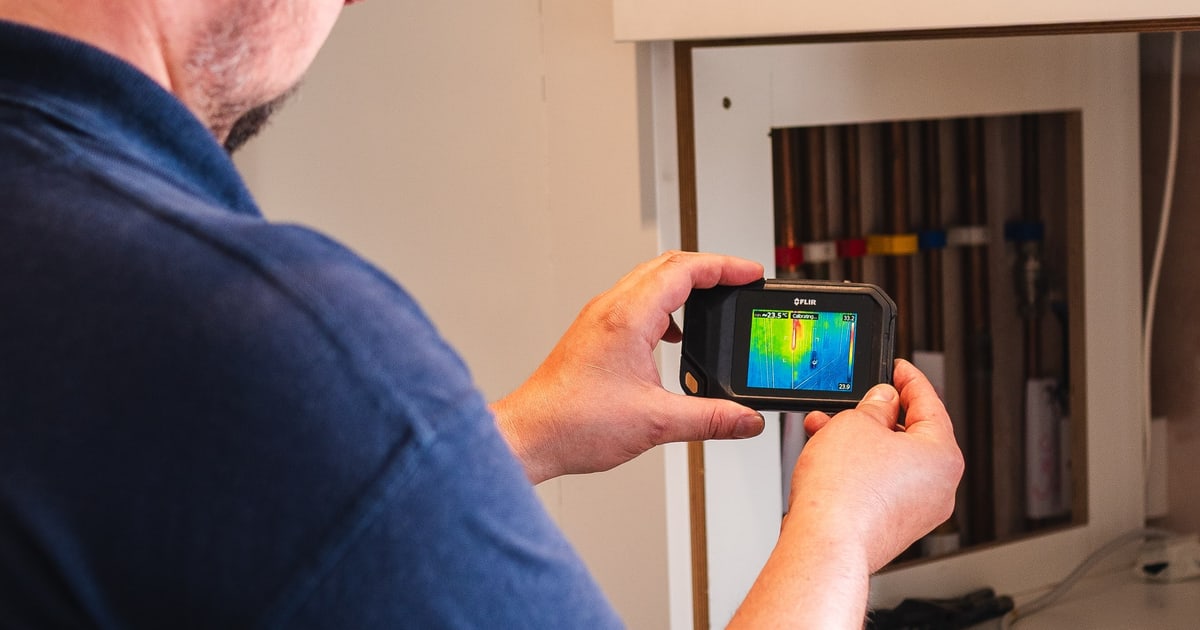
Thermal imaging was then used to scan the hot water run beneath the floor, which identified a thermal irregularity under the sink unit and behind the dishwasher position. This gave a precise target for excavation.
As a hot water leak detection method, thermal imaging is particularly effective in screed floors where heat from a leaking pipe creates a detectable signature that damp meter readings alone cannot pinpoint. The dishwasher was removed, the screed excavated, and the failed pipe section was exposed, repaired, and pressure tested before the job was closed.
Visual Inspection. Used on arrival to assess the extent of visible leak damage to walls and flooring across the kitchen and adjacent bathroom.
Damp Meter. Used to take readings across kitchen and bathroom surfaces, recording maximum saturation levels throughout both areas.
Acoustic Listening. Used to detect and assess the audible noise present on the mains supply line running to the combi boiler.
Sectional Isolation. The mains supply into the boiler was isolated to confirm the noise ceased, proving the leak was located on the hot supply circuit.
Thermal Imaging. Scanned the hot water run beneath the kitchen floor and identified a thermal irregularity under the sink unit and behind the dishwasher, directing the excavation.
Pressure Testing. The repaired pipe section was tested at 4.0 bar of compressed air over one hour with no drop in pressure recorded, confirming the repair was sound.
Investigation Process
-
1Visual inspection of affected areas
On arrival, all leak-affected areas were inspected visually. Severe leak damage was confirmed to walls and flooring in the kitchen and the adjacent bathroom.
-
2Damp meter survey
Damp meter testing was carried out across the kitchen and bathroom. Maximum readings were recorded on the flooring and walls throughout both rooms.
-
3Sectional isolation of mains supply
The mains supply into the combi boiler was isolated. The audible noise on the pipework ceased immediately, confirming the leak was on the hot supply circuit.
-
4Thermal imaging of hot water run
A thermal scan was carried out along the hot water run beneath the kitchen floor. A thermal irregularity was identified under the sink unit and behind the dishwasher position.
-
5Removal of dishwasher and excavation of screed
The dishwasher was removed to allow access. Screed above the thermal irregularity was excavated to expose the pipework below.
-
6Failed pipe located
Pooled and flowing water was found below a damp proof membrane sitting above all pipework. A 15mm copper hot supply pipe was found with a perforation on its underside.
-
7Repair and pressure test
The failed section of 15mm copper hot supply was renewed. The repaired section was tested at 4.0 bar of compressed air over one hour with no pressure drop recorded.
-
8Customer advised on next steps
The customer was advised to send the engineer's report to their insurers to arrange professional drying of all affected areas and full remedial reinstatement, all covered under the trace and access clause of their buildings insurance policy.
Result & Outcome

The leak was found in the screed beneath the kitchen floor, under the sink unit and behind the dishwasher position. A 15mm copper hot supply pipe had failed with a perforation on its underside — a type of failure that directs water downward into the screed rather than upward where it would be immediately visible, explaining the extent of concealed damage across the kitchen and bathroom before the leak was detected.
The failed section was cut out and renewed. Pressure testing at 4.0 bar over one hour with no recorded drop confirmed the repair was complete and sound. For a hot water leak detection job of this type — a buried pipe under screed with no visible access point — thermal imaging was the critical tool that avoided unnecessary widespread excavation and directed work precisely to the source.
With the leak repaired and the circuit proven watertight, the customer has a clear documented report to submit to their insurer. All professional drying and reinstatement of the kitchen and bathroom surfaces are to be arranged through the buildings insurance policy under the trace and access provision.
Suspect a leak at your property?
ADI Leak Detection specialists investigate leaks like this across the UK every day. No find, no fee terms apply on qualifying jobs.