
Hot Water Pipe Leak Detection in Kingswood
A hot water system leak in Kingswood was located using pressure testing, thermal imaging, tracer gas, and acoustic listening, with hot water leak detection pinpointing the source to a pinhole in the supply pipe beneath the hallway floor. Found by engineer Richard Poberezniuk.




The original leak detection company, est. 2011
Facts
| Location | Kingswood |
|---|---|
| County | Gloucestershire |
| Leak Type | Hot Water Leak Detection |
| Property Type | Residential property |
| Detection Method | Pressure Testing, Thermal Imaging, Tracer Gas, Acoustic Listening |
| Outcome | Pinhole leak found in buried 15mm hot water pipe, repaired. |
Symptoms

At a property in BS15, water damage had appeared on the walls and floor of the hallway running between the kitchen and ground floor bathroom. The affected area showed clear signs of prolonged moisture exposure, and warm spots were identifiable on the hallway floor, pointing to a fault on the hot water supply rather than a cold water line or the mains.
The damage pattern and the warm floor locations gave a strong indication that the leak was somewhere beneath the hallway floor on the buried pipework feeding the ground floor bathroom. Hot water leak detection was the appropriate response given the thermal evidence and the location of the damage.
With the leak active and water continuing to saturate the floor and wall finishes, it was important to locate the exact source before opening up the floor unnecessarily across a wide area.
Methods Used

The investigation began with a pressure test on the hot water supply to the ground floor bathroom, which confirmed an active leak was present. From there, the approach combined thermal imaging, tracer gas, and acoustic listening to narrow the location to a specific point in the hallway floor before any excavation was carried out.
For a hot water leak detection job like this — where the pipe is buried beneath a finished floor — using multiple methods in sequence reduces the risk of opening up the wrong section. The thermal camera identified heat patterns consistent with a leak, tracer gas produced a high reading at the same point, and an audible noise was also detected there.
With three independent methods pointing to the same location, excavation was targeted and precise.
Pressure Testing. A pressure test was applied to the hot water supply to the ground floor bathroom at 2.2 bar for 5 minutes, which failed and confirmed an active leak on that circuit.
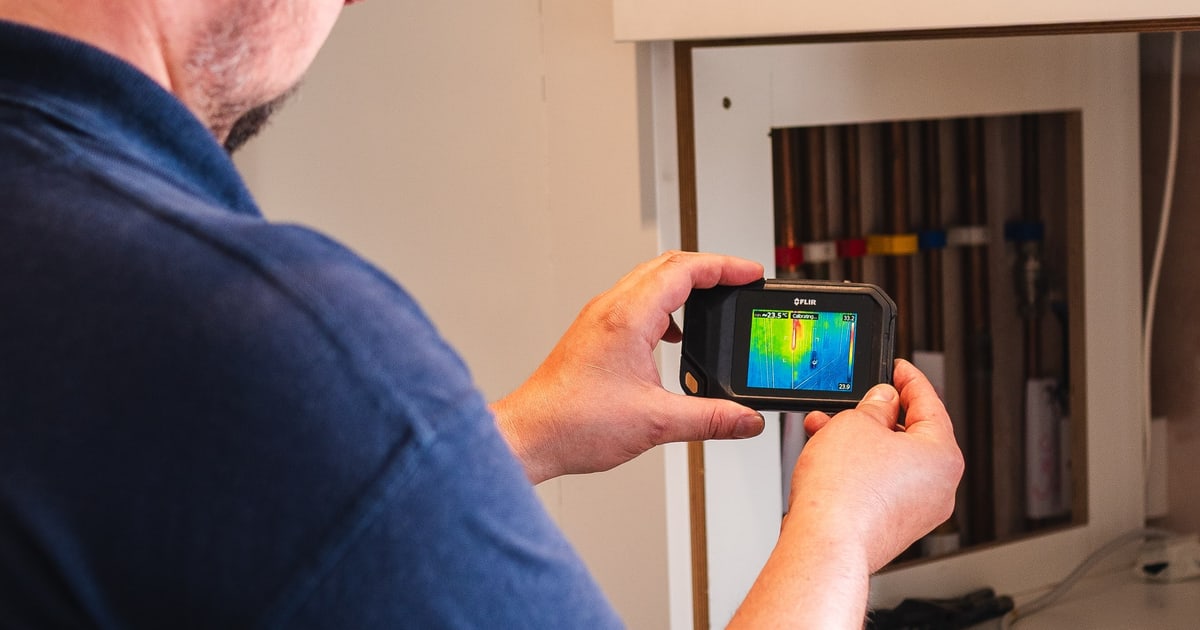
Thermal Imaging. The thermal camera was used to scan the hallway floor and walls, identifying heat patterns that indicated warm water escaping from the buried pipework beneath.
Tracer Gas. Tracer gas was introduced into the pipework and a high reading was detected at the same location flagged by the thermal camera, corroborating the suspected leak point.
Acoustic Listening. Acoustic equipment picked up an audible noise at the same location in the hallway, providing a third confirmation before the floor was opened.
Investigation Process
-
1Initial pressure test
A pressure test was carried out on the hot water supply to the ground floor bathroom at 2.2 bar for 5 minutes. The test failed, confirming an active leak on the circuit.
-
2Thermal imaging survey
Thermal imaging was carried out across the hallway between the kitchen and ground floor bathroom. The camera identified heat patterns in the floor consistent with a hot water leak beneath the surface.
-
3Tracer gas investigation
Tracer gas was introduced into the hot water supply pipework. A high gas reading was detected at the same location identified during thermal imaging.
-
4Acoustic detection
An audible noise was also detected at the same point in the hallway, providing a third independent confirmation of the leak location.
-
5Targeted excavation
The hallway floor was opened at the identified location. A pinhole was found in the 15mm hot water supply pipe running to the ground floor bathroom.
-
6Pipe repair
The pinholed section of 15mm copper pipe was cut out and replaced using two 15mm copper couplings and a short length of new 15mm copper pipe.
-
7Post-repair pressure test
A further pressure test was carried out following the repair at 3 bar for 20 minutes. The test passed at the time of testing, confirming the repair was sound.
Result & Outcome

Excavation at the pinpointed location in the hallway floor revealed a pinhole in the 15mm copper hot water supply pipe serving the ground floor bathroom. The pinhole was the source of the water damage to the hallway walls and floor. The damaged section was cut out and replaced with a short length of new 15mm copper pipe, joined with two 15mm copper couplings.
A post-repair pressure test at 3 bar held for 20 minutes passed at the time of testing, confirming the repaired section was sound. The precision of the multi-method hot water leak detection approach meant the excavation was limited to the area directly above the fault, avoiding unnecessary disruption to the rest of the hallway floor.
The hallway now requires drying out with dehumidifiers before any reinstatement work is carried out. There are further hot and cold supply pipes laid in the same floor, and consideration should be given to rerouting both surface-mounted to prevent similar issues arising from other buried sections in the future.
Suspect a leak at your property?
ADI Leak Detection specialists investigate leaks like this across the UK every day. No find, no fee terms apply on qualifying jobs.