
Hot Water System Leak Detection in Kingston upon Hull
A hot water system leak in Kingston upon Hull was located using thermal imaging, a damp meter, acoustic listening, tracer gas, pressure testing, and flow metering, with hot water leak detection confirming two faults on the pipe running beneath the kitchen screed floor. Found by engineer Brett Steele.




The original leak detection company, est. 2011
Facts
| Location | Kingston upon Hull |
|---|---|
| County | East Riding of Yorkshire |
| Leak Type | Hot Water Leak Detection |
| Property Type | Residential property |
| Detection Method | Thermal Imaging, Damp Meter, Acoustic Listening Equipment, Tracer Gas, Pressure Testing, Flow Metering |
| Outcome | Two leaks found and repaired beneath kitchen screed floor. |
Symptoms
At a property in HU9, an unexplained rise in water usage had been identified via the internal meter located on the incoming supply in a first-floor bedroom. The meter showed constant, uncontrolled flow, and prior investigations by the customer had already pointed toward the hot water supply as the source — isolating the cold feed to the combi boiler caused all usage to stop.
This gave a clear indication that hot water leak detection would be required to locate the fault.
The boiler is situated in the kitchen, with pipework running from it into the solid screed floor. How that pipework then routes to the upper floors was unclear.
No obvious signs of water damage had been identified at the time of the visit, which made pinpointing the leak without specialist equipment particularly challenging.
A secondary symptom had also emerged: the heating had stopped working. The leak rate — recorded at 1 litre per 20 seconds — was sufficient to keep the boiler responding to a perceived hot water demand, likely causing it to deprioritise heating.
This gave additional urgency to finding and resolving the fault.
Methods Used

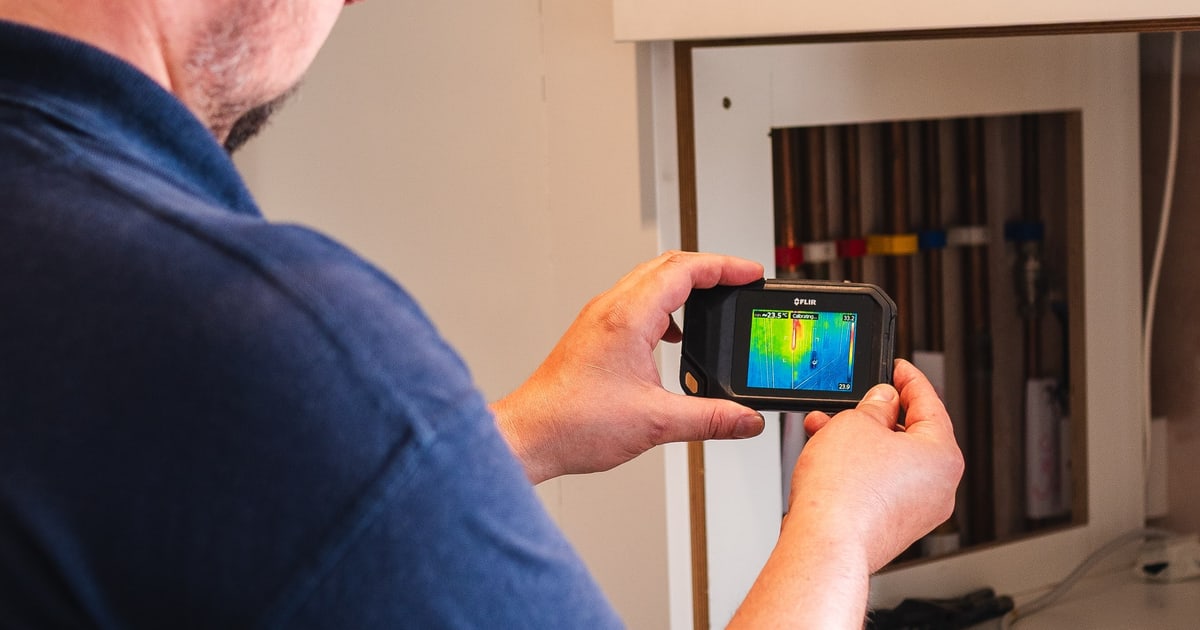
Given that the leak was buried beneath a screed floor with no visible surface damage to guide the investigation, a multi-method approach was used. Thermal imaging identified a suspect heat pattern below the sink unit, and moisture mapping recorded elevated damp levels in the same area, together narrowing the search zone.
Acoustic profiling then confirmed significant leak noise at the corner of the kitchen units where the pipe enters the concrete. Tracer gas analysis provided further confirmation, with high concentrations detected near that point and gas tracing back along the pipe channel.
This layered approach — characteristic of a thorough hot water leak detection investigation — allowed the team to build confidence in the target area before any excavation took place. Once the flooring was lifted and the screed broken out, two separate faults were identified: a leak on a compression elbow and, after step testing revealed a further fault, a pinhole leak on unprotected copper pipe further along the line.
Thermal Imaging. Identified an anomalous heat pattern in the screed below the sink unit, flagging the area as the primary zone of concern.
Damp Meter. Moisture mapping recorded high damp levels around the suspect area beneath the sink unit, corroborating the thermal findings.
Acoustic Listening Equipment. Acoustic profiling detected significant leak noise at the point where the hot water pipe enters the concrete at the corner of the kitchen units.
Tracer Gas. A specialist gas analyser detected high tracer gas concentrations near the pipe entry point, with gas tracing back along the pipe channel to confirm leak location.
Pressure Testing. Pressure testing was carried out after the repair to confirm no further leaks remained on the hot supply.
Flow Metering. The internal meter was used to record active flow rate and to confirm that usage had stopped entirely once the repair was completed.
Investigation Process
-
1Meter checked on arrival
With the hot water supply reinstated, the internal meter confirmed constant uncontrolled usage at a rate of 1 litre per 20 seconds.
-
2Kickboards removed
Kickboards were removed from beneath the kitchen units to gain access to the area above the screed floor where the pipework runs.
-
3Thermal imaging carried out
A thermography survey identified a suspect heat pattern in the screed below the sink unit, directing attention to that specific area.
-
4Moisture mapping conducted
High levels of damp were recorded around the area identified by thermal imaging, raising further concern about that location.
-
5Acoustic profiling completed
Significant leak noise was detected at the corner of the kitchen units where the hot water pipe enters the concrete floor.
-
6Tracer gas analysis performed
High tracer gas concentrations were confirmed near the pipe entry point, with gas tracing back along the pipe channel, providing strong confirmation of the leak location.
-
7Flooring lifted and screed excavated
With the customer's agreement, the warped and lifting flooring was removed and the screed was broken out around the area of concern.
-
8Sink unit base cut out
The bottom of the sink unit was cut out, with the customer's permission, to allow access to the pipework running beneath it.
-
9First leak identified — compression elbow
Excavation exposed a leaking compression elbow beneath the kitchen units.
-
10Step testing reveals second leak
Step testing indicated a further fault further down the line, and tracking the pipework revealed a pinhole leak on unprotected copper pipe.
-
11Both leaks repaired
The two faulty sections were removed and the hot water supply was re-piped using flexible push-fit pipe and fittings.
-
12Pressure test and meter check confirm resolution
A pressure test showed no further issues on the hot supply, and no usage was recorded on the meter, confirming the repairs were complete.
Result & Outcome

Two faults were found on the hot water pipe running beneath the kitchen screed floor. The first was a leaking compression elbow located beneath the sink unit; the second, identified after step testing, was a pinhole leak on unprotected copper pipe further along the same line. Both sections were removed and re-piped using flexible push-fit pipe and fittings. A pressure test and a final meter check confirmed no remaining leaks on the hot supply.
For a hot water leak detection case with no visible surface damage and pipework buried in solid flooring, the combination of thermal imaging, acoustic profiling, damp mapping, and tracer gas was essential in isolating the fault zones before any destructive work began. This kept excavation targeted and limited to the areas where leaks were actually present.
The engineer has recommended a full drying procedure before any making-good works are carried out. The repair access point beneath the kitchen unit is to remain open — it will be concealed behind the unit and kick board — and it is advisable that the fittings below the kitchen floor are kept accessible, ideally via a removable hatch cut into the click flooring above.
Suspect a leak at your property?
ADI Leak Detection specialists investigate leaks like this across the UK every day. No find, no fee terms apply on qualifying jobs.