
Hot Water Cylinder Overflow Leak Detection in Haywards Heath
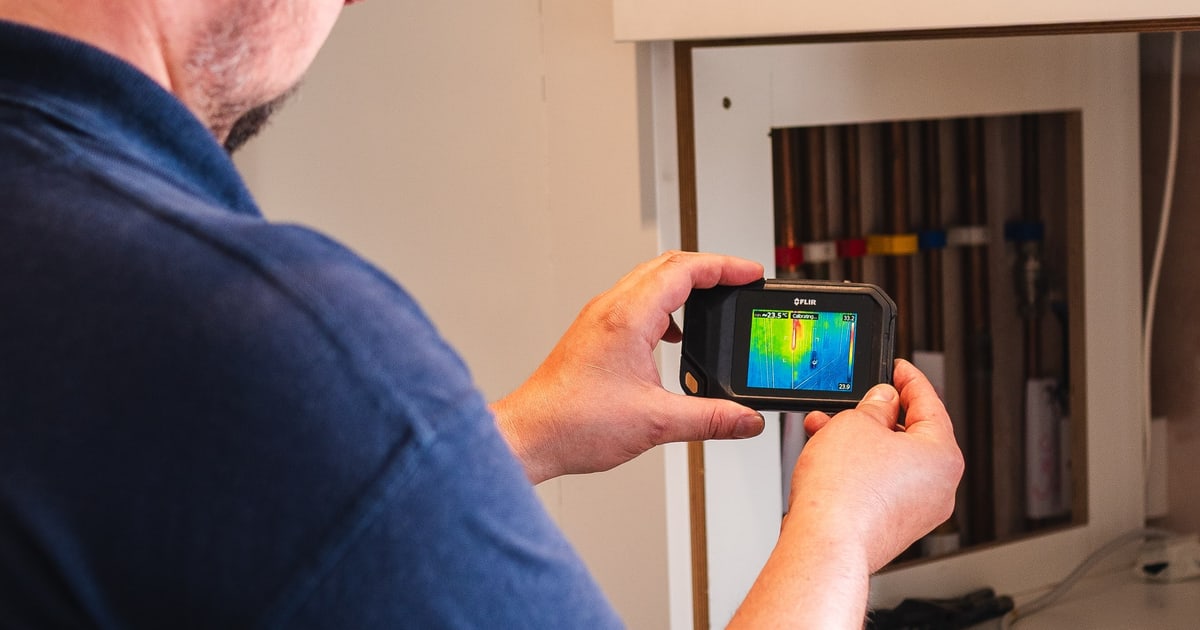
A hot water system leak in Haywards Heath was located using a damp meter, leak dye, endoscope camera, pressure testing, and tracer gas as part of hot water leak detection that traced the fault to an overflow waste pipe in the kitchen ceiling void. The work was carried out by engineer Krzysztof Kobylinski.




The original leak detection company, est. 2011
Facts
| Location | Haywards Heath |
|---|---|
| County | West Sussex |
| Leak Type | Hot Water Leak Detection |
| Property Type | Residential property |
| Detection Method | Damp Meter, Leak Dye, Endoscope Camera, Pressure Testing, Tracer Gas |
| Outcome | Leak found in ceiling void, overflow pipe replaced. |
Symptoms

A property in Haywards Heath presented with a damaged ceiling in the kitchen, showing visible watermarks that suggested water had been leaking from above. The concern centred on the possibility of a leak within the upstairs bathroom or from the hot water system, prompting a full hot water leak detection investigation to establish the source and extent of any damage.
Despite the visible ceiling damage, initial readings taken on arrival showed the ceiling itself was completely dry at the time of inspection. No water meter was present on the property, which ruled out that as a monitoring tool.
The absence of active dripping or pooling meant the leak had either paused or was intermittent, making pinpointing the source more complex.
Methods Used

The investigation approached the problem methodically, working from the visible symptom — the damaged kitchen ceiling — upward through the building. A damp meter was used first to assess whether the ceiling was actively wet.
The area around the hot water cylinder was also checked for dampness. A dye test was performed in the upstairs bathroom to trace whether water was travelling down into the kitchen void.
Spotlights were removed and an endoscope camera was inserted into the ceiling void for a visual check. A pressure test using tracer gas was then carried out on both hot and cold water supplies to detect any drop in pressure that would indicate a pipe fault.
When none of these steps produced a clear finding, inspection holes were cut into the kitchen ceiling with the customer's agreement. This direct access proved decisive.
The job demonstrates a key challenge in hot water leak detection — where the leak source is not immediately accessible and multiple methods must be combined before a definitive location can be confirmed.
Damp Meter. Used to assess moisture levels in the kitchen ceiling and around the hot water cylinder, confirming the ceiling was dry at the time of initial inspection.
Leak Dye. A dye powder test was carried out in the upstairs bathroom to determine whether water was travelling down through the floor into the kitchen ceiling below — no dye was detected beneath.
Endoscope Camera. Inserted into the kitchen ceiling void through the spotlight apertures to visually inspect for signs of leakage before any ceiling was cut.
Pressure Testing. Both the hot and cold water supplies were pressure tested using tracer gas; no pressure drop was recorded, ruling out a fault on the pipework under pressure.
Tracer Gas. Used as the pressurising medium during the pipe pressure test on hot and cold supplies to detect any escape of gas that would indicate a leak path.
Investigation Process
-
1Damp meter survey of kitchen ceiling
Initial inspection of the visible watermark on the kitchen ceiling using a damp meter confirmed the ceiling was completely dry at the point of arrival.
-
2Hot water cylinder area inspected
The area surrounding the hot water cylinder was checked for any signs of dampness — none were detected.
-
3Damp readings noted near upstairs toilet
Some elevated damp readings were found near the upstairs toilet, attributed to missing grout in the bathroom floor allowing water to seep through.
-
4Dye test performed in upstairs bathroom
Dye powder was introduced in the upstairs bathroom to trace any water movement — no dye was observed in the kitchen ceiling below.
-
5Endoscope camera inspection of ceiling void
Spotlights were removed in the kitchen and an inspection camera was passed into the ceiling void; no visible signs of an active leak were found at this stage.
-
6Tracer gas pressure test on water supplies
Both the hot and cold water supplies were pressure tested using tracer gas; no pressure drop was recorded on either supply.
-
7Inspection holes cut into kitchen ceiling
With the customer's agreement, square sections of the kitchen ceiling were cut out to allow direct access and visual inspection of the void.
-
8Wet waste pipe identified in ceiling void
A wet waste pipe was found — identified as the overflow pipe connected to the hot water cylinder. Closer inspection revealed small pieces of wood lodged between the pipe and the rubber gasket, causing the leak.
-
9Faulty pipe section removed and replaced
The affected section of pipe and two tee push-fit fittings were removed. A replacement section was installed using 32mm plastic waste pipe, a 45-degree elbow, a 90-degree elbow, and silicone. The repair was tested and no further leaks were detected.
-
10Recommendations made on bathroom floor
Grout was reinstalled in the upstairs bathroom floor and silicone was reinstalled around the shower tray to address the secondary damp readings found near the toilet.
Result & Outcome
The leak was located in the kitchen ceiling void, on the overflow waste pipe connected to the hot water cylinder. The cause was small pieces of wood that had become lodged between the pipe and its rubber gasket, preventing a proper seal and allowing water to escape intermittently — which explained why the ceiling had appeared dry on initial damp meter readings.
The faulty pipe section and two tee push-fit fittings were removed and replaced with new 32mm plastic waste pipe, shaped using a 45-degree and a 90-degree elbow, and sealed with silicone. Post-repair testing confirmed the overflow waste pipe is fully sealed with no further leaks present. This type of concealed fault is precisely what makes thorough hot water leak detection — combining non-invasive tools with direct access where necessary — the correct approach when a cause is not immediately apparent.
As a secondary finding, missing grout in the upstairs bathroom floor was identified as contributing to damp readings near the toilet. Grout was reinstalled in the bathroom floor and silicone was reapplied around the shower tray, addressing that separate pathway for water ingress.
Suspect a leak at your property?
ADI Leak Detection specialists investigate leaks like this across the UK every day. No find, no fee terms apply on qualifying jobs.