
Hot Water System Leak Detection in Fakenham
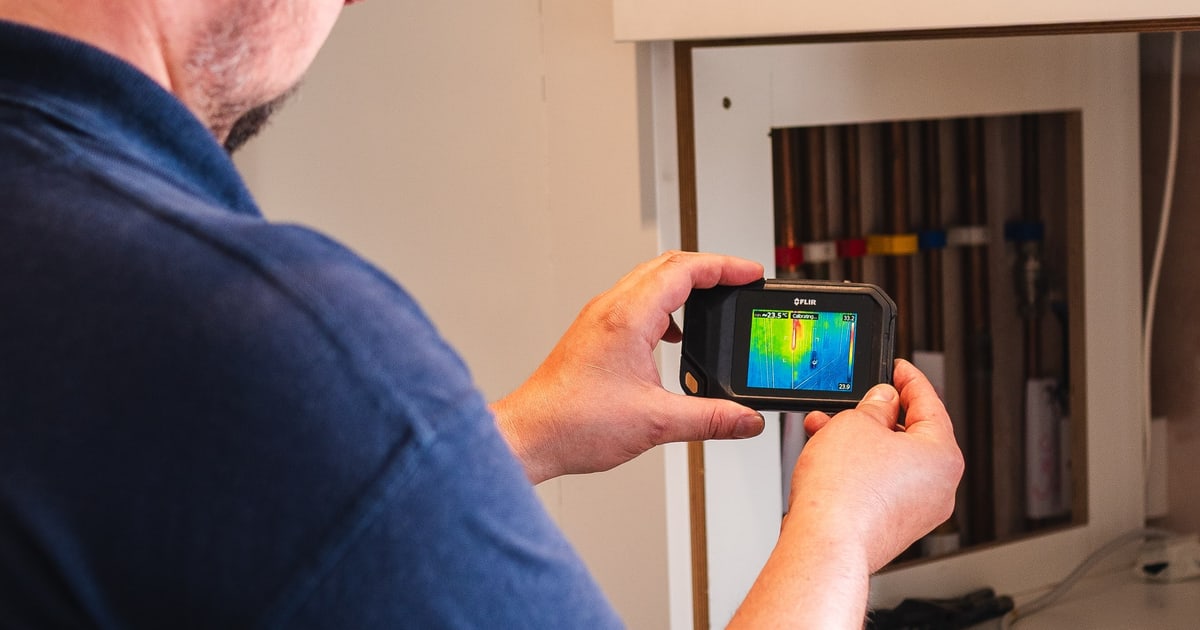
A hot water system leak in Fakenham was located using a thermal imaging camera, damp meter, and visual inspection as part of hot water leak detection, tracing the source to a redundant dead leg on the hot water system that was capped off beneath the kitchen sink. Found by engineer Scott Hardcastle.




The original leak detection company, est. 2011
Facts
Symptoms

The property in PE31 was experiencing a continuous water loss that had not been pinpointed prior to the visit. The cold storage tank was observed to be constantly refilling, and the external water meter showed uninterrupted movement, indicating an active leak somewhere within the system.
The customer had initially described the issue as relating to the heating system, though on arrival the signs pointed more clearly toward the hot water pipework.
Given the age of the property's pipework and the extent to which it had been boxed in, isolating individual sections for testing was not straightforward. This made hot water leak detection more involved than a straightforward isolation-and-pressure test, requiring specialist equipment to identify the leak source without unnecessary disruption to the building fabric.
The property is a large detached building with a hot water cylinder and an associated network of pipework, some of which had fallen out of active use. The presence of redundant pipework — known as dead legs — added complexity to the investigation, as these sections are not always immediately visible or accessible.
Methods Used

Hot water leak detection at this property required a non-invasive approach due to the age and condition of the pipework and the degree to which it had been enclosed. Because isolation of individual pipework runs connected to the hot cylinder was not possible, the investigation relied on thermal imaging to detect heat signatures through surfaces without exposing pipework directly.
A thermal imaging camera identified a significant hotspot in the utility room, which indicated active hot water leakage in that area.
A damp meter was then used to confirm elevated moisture readings at the same location, corroborating the thermal findings. Further assessment revealed that the leaking section formed part of a long, unused dead leg on the hot water system — a redundant pipe run that had remained pressurised despite serving no active purpose.
This combination of equipment allowed the leak to be located with precision and the repair to be carried out without opening up flooring or walls.
Thermal Imaging Camera. Identified a significant hotspot in the utility room by detecting the heat signature of leaking hot water through the surrounding surfaces.
Damp Meter. Confirmed high moisture readings at the area flagged by thermal imaging, corroborating the leak location in the utility room.
Visual Inspection. Used to assess the external water meter for continuous movement and to observe the cold storage tank refilling, establishing clear evidence of an active leak on arrival.
Investigation Process
-
1Initial observations on arrival
The external water meter was checked and showed continuous movement with no water in deliberate use. The cold storage tank was also observed to be constantly refilling, confirming an active leak.
-
2Assessment of pipework accessibility
Due to the age of the pipework and valves, and the extent to which they had been boxed in, it was not possible to isolate any pipework connected to the hot cylinder for individual pressure testing.
-
3Thermal imaging survey
A thermal imaging camera was deployed throughout the property. A significant hotspot was identified in the utility room, indicating the presence of leaking hot water in that area.
-
4Damp meter confirmation
A damp meter was used to test the area identified by thermal imaging. High moisture readings confirmed the leak location and indicated that water had been accumulating in this section.
-
5Dead leg identified
Further assessment established that the leaking pipework formed a long, unused dead leg on the hot water system — a redundant section that had remained live despite serving no active function.
-
6Leak repaired by capping
With the customer's explicit permission, the leaking section of pipework was capped off beneath the kitchen sink, stopping the leak and eliminating the redundant dead leg from the system.
Result & Outcome

The leak was located in the utility room area, with the source traced to a redundant dead leg on the hot water system — a section of pipe that had remained pressurised despite no longer serving any active purpose. The leaking pipework was capped off beneath the kitchen sink, resolving the continuous water loss without any need to lift flooring or open up walls.
For a hot water leak detection job of this nature — where pipework is largely concealed and isolation is not straightforward — thermal imaging proved critical in identifying the precise area of failure non-invasively. The damp meter readings provided independent confirmation, giving confidence in the findings before any remedial work was carried out.
Beyond stopping the leak, capping the dead leg also removes a known Legionella risk, as stagnant water in unused pipe sections can provide conditions for bacterial growth. The customer was advised to check their building insurance for Trace and Access cover, as the works may qualify for reimbursement. If damp readings in the affected area do not reduce over time, further assessment by a damp specialist is recommended.
Suspect a leak at your property?
ADI Leak Detection specialists investigate leaks like this across the UK every day. No find, no fee terms apply on qualifying jobs.