
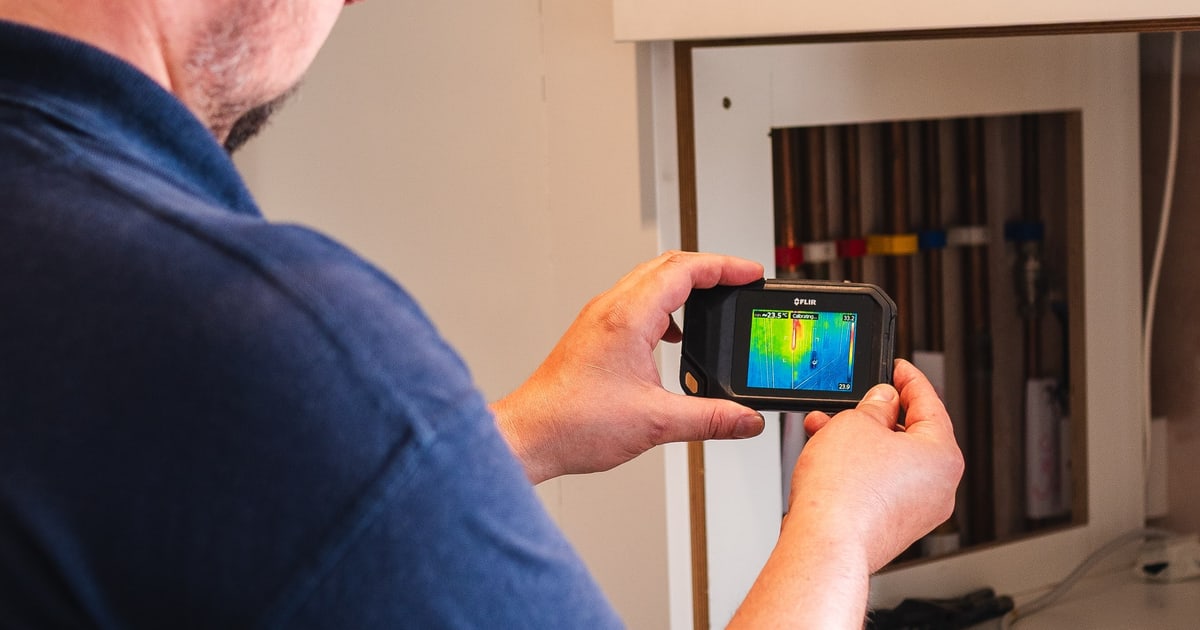
Hot Water System Leak Detection in Keynsham
A hot water system leak in Keynsham was located using pressure testing, tracer gas, and visual inspection, with hot water leak detection confirming the precise point within buried pipework beneath a first-floor flat. Found by engineer James Bexter.




The original leak detection company, est. 2011
Facts
| Location | Keynsham |
|---|---|
| County | Somerset |
| Leak Type | Hot Water Leak Detection |
| Property Type | Residential property |
| Detection Method | Pressure Testing, Tracer Gas, Visual Inspection |
| Outcome | Buried hot pipework traced and leak located downstairs. |
Symptoms

The property in BS31 is a first-floor flat with two bedrooms, one bathroom, and a combi boiler. It had previously undergone a system conversion from an open vent cylinder setup, but not all of the old pipework had been removed during that work.
Hot water pipework from the original installation had been left in the ground, and the rest of the hot and cold pipework had been run up into the ceiling and back down.
Underneath the bath, the old hot pipework was still connected to the hot tap feed, with the new feed tee'd into it. A Ballofix isolation valve was present, switched off, with pipework disappearing into the ground — the only pipework running beneath the bathroom floor.
This arrangement meant a section of buried, redundant pipework remained under live pressure, making hot water leak detection necessary to establish exactly where the fault lay.
Methods Used

The investigation began at the external meter, which confirmed an active leak. Because the property had a history of open vent conversion with pipework left in the ground, the focus moved to tracing the buried hot water route beneath the bathroom floor.
Pressure testing was carried out first to confirm a leak in the hot pipework. Tracer gas was then introduced to pinpoint the precise location, with detection carried out downstairs where the gas surfaced at the leak point.
This methodical approach — pressure test and tracer gas — is standard practice in hot water leak detection where buried pipework cannot be visually inspected. Each method built on the last, narrowing the search area before committing to a precise location.
Pressure Testing. The hot feed was cut into and pressurised to 2 bar; a gradual pressure drop confirmed an active leak within the buried hot pipework.
Tracer Gas. Tracer gas introduced at 2.4 bar travelled through the pipe system and surfaced at the leak point, allowing it to be traced to a specific location downstairs.
Visual Inspection. Inspection beneath the bath identified the old hot pipework still connected to the live tap feed, with a Ballofix valve leading into the ground — the only buried pipework in the bathroom.
Investigation Process
-
1Meter checked on arrival
The external meter on the pavement was observed showing a small active leak, confirming water loss from the property.
-
2Pipework configuration assessed
Investigation revealed that hot water pipework from a previous open vent cylinder installation had been left in the ground. The rest of the hot and cold pipework ran up into the ceiling and back down.
-
3Inspection beneath the bath
Underneath the bath, the old hot pipework was found still connected to the hot tap feed, with the new feed tee'd in. A Ballofix isolation valve, switched off, led into the ground — the only pipework beneath the bathroom floor.
-
4Pressure test carried out
The hot feed was cut into and pressurised to 2 bar. A gradual drop in pressure was observed, confirming a leak in the buried hot pipework.
-
5Tracer gas introduced and traced
Tracer gas was introduced at 2.4 bar and successfully traced to the leak area downstairs, identifying the precise location of the fault.
-
6Repair carried out
The old hot pipework was capped off and the hot tap feed was connected directly onto the new hot feed pipework, isolating and bypassing the buried redundant section.
Result & Outcome

The leak was located in the buried hot water pipework left over from the previous open vent cylinder installation — specifically traced to an area downstairs beneath the first-floor flat. Tracer gas surfacing at the leak point confirmed the precise location, removing any ambiguity about where excavation or remedial work would be needed.
The repair was carried out as part of the same visit. The old buried hot pipework was capped off, and the hot tap feed was reconnected directly onto the new hot feed pipework, eliminating the redundant buried section from the live system entirely. This resolves the root cause rather than simply isolating the symptom.
For the customer, the outcome of this hot water leak detection job is clear: the source of the water loss has been identified and the pipework reconfigured to remove the problematic buried run. There is no longer a live connection feeding the old underground pipe, and the meter reading should reflect the leak has stopped.
Suspect a leak at your property?
ADI Leak Detection specialists investigate leaks like this across the UK every day. No find, no fee terms apply on qualifying jobs.