
Hot Water System Leak Detection in Leighton Buzzard
A hot water system leak in Leighton Buzzard was located using a damp meter, endoscope camera, pressure testing, acoustic listening, and visual inspection, with hot water leak detection confirming the source beneath a raised wooden floor in the en suite bathroom. The work was carried out by engineer Gabor Weber.




The original leak detection company, est. 2011
Facts
| Location | Leighton Buzzard |
|---|---|
| County | Bedfordshire |
| Leak Type | Hot Water Leak Detection |
| Property Type | Residential property |
| Detection Method | Damp Meter, Endoscope Camera, Pressure Testing, Acoustic Listening Equipment, Visual Inspection |
| Outcome | Hot feed leak located and repaired beneath en suite floor. |
Symptoms

At a property in LU7, the customer noticed that the en suite bathroom wall had become damp and that tiles had come loose from the surface. These are common early indicators of a moisture problem within the structure, often pointing to a leak that has been present long enough to cause material deterioration.
The visible damp and tile movement suggested moisture had been migrating through the wall and floor over a period of time. A hot water leak detection investigation was required to determine whether the source was a failed pipe, a failed joint, or water ingress from another route.
Given the raised wooden floor construction in the en suite, there was a risk that any prolonged leak had caused structural damage beyond the immediate pipe — a concern that would need to be assessed as part of the inspection.
Methods Used

A damp survey was carried out first, using a damp meter to map moisture levels across the floor and adjacent wall. High readings confirmed that water had been present in the subfloor structure for some time.
The bath panel was removed to allow visual inspection behind the enclosure, where significant rot was found in the wooden floor and frame beneath.
To pursue the source, a tracer camera was used to inspect behind the boxed-in pipework — no faults were found there. Pressure testing was then applied independently to the cold feed and the hot feed.
The cold feed held pressure and passed; the hot feed failed, confirming an active leak on that circuit. This directed the investigation to the hot water pipework beneath the floor.
Acoustic listening was used to pinpoint the anomaly within the en suite floor area, guiding precise exposure of the tiles, underfloor heating, and raised wooden floor to reach the leaking pipe. This systematic approach is standard practice in hot water leak detection where pipework is concealed beneath layered floor construction.
Damp Meter. Used to take moisture readings across the en suite floor and wall, confirming elevated levels that indicated water had been present within the structure.
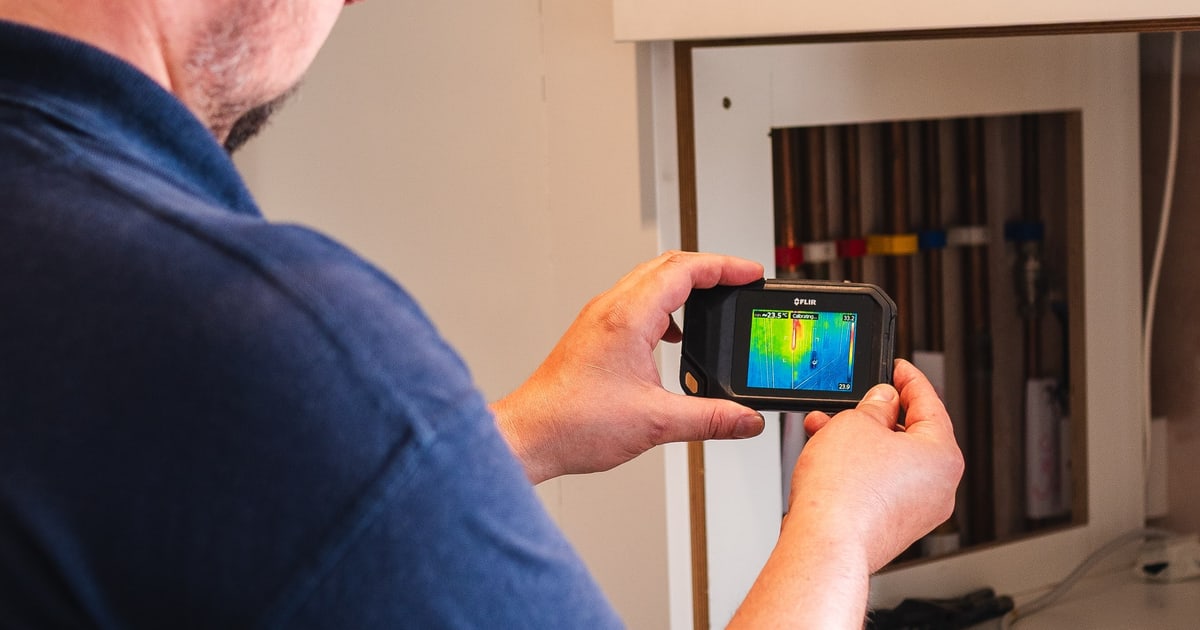
Endoscope Camera. Deployed to inspect behind the boxed-in pipework in the en suite, ruling out faults in that section before moving to pressure testing.
Pressure Testing. Applied separately to the cold feed and hot feed; the cold feed passed and the hot feed failed, isolating the leak to the hot water circuit.
Acoustic Listening Equipment. Used to detect and locate the acoustic anomaly within the en suite floor, pinpointing the position of the leaking pipe before any floor was opened.
Visual Inspection. Carried out on arrival and after bath panel removal, identifying damp walls, loose tiles, and significant rot in the wooden subfloor and frame.
Investigation Process
-
1Initial Assessment
On arrival, the customer reported a damp wall and loose tiles in the en suite bathroom. A damp survey was carried out using a damp meter, which detected high moisture readings on the floor and adjacent wall.
-
2Bath Panel Removal and Visual Inspection
The bath panel was removed to allow inspection behind the enclosure. Significant rot was identified in the wooden floor and frame beneath, indicating prolonged water exposure.
-
3Endoscope Camera Inspection
A tracer camera was used to inspect behind the boxed-in pipework in the en suite. No issues were detected at this stage.
-
4Cold Feed Pressure Test
A pressure test was carried out on the cold feed. The test passed, indicating no leak was present on that circuit.
-
5Hot Feed Pressure Test
A pressure test was then carried out on the hot feed. The test failed, confirming an active leak on the hot water supply.
-
6Acoustic Detection
Acoustic listening equipment was used to identify an anomaly within the en suite floor area, directing the investigation to a specific zone of the subfloor.
-
7Floor Exposure
Floor tiles, the electric underfloor heating, and the raised wooden floor were carefully lifted to access the suspected pipework beneath.
-
8Leak Located
A leaking 15mm copper pipe was found at the location identified by acoustic detection. The defective section was removed.
-
9Repair and Retest
The pipe was replaced with new 15mm copper pipe and fittings. On completion, the repaired pipework was pressure tested at 4 bar for 20 minutes and passed, confirming no further leaks.
Result & Outcome

The leak was located in the en suite bathroom floor, where a 15mm copper pipe on the hot feed had failed beneath the raised wooden floor construction. The defective section was removed and replaced with new copper pipe and fittings. Following repair, the system was re-tested at 4 bar for 20 minutes and passed, confirming the circuit was sound at the time of completion.
The hot water leak detection process — combining damp survey, pressure testing, and acoustic listening — allowed the leak to be identified without unnecessary exposure of the floor. Only the area directly above the fault was opened, which was confirmed by the acoustic reading before any lifting began.
Significant rot was found in the wooden subfloor and frame during the investigation. The floor surface should remain open to allow the structure to dry out thoroughly. A specialist assessment of the wooden floor is recommended to determine whether it can be reused or whether replacement is required before the area is reinstated.
Suspect a leak at your property?
ADI Leak Detection specialists investigate leaks like this across the UK every day. No find, no fee terms apply on qualifying jobs.