
Central Heating Leak Detection in Bothwell
A central heating leak in Bothwell was located using thermal imaging, a damp meter, acoustic listening, tracer gas, and an endoscope camera, with central heating leak detection confirming a pinhole fault in the copper pipe beneath the living room floorboards. Found by engineer Hamaad Janjua.




The original leak detection company, est. 2011
Facts
| Location | Bothwell |
|---|---|
| County | Lanarkshire |
| Leak Type | Central Heating Leak Detection |
| Property Type | Residential property |
| Detection Method | Thermal Imaging, Damp Meter, Acoustic Listening Equipment, Tracer Gas, Endoscope Camera |
| Outcome | Pinhole leak in copper pipe beneath living room floorboards, repaired. |
Symptoms

The property in G71 is a two-floor house running an Ideal combi boiler. The presenting issue was a recurring pressure drop across the central heating system, with no visible signs of a leak anywhere in the property.
British Gas had already attended and confirmed a leak was present within the system, but had not located it.
The first physical clue emerged at floor level: laminate flooring near the sink area had buckled, which pointed to moisture working its way up from beneath the floorboards. Despite this, the source of the leak remained unconfirmed and its exact position unknown.
Central heating leak detection was required to trace the fault without unnecessary damage to the floor or structure. The combination of a confirmed pressure loss and visible floor movement gave clear grounds to investigate beneath the living room floorboards.
Methods Used

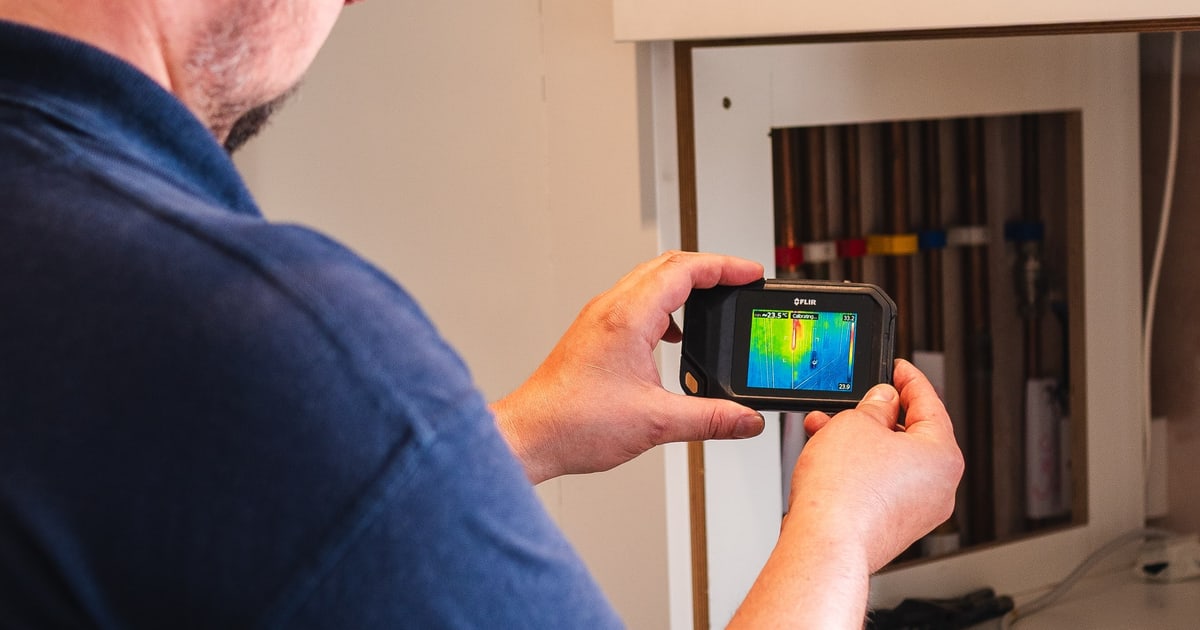
The investigation began with non-invasive survey methods before any floorboards were lifted. A thermal imaging camera was used first, identifying a heat spot in the living room that indicated warm water escaping from the central heating pipework below.
Moisture meter testing returned a positive result in the same area, corroborating the thermal findings. Acoustic equipment was then deployed and detected sound consistent with an active leak beneath the living room floorboards.
A tracer gas test was also carried out and produced a positive result, further narrowing the location. With all four non-invasive methods pointing to the same zone, the floorboards were lifted with the customer's permission.
An endoscope camera was inserted to examine the pipework directly, confirming the exact position of the fault. This systematic approach is standard in central heating leak detection, where preserving as much of the floor structure as possible is a priority.
Thermal Imaging. Identified a heat spot in the living room, indicating warm water escaping from the central heating pipe beneath the floor.
Damp Meter. Returned a positive moisture reading in the living room area, corroborating the thermal imaging result.
Acoustic Listening Equipment. Detected sound consistent with an active leak beneath the living room floorboards, helping to pinpoint the affected zone.
Tracer Gas. Produced a positive result beneath the living room floor, providing additional confirmation of the leak location before any boards were lifted.
Endoscope Camera. Inserted beneath the lifted floorboards to visually confirm the pinhole in the central heating copper pipe.
Investigation Process
-
1Initial Inspection
The engineer observed that the laminate flooring near the sink area was buckled, suggesting moisture beneath the floorboards and prompting further investigation.
-
2Thermal Imaging Survey
A thermal imaging camera was used across the living room floor and identified a heat spot, indicating escaping warm water from the central heating pipework below.
-
3Moisture Meter Testing
A damp meter was applied in the area highlighted by thermal imaging and returned a positive result, confirming elevated moisture levels.
-
4Acoustic Detection
Acoustic equipment was used and picked up sound consistent with a leak beneath the living room floorboards, narrowing the suspect area further.
-
5Tracer Gas Test
Tracer gas was introduced into the system and a positive result was recorded beneath the living room floor, aligning with all previous findings.
-
6Floorboards Lifted
With the customer's permission, the floorboards in the identified area were carefully lifted to allow direct access to the pipework below.
-
7Endoscope Inspection
An endoscope camera was used beneath the floorboards to visually locate the pinhole in the central heating copper pipe.
-
8Repair Carried Out
The damaged section of copper pipe was removed and replaced with new pipework using appropriate fittings and inserts, resolving the pressure loss.
Result & Outcome

The leak was found in the central heating copper pipe beneath the living room floorboards — a pinhole that had been causing a sustained pressure drop across the system. The fault was confirmed visually using the endoscope camera after four non-invasive tests had already converged on the same location, meaning the floorboard lift was targeted and limited in scope.
The damaged section of pipework was cut out and replaced with new copper pipe, using appropriate fittings and inserts to restore the integrity of the system. Following the repair, the engineer also noted that the pipework beneath the floorboards was not adequately clipped or insulated, and advised that this be addressed to reduce the risk of future issues.
For a job of this type, central heating leak detection allowed the engineer to confirm the leak position with confidence before any invasive work was undertaken. The customer was left with a repaired system, a resolved pressure fault, and clear guidance on the remedial work recommended to protect the pipework going forward.
Suspect a leak at your property?
ADI Leak Detection specialists investigate leaks like this across the UK every day. No find, no fee terms apply on qualifying jobs.