
Central Heating Leak Detection in Hove
A central heating leak in Hove was located using tracer gas, acoustic listening, a damp meter, and pressure testing, with central heating leak detection confirming a fractured push-fit isolation valve hidden beneath the floorboards. Found by engineer James Hunter.




The original leak detection company, est. 2011
Facts
| Location | Hove |
|---|---|
| County | East Sussex |
| Leak Type | Central Heating Leak Detection |
| Property Type | Residential property |
| Detection Method | Tracer Gas, Acoustic Listening Equipment, Damp Meter, Pressure Testing |
| Outcome | Fractured isolation valve found beneath floorboards, repaired. |
Symptoms

At a property in BN3, the customer had been experiencing a persistent and rapid loss of boiler pressure. The system required repressurising every 20 minutes, a cycle that had become a repeated disruption.
A previous plumber had attended and inspected the system but was unable to identify the source of the problem, leaving the fault unresolved.
On arrival, no visible signs of dampness were apparent anywhere in the property, making the leak difficult to locate by conventional visual inspection. The boiler pressure had been topped up around 30 minutes before the engineer arrived, yet it had already dropped to zero — confirming a significant and active loss from within the heating system.
This is a situation where central heating leak detection using specialist equipment is necessary. With no surface moisture to follow and a previous inspection having drawn a blank, the only reliable path to a diagnosis was a structured pressure and acoustic investigation.
Methods Used

The central heating leak detection process began with a system pressure assessment. The boiler had already lost all pressure by the time the engineer arrived, confirming the leak was active and significant.
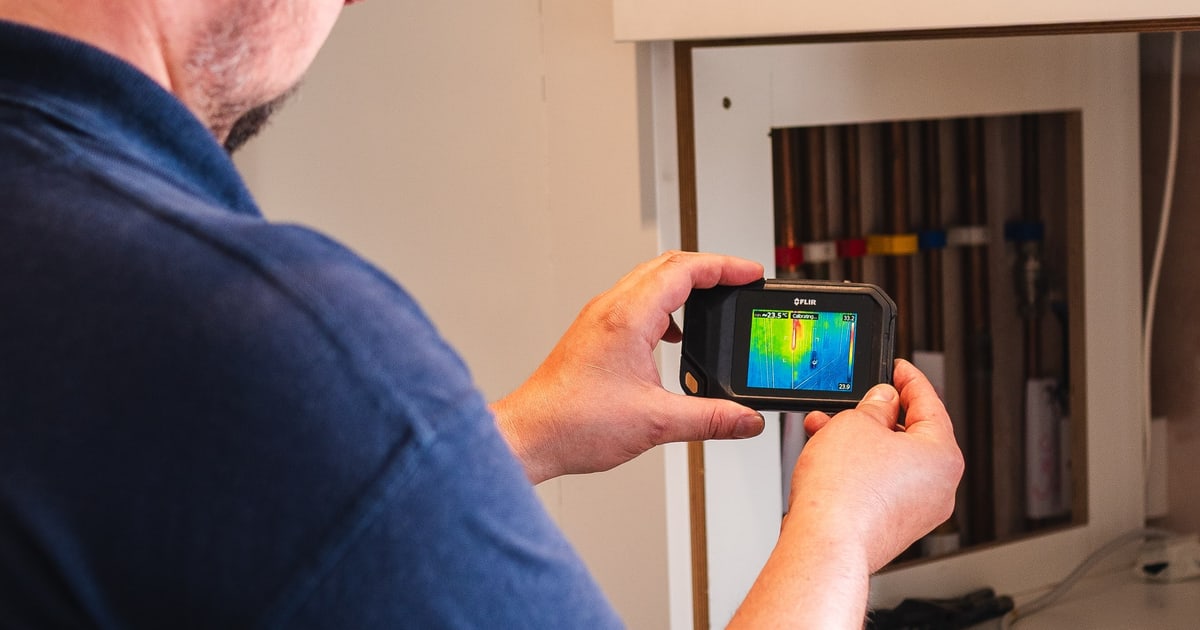
Thermal imaging was considered but ruled out — the pipework was not sufficiently hot to produce usable readings, so the method was set aside in favour of alternatives.
The system was drained to remove residual water, and compressed air was introduced to clear any remaining moisture from the pipework. Tracer gas was then injected throughout the system.
Acoustic detection equipment was used to listen along the pipe routes, and a distinct sound was identified emanating from beneath the floorboards. This pointed to a precise location, which was then opened up with the customer's approval.
Tracer Gas. Injected into the drained and air-cleared pipework to create a detectable signal within the system, enabling the acoustic equipment to identify the leak location.
Acoustic Listening Equipment. Used to listen along the pipework after tracer gas injection, pinpointing a distinct sound beneath the floorboards that identified the leak source.
Damp Meter. Used during the initial inspection to check for any moisture in the building fabric, confirming no surface dampness was present.
Pressure Testing. Confirmed the rate and severity of pressure loss in the heating system, establishing that the leak was active and significant before investigation began.
Investigation Process
-
1Initial Assessment
The engineer arrived and noted the boiler pressure had already fallen to zero, approximately 30 minutes after the customer had last topped it up. No visible dampness was found anywhere in the property.
-
2Thermal Imaging Ruled Out
Thermal imaging was considered but not used. The pipework was not sufficiently hot to provide reliable readings, so the engineer moved to alternative methods.
-
3System Drained and Cleared
The remaining water in the heating system was drained, and compressed air was introduced to remove any residual moisture from the pipework.
-
4Tracer Gas Injection
Tracer gas was injected into the cleared pipework throughout the heating system to create a detectable signal at any breach point.
-
5Acoustic Detection
Acoustic detection equipment was used along the pipe routes. A distinct sound indicative of escaping gas was identified coming from beneath the floorboards.
-
6Floor Lifted and Leak Located
With the customer's authorisation, the floorboards were carefully lifted at the identified location. A fractured push-fit isolation valve was found and confirmed as the source of the pressure loss.
-
7Repair Carried Out
The damaged section of pipework was removed and replaced, and a new isolation valve was fitted. Central heating inhibitor was added, and the system was repressurised and retested.
Result & Outcome

The leak was traced to a fractured push-fit isolation valve located beneath the floorboards. This was the component responsible for the repeated pressure loss — a fault that had remained undetected through a previous plumber's visit and was invisible from the surface, explaining why no dampness had been observed.
Repair was completed at the same visit. The damaged valve and the affected section of pipework were replaced, a new isolation valve was installed, and central heating inhibitor was added to the system. The system was then repressurised and retested to confirm the repair held and pressure was stable.
For the customer, this concludes what had become a disruptive and unresolved problem. Central heating leak detection using tracer gas and acoustic methods provided the precision needed to locate a fault that conventional inspection had missed entirely. The recommendation going forward is to keep up to date with the system and use the report as ongoing reference guidance.
Suspect a leak at your property?
ADI Leak Detection specialists investigate leaks like this across the UK every day. No find, no fee terms apply on qualifying jobs.