
Central Heating Leak Detection in St Albans
A central heating leak in St Albans was located using thermal imaging, a damp meter, acoustic listening, tracer gas, pressure testing, and visual inspection, completing a full central heating leak detection that confirmed the source and allowed the system to be repaired and restored to full working order. Found by engineer Danny O'Mahony.




The original leak detection company, est. 2011
Facts
| Location | St Albans |
|---|---|
| County | Hertfordshire |
| Leak Type | Central Heating Leak Detection |
| Property Type | Residential property |
| Detection Method | Thermal Imaging Camera, Damp Meter, Acoustic Listening Equipment, Tracer Gas, Pressure Testing, Visual Inspection |
| Outcome | Leak found on pulled bend beneath hallway floor, pipe replaced. |
Symptoms

With no external signs of a leak and the system still losing pressure, central heating leak detection was required to establish whether a second leak point existed elsewhere in the property. The central heating had been losing pressure consistently enough to suggest an active, ongoing leak rather than a residual issue from the earlier repair.
Methods Used

The system was drained and cleared with a compressor before tracer gas was introduced to the pipework and drawn out via the external drain cock. Walking the known pipe routes on the ground floor with a gas analyser, the only area of escaping gas was around the left-hand radiator connection in the hallway.
A three-millimetre pilot hole drilled into the laminate at the location identified by the earlier methods immediately produced a sharp rise in gas concentration at the analyser, confirming the leak was directly below. This thorough approach to central heating leak detection — using thermal imaging, moisture metering, acoustic testing, and tracer gas in sequence — meant every method pointed to the same point before any flooring was lifted.
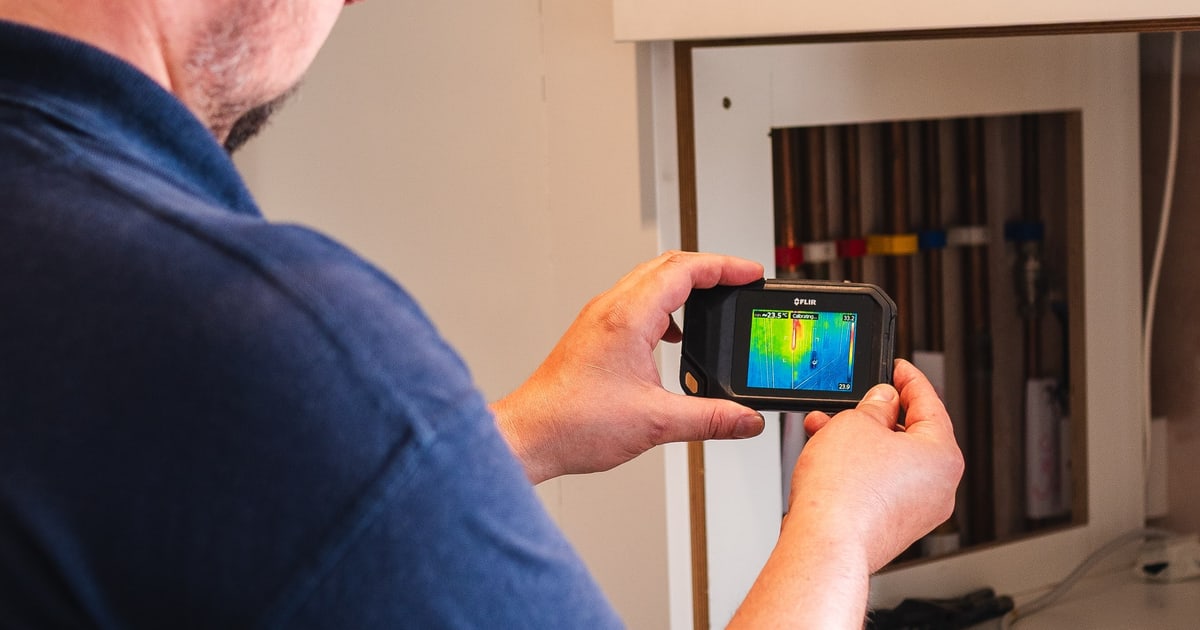
Thermal Imaging Camera. Used on arrival while the heating was live to map pipe routes beneath the hallway floor and identify a thermal hotspot approximately 12 inches from the left-hand side of the hallway radiator.
Damp Meter. Applied to all areas identified by the thermal camera; returned a reading of 999 at the hallway hotspot location and dry readings six inches either side, pinpointing the moisture concentration precisely.
Acoustic Listening Equipment. Used across the marked areas to listen for sound anomalies in the floor; returned a sound consistent with an active leak at the same hallway location identified by the camera and moisture meter.
Tracer Gas. Introduced to the drained and compressed pipework, then tracked with a gas analyser along known pipe routes; the only point of gas escape was at the left-hand hallway radiator connection, with concentration rising sharply once a pilot hole was drilled at the target location.
Pressure Testing. Used on completion of the repair, with the system held at 1.8 bar for 45 minutes; no measurable pressure loss was recorded, confirming no further leaks were present at the time of testing.
Visual Inspection. Carried out once the laminate and parquet flooring were removed; a lateral fracture on a pulled bend in the central heating pipework was identified as the source of the leak.
Investigation Process
-
1Thermal imaging with heating live
On arrival the central heating was running, so a thermal imaging camera was used immediately to locate pipe routes beneath the hallway floor and flag a thermal hotspot approximately 12 inches from the left-hand side of the hallway radiator. This area was marked with masking tape.
-
2Moisture meter survey
All areas identified by the thermal camera were checked with a moisture meter. The hallway hotspot returned a reading of 999, while readings six inches either side were dry, confirming localised moisture at the same point.
-
3Acoustic testing
Acoustic equipment was used across the marked areas and detected a sound in the floor consistent with an active leak, at the same location identified by both the camera and the moisture meter.
-
4System drained and tracer gas introduced
The central heating system was drained, then cleared with an air compressor to remove residual water from the pipework. Tracer gas was introduced and drawn through the external drain cock before the ground floor pipe routes were walked with a gas analyser.
-
5Tracer gas escape confirmed at hallway radiator
The only area of escaping gas detected by the analyser was around the left-hand radiator connection in the hallway. A three-millimetre pilot hole was drilled into the laminate at the target location, after which gas concentration at the analyser rose sharply, confirming the leak was directly below.
-
6Flooring removed and leak located
With customer consent, a small section of laminate was cut up, revealing parquet flooring beneath with a very high moisture reading. The parquet was removed and, with the compressor re-pressurising the pipework, air could be heard escaping in the floor. A lateral fracture on a pulled bend in the central heating pipework was identified as the source.
-
7Pipe section replaced
The fractured section of pipe was removed and replaced with a new length of copper tube and fittings, soldered into position using solder and flux.
-
8Pressure test and system reinstatement
The repaired system was pressure tested at 1.8 bar for 45 minutes with no measurable pressure loss recorded. The system was then refilled, inhibitor chemical added, vented, and heat tested — heat was achieved at all radiators and hot water operation was confirmed satisfactory.
Result & Outcome

On completion of the repair, the system held 1.8 bar for 45 minutes without any measurable pressure drop, confirming no additional leaks were present. The system was refilled with inhibitor chemical added, vented, and heat tested, with heat confirmed at all radiators and hot water operation found to be satisfactory. The customer's problem of needing to re-pressurise the system multiple times a day has been resolved.
Suspect a leak at your property?
ADI Leak Detection specialists investigate leaks like this across the UK every day. No find, no fee terms apply on qualifying jobs.