
Central Heating Leak Detection in Bordon
A central heating leak in Bordon was located beneath the hallway floor using acoustic listening, thermal imaging, damp metering, and tracer gas, with central heating leak detection confirmed after tracer gas provided the definitive result where other methods had proved inconclusive. The work was carried out by engineer Krzysztof Kobylinski.




The original leak detection company, est. 2011
Facts
| Location | Bordon |
|---|---|
| County | Hampshire |
| Leak Type | Central Heating Leak Detection |
| Property Type | Residential property |
| Detection Method | Acoustic Listening, Thermal Imaging, Damp Meter, Tracer Gas, Pressure Testing |
| Outcome | Leak found in deteriorated copper pipe beneath hallway concrete floor, repaired. |
Symptoms
The heating system at a property in GU35 had stopped working entirely. The boiler pressure had dropped to 0 bar, there was no heat being produced, and no visible water was present anywhere in the property.
With no obvious signs of a leak on the surface and no damage found during the initial inspection, this was a concealed loss of pressure within the heating circuit.
Situations like this — where the system has lost pressure but left no visible trace — require methodical central heating leak detection to establish where the water is going. The absence of surface moisture or physical damage made it clear that if a leak existed, it was almost certainly underground or otherwise hidden beneath the building fabric.
Methods Used

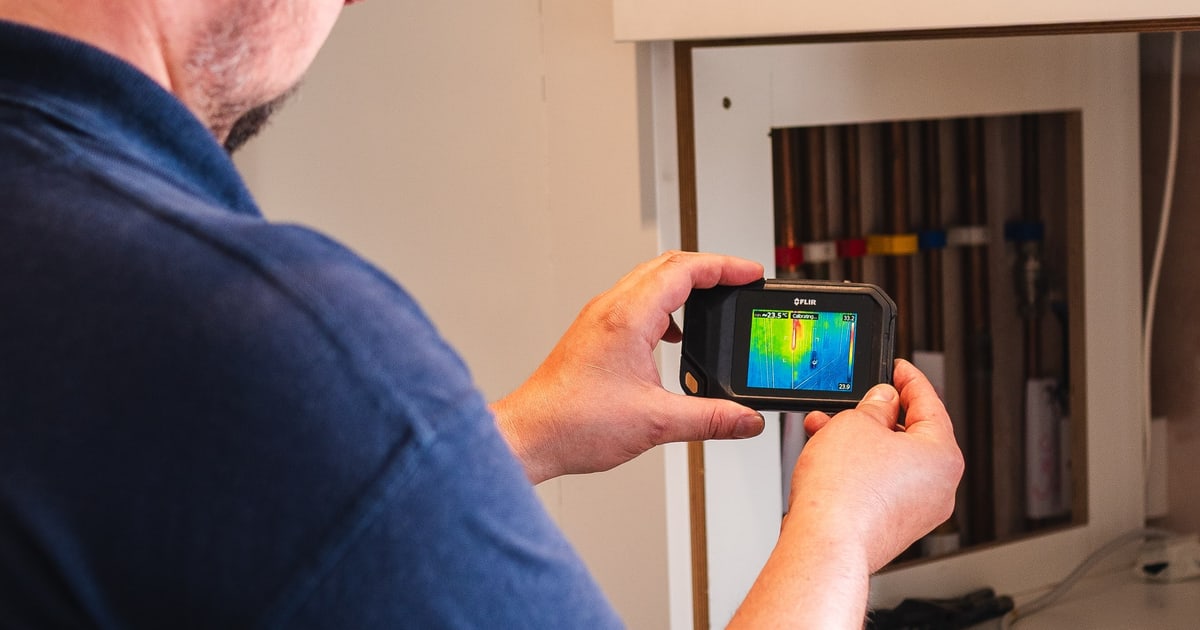
The investigation began with acoustic listening, which picked up a clear noise at one radiator in the hallway — this gave an early focus point for the rest of the work. Thermal imaging was attempted but returned no useful results.
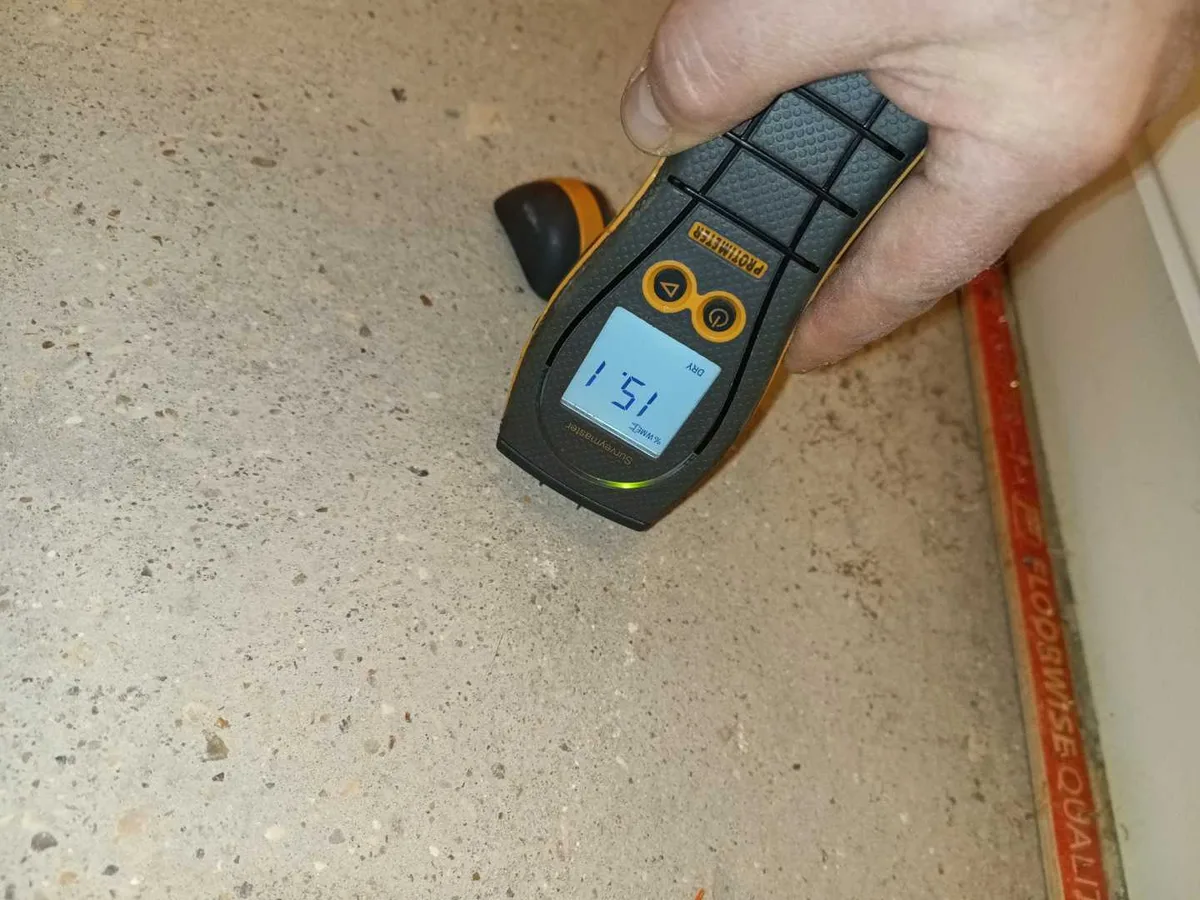
A damp meter was also used, but the readings were not conclusive. Tracer gas was then introduced to the system and produced a strong reading near the hallway radiator, confirming that area as the leak location.
This combination of methods is standard practice in central heating leak detection where the leak is concealed beneath solid floors. With acoustic and gas evidence both pointing to the hallway, the decision was made to lift the carpet and open the concrete floor.
A 120mm channel was cut into the concrete to expose the pipework beneath, where two copper heating pipes were found running under the floor.
Acoustic Listening. A listening stick was used on the floor and around the hallway radiator, and detected a clear noise at that radiator, directing the investigation to the correct area.
Thermal Imaging. A thermal camera was used across the hallway area but returned no results on this job, likely due to the depth of the pipes within the concrete.
Damp Meter. A damp meter was used to check for moisture in the floor and surrounding surfaces, but the readings were not good enough to confirm the leak location.
Tracer Gas. Tracer gas was introduced to the heating circuit and produced a strong reading directly near the hallway radiator, corroborating the acoustic findings and confirming where to excavate.
Pressure Testing. A pressure test was carried out after the repair to confirm the integrity of the replaced pipework, with good results recorded.
Investigation Process
-
1Initial inspection
The engineer arrived and assessed the system. The boiler was at 0 bar, there was no heating, and no visible water or damage was found anywhere in the property.
-
2Acoustic listening
A listening stick was used throughout the property. A clear noise was detected at the radiator in the hallway, identifying it as the primary area of interest.
-
3Thermal imaging attempted
A thermal camera was used in the hallway area but returned no results, and could not confirm the leak location.
-
4Damp meter used
A damp meter was applied to the floor and surrounding area, but the readings were not good enough to pinpoint the leak.
-
5Tracer gas introduced
Tracer gas was added to the heating circuit. A strong reading was detected near the hallway radiator, confirming it as the leak area.
-
6Carpet lifted and floor opened
The carpet was removed and a hole was made in the concrete floor, revealing two copper heating pipes beneath. The leak could not be located at this initial point.
-
7120mm channel cut in concrete
A 120mm channel was cut into the concrete floor to expose more of the pipework. The leak was eventually found in a section of copper pipe in very poor condition.
-
8Pipe replaced
Approximately 1 metre of copper pipe was replaced using two straight 15mm copper connectors, 15mm copper pipe, and a 15mm push-fit elbow.
-
9Pressure test carried out
The repaired section was pressure tested and returned good results, confirming the integrity of the repair.
-
10Area made safe
The excavated area was backfilled and cleaned. Concrete reinstatement was not carried out, as remedial works are outside the scope of the service.
Result & Outcome

The leak was located beneath the hallway floor, in a section of copper heating pipe in very poor condition. Tracer gas provided the definitive confirmation after acoustic listening had narrowed the area and thermal imaging and damp metering had both proved inconclusive. A 120mm channel had to be cut into the concrete before the deteriorated pipe section could be exposed and assessed.
Approximately 1 metre of copper pipe was replaced using two straight 15mm connectors, 15mm copper pipe, and a 15mm push-fit elbow. The subsequent pressure test returned good results, confirming the circuit was sound. For any central heating leak detection job where the pipework runs beneath a solid concrete floor, physical excavation is often unavoidable once non-invasive methods have done their work in narrowing the location.
The customer was advised that concrete reinstatement is not part of the service. The area was backfilled, cleaned, and left safe, with the heating system restored to working pressure.
Suspect a leak at your property?
ADI Leak Detection specialists investigate leaks like this across the UK every day. No find, no fee terms apply on qualifying jobs.