
Central Heating Leak Detection in Beccles
A central heating leak in Beccles was located using tracer gas, acoustic listening, and thermal imaging as part of central heating leak detection that pinpointed a cracked push fit fitting beneath the living room floor without lifting any floorboards. Found by engineer Ferenc Gulyas.




The original leak detection company, est. 2011
Facts
| Location | Beccles |
|---|---|
| County | Suffolk |
| Leak Type | Central Heating Leak Detection |
| Property Type | Residential property |
| Detection Method | Pressure Testing, Sectional Isolation, Tracer Gas, Acoustic Listening Equipment, Thermal Imaging, Borescope |
| Outcome | Leak found beneath living room floor, cracked push fit fitting replaced. |
Symptoms
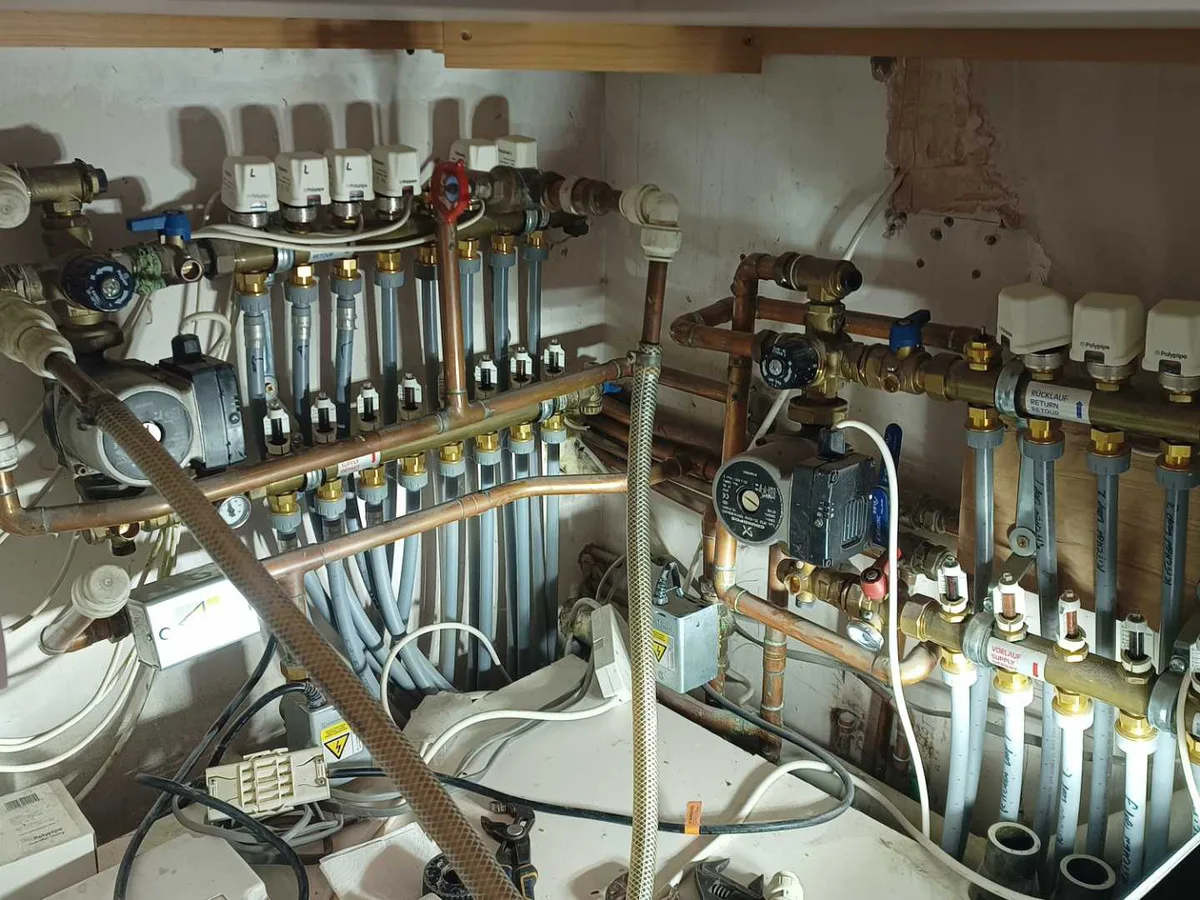
The heating system at a property in NR34 was losing pressure on a recurring basis. The installation was a complex one — an oil combi boiler located outside, two underfloor heating manifolds in a utility room cupboard (one serving eight zones, another serving six zones), a hot water cylinder, and eight further radiators in the bedroom area.
With mixed flooring throughout and no visible evidence of a leak anywhere in the property, there was no straightforward way to identify the source without a structured investigation.
Methods Used

Given the size and complexity of the system, the investigation for this central heating leak detection job required a staged approach. The system was first separated into distinct sections and pressure tested with water to isolate which part was responsible.
The underfloor heating circuits and the boiler both passed their pressure tests, confirming the leak was confined to the radiator pipework. A full bore lever valve was fitted to allow the manifold to be properly isolated during subsequent testing.
Tracer gas was then introduced into the radiator circuit, and a gas detector identified a probable leak location in the corridor area. Acoustic equipment was used to narrow this down further, ultimately pointing to the living room.
Pressure Testing. Used to test the underfloor heating circuits, boiler, and radiator pipework separately, confirming the leak was isolated to the radiator side of the system.
Sectional Isolation. A 22mm full bore lever valve was fitted to isolate the underfloor manifold from the radiator circuit, allowing each section to be tested independently.
Tracer Gas. Introduced into the radiator pipework after the underfloor and boiler circuits were cleared; the detector identified a probable leak location in the corridor area.
Acoustic Listening Equipment. Used after the tracer gas indicated the corridor area, acoustic equipment refined the leak location down to a specific point in the living room.
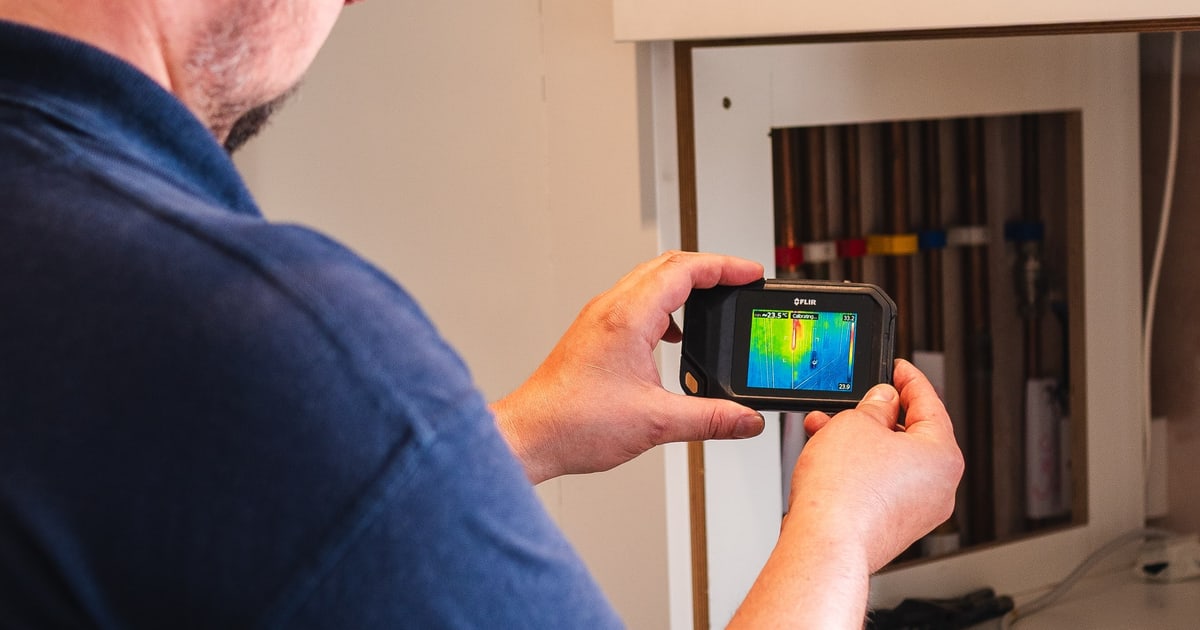
Thermal Imaging. Deployed during the investigation to assess the flooring and surrounding surfaces for thermal anomalies consistent with an active water leak beneath.
Borescope. Available as part of the investigative toolkit to inspect concealed areas without unnecessary exposure of the floor.
Investigation Process
-
1System separated and pressure tested
The heating system was divided into sections and each was pressure tested with water. The underfloor heating circuits passed, and the boiler passed, confirming the leak was within the radiator pipework.
-
2Lever valve fitted for isolation
A 22mm full bore lever valve was fitted to isolate the underfloor manifold from the rest of the system, enabling a clean and controlled investigation of the radiator circuit.
-
3Tracer gas introduced into radiator circuit
Tracer gas was introduced into the confirmed leaking circuit. The detector identified a possible leak location in the corridor area of the property.
-
4Acoustic equipment used to narrow location
Acoustic equipment was deployed to refine the signal from the tracer gas investigation, reducing the area of interest to a specific point in the living room.
-
5Customer informed of findings and options
Before any floor was disturbed, the customer was informed of the suspected location and the proposed next steps, including what exposure of the wooden floor would involve.
-
6Wooden floor exposed at identified location
The wooden floor in the living room was lifted at the pinpointed location to gain access to the pipework beneath.
-
7Leak identified on push fit fitting
A cracked push fit fitting was found at the exposed location — this was the source of the pressure loss in the heating system.
-
8Fitting replaced and system retested
The cracked fitting was replaced with new Hep2O push fit fittings. The system was pressure tested again and passed, confirming no further leak was present.
-
9Inhibitor added, system restored
Inhibitor was added to the heating system and the system was fully restored to working order throughout the property.
Result & Outcome

The leak was located beneath the living room floor, caused by a cracked push fit fitting on the radiator pipework. The combination of tracer gas and acoustic equipment used during this central heating leak detection job made it possible to pinpoint the fault to a precise location before any floorboards were lifted, minimising unnecessary disruption to the wooden floor.
Suspect a leak at your property?
ADI Leak Detection specialists investigate leaks like this across the UK every day. No find, no fee terms apply on qualifying jobs.