
Underground Water Mains Leak Detection in Twyford
A underground mains leak in Twyford was located using a damp meter, thermal imaging, acoustic listening, and tracer gas, with water mains leak detection confirming the source beneath the kitchen and living room floor at a dissimilar metal pipe joint in the concrete slab. Found by engineer Kyle Storkey.




The original leak detection company, est. 2011
Facts
| Location | Twyford |
|---|---|
| County | Berkshire |
| Leak Type | Water Mains Leak Detection |
| Property Type | Residential property |
| Detection Method | Damp Meter, Thermal Imaging, Acoustic Listening Equipment, Tracer Gas |
| Outcome | Mains leak found beneath kitchen floor, pipe joint repaired. |
Symptoms

A property in RG10 presented with visible water damage to the walls of both the kitchen and living room. The extent of the damage suggested the source had been active for some time, with moisture affecting multiple areas across the ground floor.
The combination boiler in the utility room was holding pressure above 1 bar with no active recharging, ruling it out as a contributing factor.
With the property not on a water meter, there was no usage data to indicate when the problem had started or how significant the loss was. The pattern of damage across two adjoining rooms pointed toward a subsurface leak affecting the shared floor area beneath the tiles.
A water mains leak detection survey was commissioned to locate the source without unnecessary disruption to the property.
The distribution of moisture across the kitchen and living room walls and floors indicated that water had been travelling beneath the finished surfaces for a sustained period, saturating the substrate before becoming visible at wall level.
Methods Used

The investigation followed a structured progression from non-invasive survey through to targeted access. Moisture mapping was carried out first across the affected walls and floor tiles to establish the extent of elevated readings and define the area of interest.
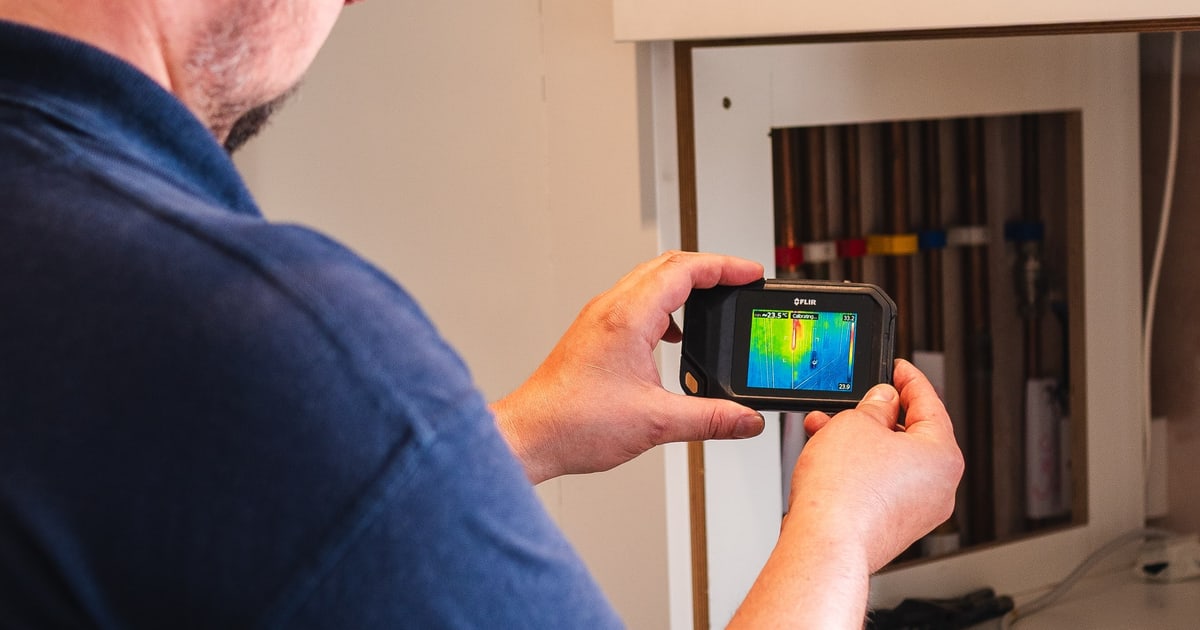
Thermal imaging of the floor then identified specific saturation zones beneath the surface, narrowing the search considerably before any destructive work was considered.
Acoustic testing was applied directly to the areas highlighted by thermal imaging, returning audible evidence of a leak. A tracer gas survey was then set up through the garden hose tap, pressurised to 2 bar, and the floors were swept with an electronic gas sensor.
Large concentrations of escaping gas were detected across the kitchen and living room floor, allowing a precise access point to be marked on the tilework. This methodical approach — standard practice in water mains leak detection — meant that tile removal and concrete slab access were limited to the confirmed leak area only.
Damp Meter. Used to map moisture levels across the kitchen and living room walls and floor tiles, confirming elevated readings that defined the affected zone.
Thermal Imaging. Applied to the kitchen and living room floors to identify saturation areas beneath the tile surface, directing the subsequent acoustic and gas testing.
Acoustic Listening Equipment. Deployed over the thermally identified saturation zones, returning audible evidence of a leak beneath the floor.
Tracer Gas. Introduced through the garden hose tap at 2 bar pressure; an electronic gas sensor was used to sweep the floors, locating large concentrations of escaping gas that pinpointed the exact access position.
Investigation Process
-
1Initial Assessment
Water damage was noted to the walls of the kitchen and living room. The combination boiler in the utility room was checked — pressure was above 1 bar with no recharging occurring, ruling out the heating system as the source.
-
2Moisture Mapping — Walls and Tiles
A damp meter was used to map moisture across the damaged walls and the tiled floor surfaces of both the kitchen and living room, confirming elevated readings throughout the affected area.
-
3Thermal Imaging — Floor Survey
Thermal imaging was carried out across the kitchen and living room floors, identifying specific saturation zones beneath the tiles.
-
4Acoustic Testing
Acoustic equipment was applied to the floor at the saturation areas identified by thermal imaging, returning audible evidence consistent with an active leak below.
-
5Tracer Gas Survey
Tracer gas was introduced through the garden hose tap and pressurised to 2 bar. An electronic gas sensor was used to sweep the kitchen and living room floor, detecting large amounts of escaping gas and confirming the leak position.
-
6Access Point Marked
An X was marked on the tilework at the confirmed leak location. Following discussion with the client, access and repair were accepted.
-
7Tile Removal and Slab Access
Tiles were removed and the concrete slab broken out at the marked location to expose the pipework below.
-
8Leak Located and Repaired
The leak was found on the mains water connection at the point where a 28mm steel pipe reduced to 15mm copper. A new pipe and fittings were installed to complete the repair.
Result & Outcome

The leak was located on the mains water supply connection beneath the kitchen and living room floor, specifically at the transition point where a 28mm steel pipe reduced to 15mm copper. This type of joint — a dissimilar metal connection under mains pressure — is a known failure point, and the sustained water loss had saturated the concrete slab and wicked up into the surrounding walls before the damage became visible.
The repair was carried out on site using 15mm copper pipe and fittings, restoring the supply connection with a sound, like-for-like replacement. Because the tracer gas survey had pinpointed the exact access location, tile removal and slab penetration were confined to the area directly above the fault, limiting the scope of disruption.
For a water mains leak detection case of this kind — where damage has spread across multiple rooms from a single subsurface source — precise location before access is essential. The property was left with the supply repaired and a recommendation to contact the insurer to progress strip-out, drying, and redecoration of the water-damaged areas.
Suspect a leak at your property?
ADI Leak Detection specialists investigate leaks like this across the UK every day. No find, no fee terms apply on qualifying jobs.