
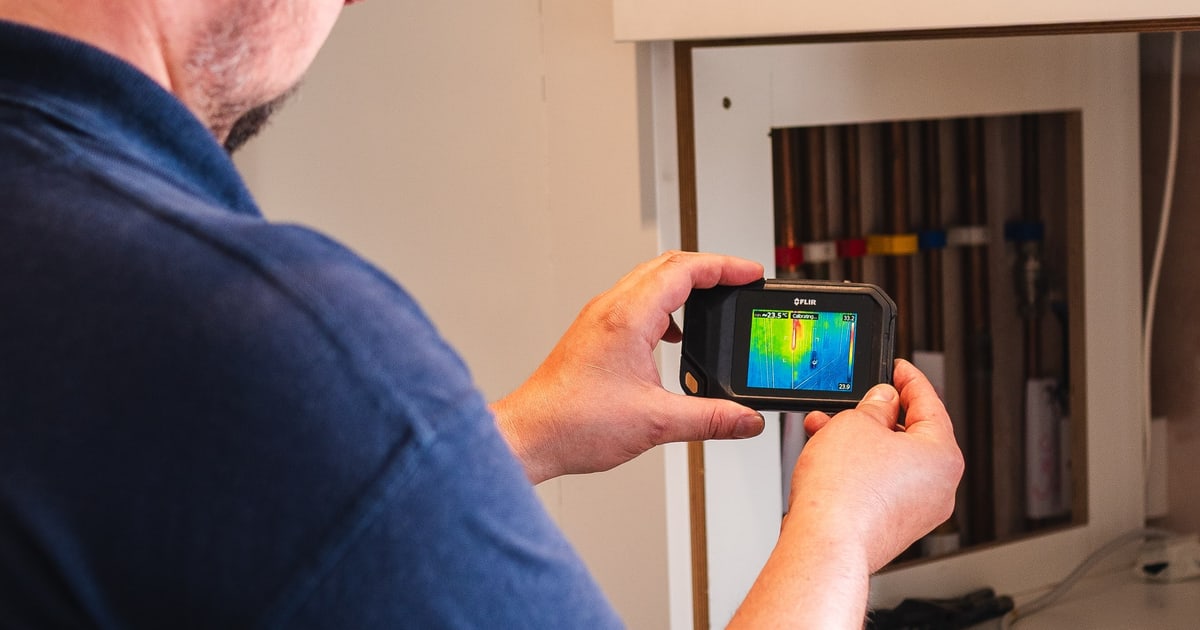
Internal Cold Mains Leak Detection in Telford
A cold mains leak in Telford was located using acoustic listening, tracer gas, pressure testing, borescope, and visual inspection as part of water mains leak detection that traced the source to the cold feed pipe beneath the living room floor. The work was carried out by engineer Phillip Whitehouse.




The original leak detection company, est. 2011
Facts
| Location | Telford |
|---|---|
| County | Shropshire |
| Leak Type | Water Mains Leak Detection |
| Property Type | Residential property |
| Detection Method | Pressure Testing, Tracer Gas, Acoustic Listening Equipment, Visual Inspection, Borescope |
| Outcome | Pinhole leak found beneath living room floor on cold feed, repaired. |
Symptoms
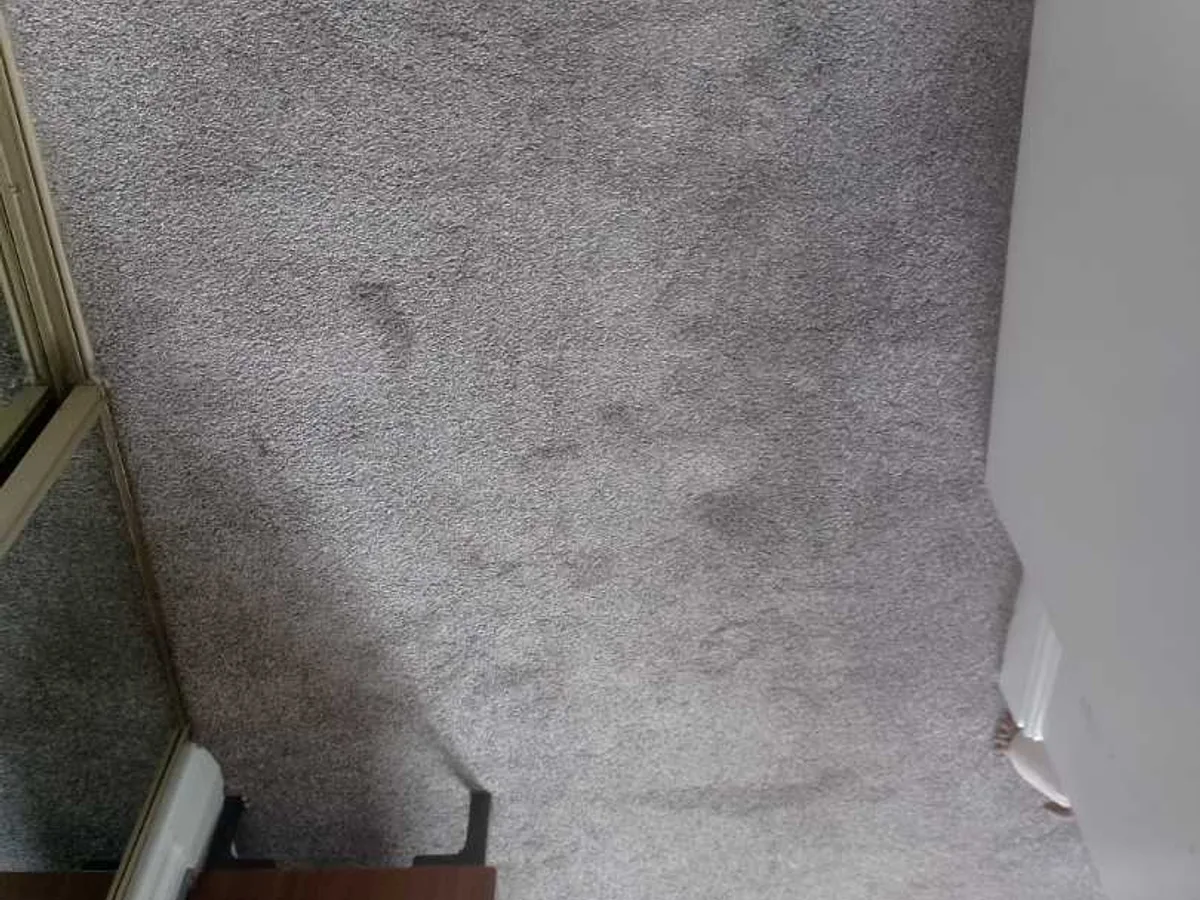
The occupant of a detached house in a property in TF7 noticed a damp patch appearing on the ceiling and wall in the living room. The property has an unvented hot water and heating system, with the internal stop tap located in a corner unit in the kitchen.
The visible damp was the first sign that water was escaping somewhere within the building's pipework.
Because the property has both heating and hot water circuits in addition to the cold mains supply, there were several potential sources for the leak. Establishing which system was affected — and precisely where — required a methodical process of isolation and testing.
This is exactly the kind of job where internal leak detection is needed: the symptom is visible, but the source is hidden.
Without pinpointing the leak accurately, any repair attempt risks opening up unnecessary areas of the property or missing the fault entirely. A structured detection approach was the only reliable way to identify the damaged section of pipe.
Methods Used
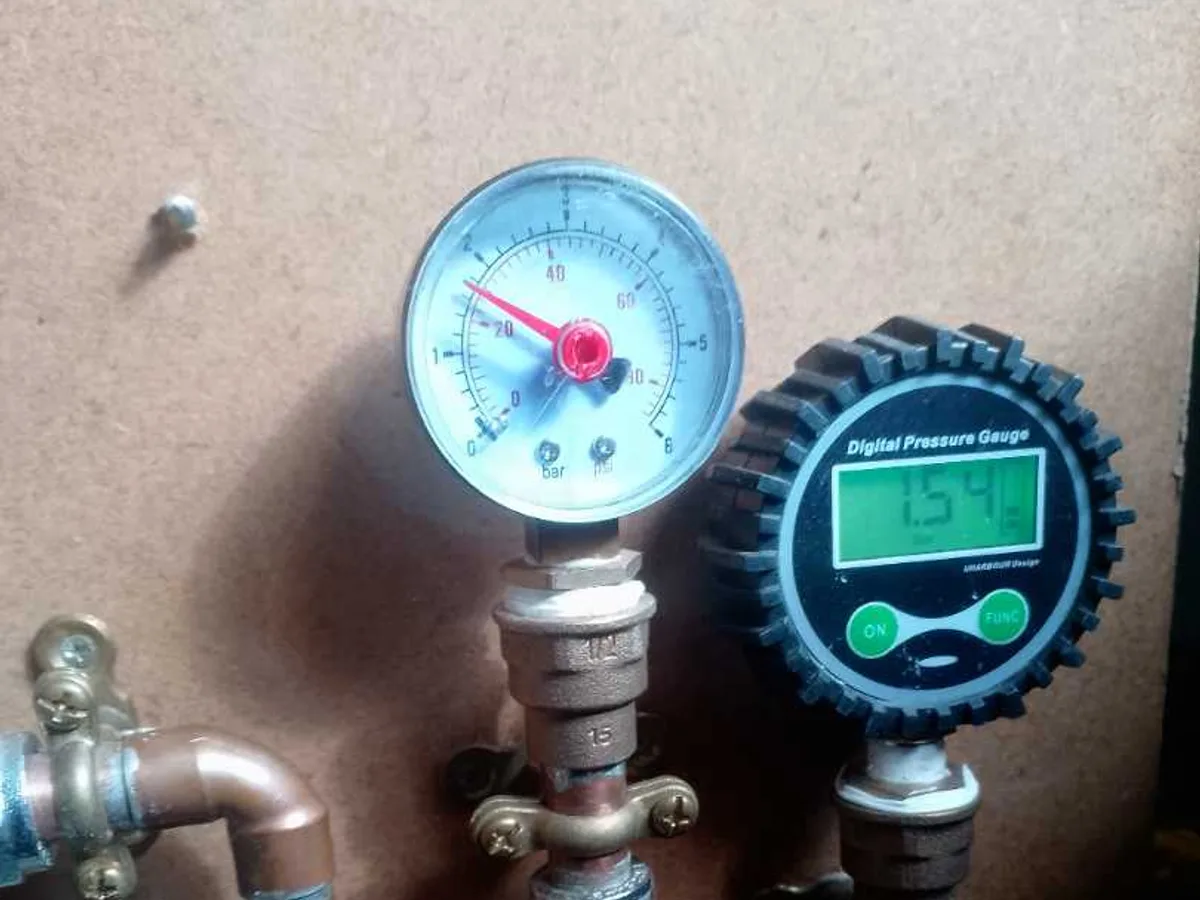
The investigation began with isolation of the internal stop tap and a full drain-down of the system. Pressure testing equipment was connected to the cold mains supply, and the pipework was pressurised to 1.5 bar.
After 15 minutes, a drop of 0.1 bar was recorded. The heating system was then isolated and the test repeated — pressure continued to fall.
The hot water system was isolated next, but the pressure drop persisted, confirming the fault lay on the cold feed rather than in either of the other circuits.
Tracer gas was introduced to attempt to pinpoint the leak, but the leak rate was too high for that method to produce a reliable result. Acoustic testing was carried out instead and produced a positive signal, directing attention to a specific area of the living room floor.
Internal leak detection of this kind — working systematically through pressure isolation, tracer gas, and acoustic listening — is what allows a precise location to be established without unnecessary disruption to the property.
Pressure Testing. Pipework was pressurised to 1.5 bar and the system was isolated in stages — heating first, then hot water — to confirm the fault was on the cold feed by observing continued pressure drop after each isolation.
Tracer Gas. Tracer gas was introduced into the pipework, but the leak rate was too high for gas to accumulate and produce a detectable signal at the surface.
Acoustic Listening Equipment. Acoustic testing was performed after the tracer gas method was ruled out, and produced a positive result that directed the engineer to the area of floor directly above the damaged pipe.
Visual Inspection. Once the carpet was lifted and the floorboards removed, a visual inspection confirmed a damp patch on the boards and allowed the pinhole leak on the cold feed pipe to be identified directly.
Borescope. A borescope was available as part of the equipment set brought to the property in TF7 for this internal leak detection job.
Investigation Process
-
1Symptom noted on arrival
The customer showed the engineer a damp patch on the ceiling and wall in the living room, which was the starting point for the investigation.
-
2Stop tap isolated and system drained
The internal stop tap in the kitchen corner unit was closed and the system was fully drained down before testing began.
-
3Pressure test carried out
Testing equipment was connected to the cold mains and the pipework was pressurised to 1.5 bar. After 15 minutes, pressure had dropped by 0.1 bar, confirming a leak was present.
-
4Heating system isolated and retested
The heating circuit was isolated and the pressure test repeated. Pressure continued to fall, ruling out the heating system as the source.
-
5Hot water system isolated and retested
The hot water system was then isolated. Pressure still continued to drop, confirming the fault was on the cold feed.
-
6Tracer gas introduced
Tracer gas was introduced into the system in an attempt to locate the leak, but the leak rate was too high for the method to produce a usable result.
-
7Acoustic testing carried out
Acoustic equipment was deployed and produced a positive signal, identifying the area of the living room floor where the leak was located.
-
8Carpet lifted and floorboards removed
The carpet was lifted over the identified area, revealing a damp patch on the floorboards. The boards were removed to expose the pipework beneath.
-
9Pinhole leak found and repaired
A pinhole leak was identified on the cold feed pipe. Approximately eight inches of damaged copper pipe were cut out and replaced using two press-fit couplings and new copper pipe.
-
10Floor reinstated
The floorboards were refitted and the carpet was relaid, leaving the floor in the same condition as before work began.
Result & Outcome

The leak was found beneath the living room floor on the cold feed pipe. A pinhole had developed in the copper, allowing water to track upward and appear as dampness on the ceiling and wall above. Acoustic testing was the method that delivered the result after tracer gas was ruled out due to the leak rate — a common situation in internal leak detection where the appropriate method depends on conditions found on the day.
The repair involved cutting out approximately eight inches of the damaged copper pipe and fitting a new section using two press-fit couplings. This is a clean, reliable repair method that avoids the need for soldering in a confined underfloor space. Once the pipe was replaced, the floorboards and carpet were refitted.
With the cold feed restored and the floor reinstated, the source of the damp has been eliminated. No further recommendations were made, indicating the remainder of the system was found to be in satisfactory condition.
Suspect a leak at your property?
ADI Leak Detection specialists investigate leaks like this across the UK every day. No find, no fee terms apply on qualifying jobs.