
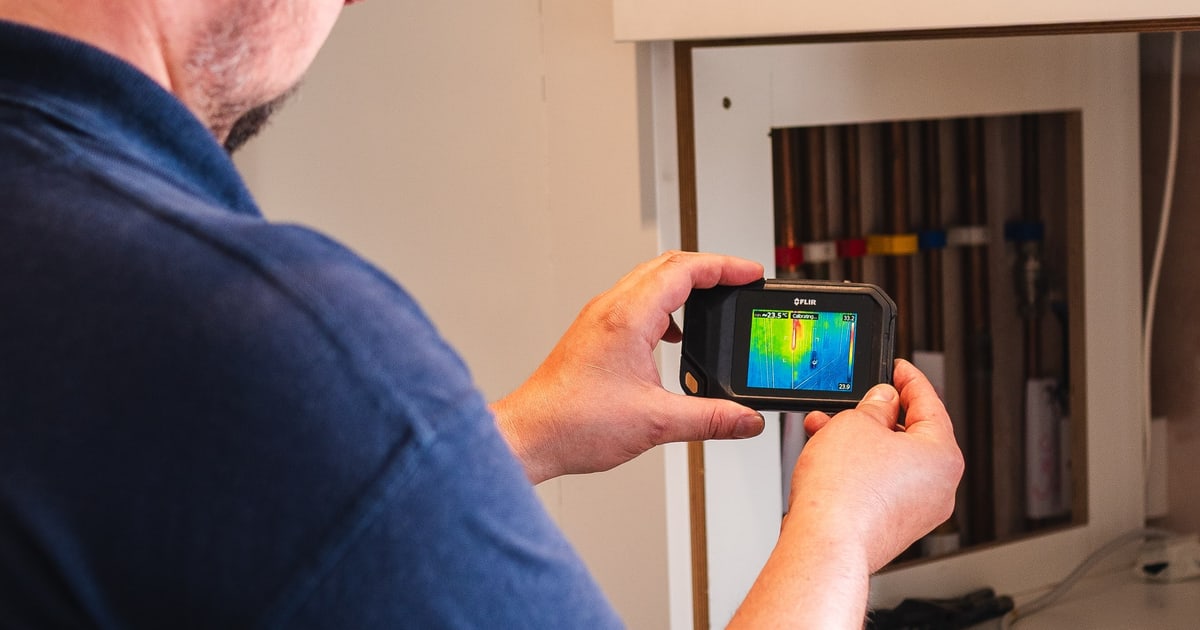
Underground Water Mains Leak Detection in Telford
A underground mains leak in Telford was located using pressure testing, tracer gas, acoustic listening, and visual inspection as part of water mains leak detection that traced the burst to where the incoming mains ran beneath a drainage pipe. Found by engineer Phillip Whitehouse.




The original leak detection company, est. 2011
Facts
| Location | Telford |
|---|---|
| County | Shropshire |
| Leak Type | Water Mains Leak Detection |
| Property Type | Residential property |
| Detection Method | Pressure Testing, Tracer Gas, Acoustic Listening Equipment, Visual Inspection |
| Outcome | Underground mains burst located at front of property, excavated and repaired. |
Symptoms
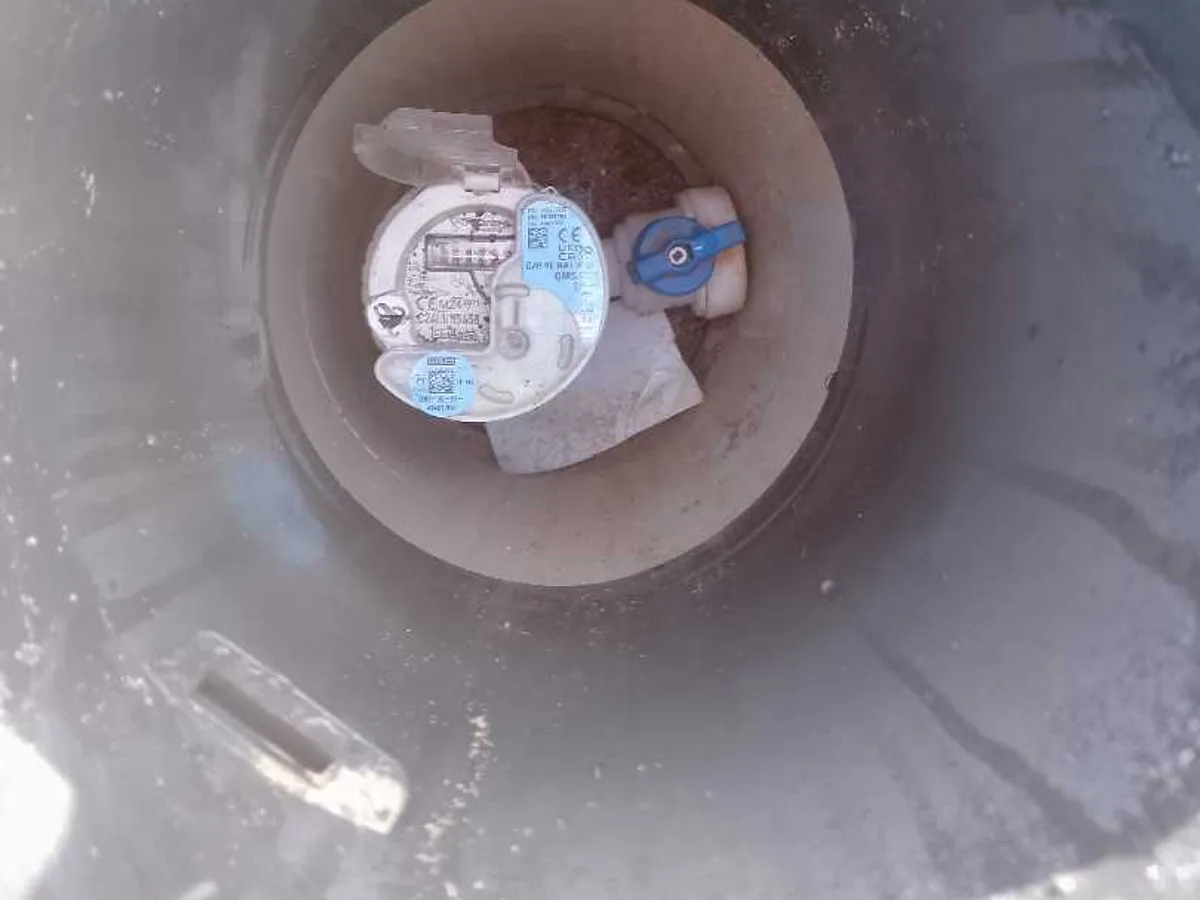
The customer at a semi-detached property in TF3 reported significant water loss from the incoming mains supply. The volume of water being lost was notable enough to raise immediate concern, and with the internal stop tap located under the basin in the downstairs toilet and an external stop tap on the front drive, the layout of the supply gave a clear starting point for investigation.
A water mains leak detection job like this — where substantial pressure loss is reported but the pipe runs underground — requires a methodical approach to confirm the leak, isolate its position, and avoid unnecessary excavation. The challenge at this property was that the mains ran beneath a drainage pipe, which introduced the possibility of false acoustic readings during the search.
Methods Used

The investigation began with a meter check carried out with the internal stop tap closed. This immediately confirmed that water was being lost from the incoming mains rather than the internal pipework.
Pressure testing equipment was then connected to the mains pipe under the sink and tested to 3 bar; the pressure dropped quickly, indicating a substantial breach in the pipe.
Tracer gas was introduced to the line and a surface search was conducted across the front of the property, where results were detected. Air and water were then combined and acoustic testing was applied to narrow down the precise location.
The mains running beneath a drainage pipe complicated the acoustic readings, requiring the excavation to be extended before the burst pipe was reached and visually confirmed. This combination of methods is standard practice in water mains leak detection where underground routing makes the leak inaccessible without targeted digging.
Pressure Testing. The mains pipe was pressurised to 3 bar with the internal stop tap closed; the rapid pressure drop confirmed a significant leak on the incoming mains before any ground was broken.
Tracer Gas. Tracer gas was introduced into the mains pipe and detected at the surface at the front of the property, directing the investigation to the correct area for acoustic testing and excavation.
Acoustic Listening Equipment. Air and water were combined and acoustic testing was used to confirm the leak position identified by tracer gas, though the proximity of a drainage pipe required the dig to be widened before the burst could be reached.
Visual Inspection. Once excavated, the burst section of pipe was visually confirmed, consistent with the rapid pressure loss recorded during the initial pressure test.
Investigation Process
-
1Meter Check with Internal Stop Tap Closed
With the internal stop tap isolated under the downstairs toilet basin, a meter check was carried out. This confirmed that water loss was occurring on the incoming mains supply.
-
2Pressure Test on Mains Pipe
Pressure testing equipment was connected to the mains pipe under the sink and the line was tested to 3 bar. Pressure dropped very quickly, indicating a large and active leak.
-
3Tracer Gas Introduction and Surface Search
Tracer gas was connected to the mains pipe and a surface search was conducted. Results were detected at the front of the property, confirming the general area of the leak.
-
4Acoustic Testing to Confirm Location
Air and water were combined and acoustic testing was applied to the area identified by tracer gas. This narrowed down the position and confirmed where excavation should begin.
-
5Excavation and Leak Found
Digging commenced at the confirmed location. The mains pipe was found to run beneath a drainage pipe, which was causing false acoustic readings, so the hole was opened up further until the burst pipe was reached and visually confirmed.
-
6Repair Carried Out
The burst section of pipe was cut out and replaced using two couplings and new MDPE pipe, restoring the mains supply.
Result & Outcome

The leak was located at the front of the property where the incoming mains ran beneath a drainage pipe. The burst was confirmed visually once the excavation was extended to clear the interference caused by the drainage pipe's proximity. The pressure loss recorded during testing was consistent with what was found — a burst section of MDPE pipe requiring full replacement of that section.
The repair involved cutting out the burst pipe and joining new MDPE pipe in its place using two couplings. This restored the mains supply and resolved the pressure loss. For water mains leak detection jobs of this kind, the outcome depends on the accuracy of the pre-dig work — the combination of tracer gas and acoustic testing meant excavation was kept as targeted as the ground conditions allowed.
Given the age and condition of the existing mains, the recommendation on leaving site was that if further problems arise, a full mains replacement should be considered rather than further section repairs.
Suspect a leak at your property?
ADI Leak Detection specialists investigate leaks like this across the UK every day. No find, no fee terms apply on qualifying jobs.