
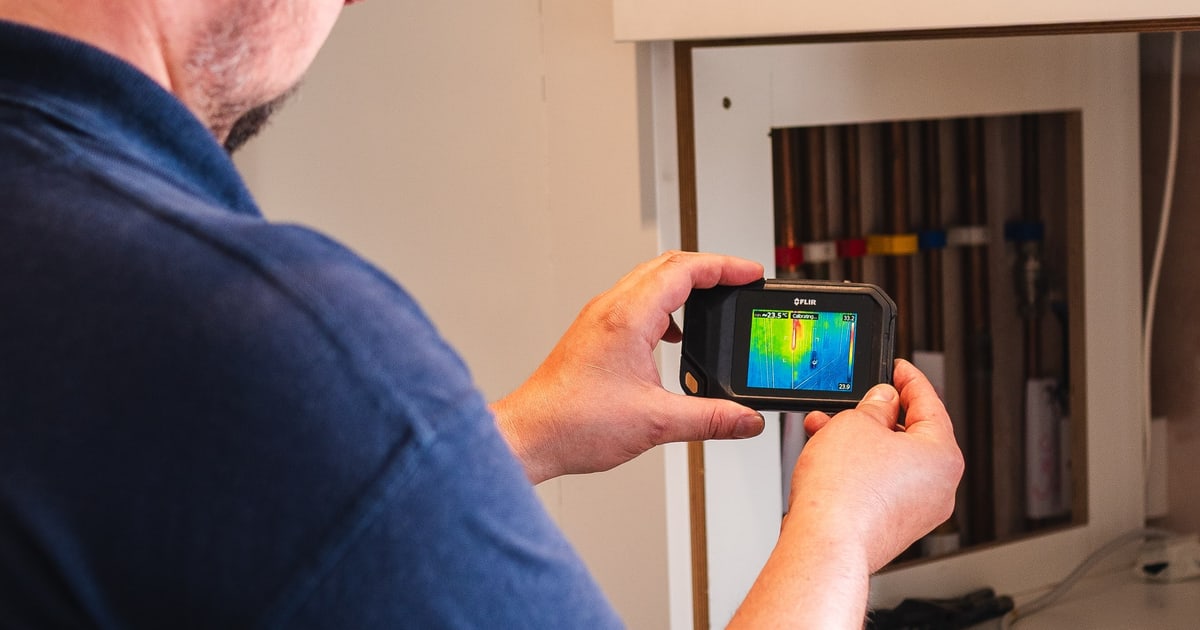
Internal Cold Water Leak Detection in Southampton
An internal cold mains leak in Southampton was located using a damp meter, endoscope camera, pressure testing, and visual inspection as part of a water mains leak detection job, identifying two separate leaks — one beneath the bathroom basin and one within the kitchen wall — both of which were repaired and retested with no further leaks found. The work was carried out by engineer Krzysztof Kobylinski.




The original leak detection company, est. 2011
Facts
| Location | Southampton |
|---|---|
| County | Hampshire |
| Leak Type | Water Mains Leak Detection |
| Property Type | Residential property |
| Detection Method | Damp Meter, Endoscope Camera, Pressure Testing, Visual Inspection |
| Outcome | Two leaks found and repaired; bathroom basin and kitchen wall pipe. |
Symptoms
A property in SO16 developed water ingress in two separate areas — underneath the bathroom basin and in the kitchen. Visible damp staining was present on the kitchen wall, indicating that water had been penetrating the structure for some time.
By the time the engineer arrived, the main water supply had already been turned off due to reported flooding.
The bathroom had recently been renovated, but the condition of the newly installed pipework gave cause for concern. Adhesive from ceramic tiling had been applied directly onto copper pipes, and pipes routed through walls had been left without adequate protection.
The toilet cistern was also connected via a flexible pipe that was too short for the installation — a sign that the original workmanship had been poor throughout.
The property was also operating at an elevated water pressure of approximately 6 bar, which is high for a domestic system. For an internal leak detection job of this kind, high pressure is a significant contributing factor — it increases stress on fittings and joints, making substandard installations more likely to fail.
Methods Used

With the main supply turned off on arrival, the first step was to reinstate the water to allow active investigation of the internal cold water supply. This enabled the engineer to identify live leaks rather than relying solely on residual damp evidence.
The investigation focused on the cold water pipework throughout the property, with particular attention to the recently renovated bathroom and the kitchen wall where staining had been noted.
For an internal leak detection job at this property, the combination of pressure testing, damp meter readings, endoscope camera inspection, and direct visual inspection allowed the engineer to pinpoint two distinct failure points — one at a fitting beneath the basin and one on a 15mm copper pipe within the kitchen wall near the ceiling. Neither leak required destructive investigation beyond targeted access to the affected areas.
Damp Meter. Used to quantify moisture levels in the kitchen wall and bathroom areas, confirming active ingress rather than historic drying damp.
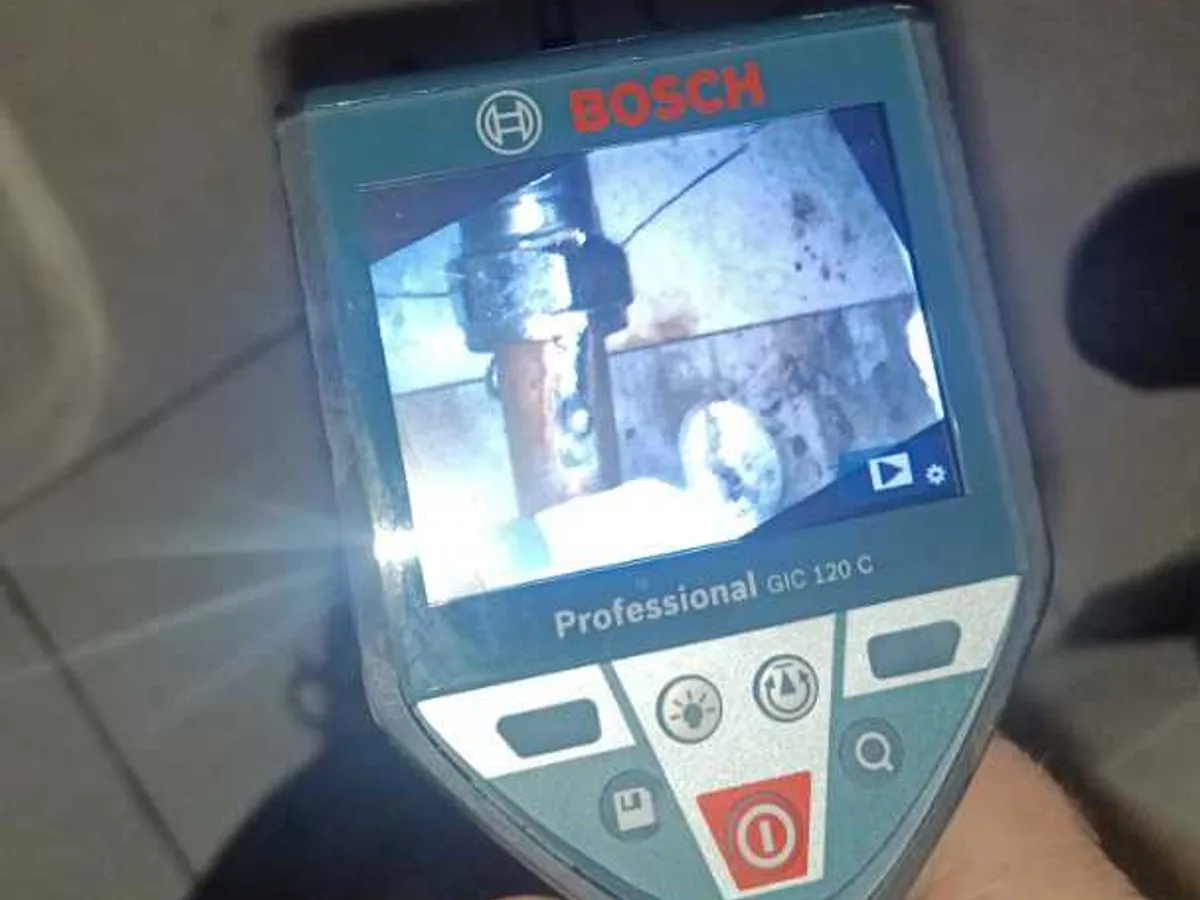
Endoscope Camera. Used to inspect pipework within the wall cavity, helping to locate the 15mm copper pipe fault near the ceiling of the kitchen without unnecessary opening up of the wall.
Pressure Testing. Applied to the cold water supply after the main was reinstated to confirm the presence of active leaks and verify the system pressure at approximately 6 bar.
Visual Inspection. Carried out across the bathroom and kitchen to assess the condition of pipework, fitting quality, tile adhesive contamination on pipes, and the poorly fitted flexible cistern connector.
Investigation Process
-
1Arrival and supply assessment
The engineer arrived to find the main water supply had been turned off due to flooding. An initial visual inspection of the bathroom and kitchen was carried out to assess the visible damp staining and scope of the problem.
-
2Water supply reinstated
The main supply was turned back on to allow active investigation of the internal cold water system and to identify any live leaks under normal operating conditions.
-
3First leak identified — bathroom basin
A leak was found underneath the bathroom basin, attributed to a poorly installed fitting. The recent renovation work in the bathroom was found to be of poor quality throughout, with tile adhesive applied directly onto copper pipes and insufficient pipe protection within the walls.
-
4Second leak identified — kitchen wall
A leak on a 15mm copper pipe supplying the kitchen was located within the wall near the ceiling. Damp meter readings and endoscope camera inspection guided the engineer to the precise location without unnecessary damage to the structure.
-
5Both leaks repaired
Repairs were carried out using 15mm press fittings, 15mm copper pipe, and silver isolation valves. Both leak points were addressed and the system was made watertight.
-
6System retested and site cleared
Following the repairs, the water supply system was retested and no further leaks were detected. The site was left in a clean, safe, and tidy condition.
Result & Outcome

Two leaks were identified and repaired during this internal leak detection job. The first was beneath the bathroom basin, caused by a poorly installed fitting introduced during a recent renovation. The second was on a 15mm copper pipe within the kitchen wall, located near the ceiling — the source of the damp staining that had been visible on the wall surface. Both were repaired using 15mm press fittings, copper pipe, and silver isolation valves, and the system was retested with no further leaks found.
Beyond the immediate repairs, the investigation revealed a broader concern about the quality of the original installation. Tile adhesive had been applied directly onto copper pipes, pipework within walls lacked adequate protection, and the flexible connector to the toilet cistern was too short. These issues, combined with a system pressure of approximately 6 bar, mean the long-term integrity of the pipework warrants monitoring.
Installation of a pressure reducing valve is strongly advised to bring the system within a safer pressure range for domestic use. All newly installed fittings should also be monitored for any early signs of leakage given the elevated pressure the system was operating under.
Suspect a leak at your property?
ADI Leak Detection specialists investigate leaks like this across the UK every day. No find, no fee terms apply on qualifying jobs.