
Internal Cold Mains Leak Detection in Bolton
An internal cold mains leak at a Bolton property was losing water beneath the lounge floor. Moisture readings in the lounge and garage narrowed the search, tracer gas and acoustic listening located the escape at the back of the lounge, the damaged copper was cut out and replaced with a 15mm plastic section joined by a compression fitting, and the repaired pipework was pressure tested.




The original leak detection company, est. 2011
Facts
| Location | Bolton |
|---|---|
| County | Greater Manchester |
| Leak Type | Water Mains Leak Detection |
| Property Type | Residential property |
| Detection Method | Damp Meter, Thermal Imaging, Tracer Gas, Acoustic Listening Equipment, Pressure Testing |
| Outcome | Mains leak found under lounge floor, pipe replaced. |
Symptoms

The customer at a property in BL2 reported a suspected leak on the mains water supply. Notably, there was no drop in boiler pressure, which helped narrow the focus to the cold water mains rather than the heating circuit from the outset.
High levels of moisture had been detected across two areas of the property — the lounge floor and the garage floor — pointing to a subsurface leak that had already caused measurable water damage to the wooden flooring in the lounge.
Water mains leak detection was required to pinpoint the precise escape point, as the leak was not visible at the surface and the affected areas spanned more than one room.
Methods Used

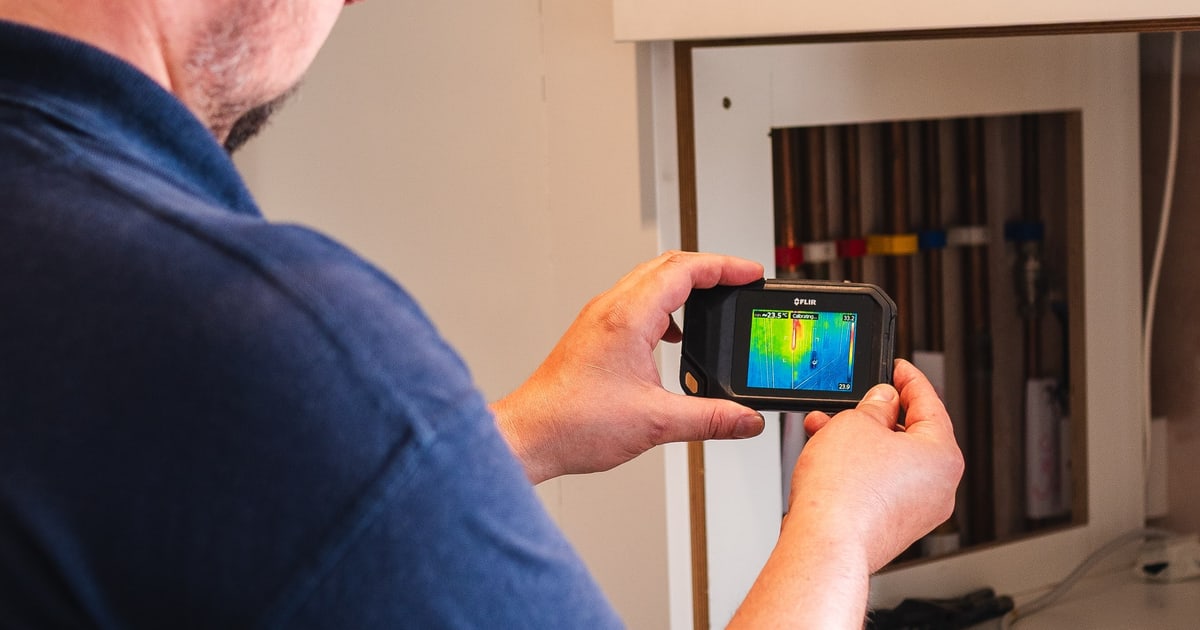
The investigation began with moisture readings taken across the garage and lounge areas to map the extent of elevated damp levels and identify where the leak was most active. Thermal imaging was then used to scan for cold anomalies consistent with escaping mains water beneath the floor surfaces.
A tracer gas test was run from the internal stopcock to the mains stopcock, isolating the supply section under test. Tracer gas was detected in the garage, confirming the leak was on the mains supply line.
Pressure from the mains supply was then matched with the tracer gas to generate a noise signature at the escape point, which the acoustic equipment was used to identify — water movement was detected in the garage and at the back of the lounge area.
This multi-method approach is standard practice in water mains leak detection where a leak is concealed beneath finished floors and spans more than one area. Once the acoustic and tracer gas results converged on the lounge corner, the carpet and flooring were lifted to expose and confirm the leak location.
Damp Meter. Used to take moisture readings across the garage and lounge floors, identifying elevated levels that indicated where water had been escaping beneath the surface.
Thermal Imaging. Carried out a thermal CCTV survey of the affected areas, revealing cold anomalies beneath the floor consistent with the presence of escaping cold mains water.
Tracer Gas. Introduced between the internal stopcock and the mains stopcock; gas detected in the garage confirmed the leak was on the mains supply running through that area.
Acoustic Listening Equipment. Used after mains pressure was matched with the tracer gas to amplify the escape noise, detecting water movement in the garage and at the back of the lounge.
Pressure Testing. Applied to the repaired pipework after the copper section was replaced, confirming the repair had restored integrity to the mains supply.
Investigation Process
-
1Moisture survey — garage and lounge
Moisture readings were taken across the garage floor and the lounge floor. High levels were recorded in both areas, establishing the extent of the affected zone.
-
2Thermal imaging survey
A thermal CCTV survey was carried out across the affected areas. Cold anomalies were identified, consistent with escaping mains water beneath the floors.
-
3Tracer gas test
Tracer gas was introduced from the internal stopcock to the mains stopcock. Gas was detected in the garage, confirming a leak on the mains supply in that area.
-
4Acoustic detection
Mains pressure was matched with the tracer gas to create a noise at the escape point. Acoustic equipment detected water movement in the garage and at the back of the lounge.
-
5Floor lifted — leak exposed
The carpet and flooring were lifted in the corner of the lounge area. This exposed the leak on the mains supply pipe.
-
6Repair carried out
The defective copper pipe was cut out and replaced with a 15mm plastic pipe, joined to the existing copper pipework using a 15mm brass compression fitting.
-
7Pressure test
The repaired section was pressure tested to confirm the integrity of the repair before the area was made good.
Result & Outcome

The leak was located beneath the corner of the lounge floor at the property in BL2. The convergence of tracer gas results in the garage and acoustic detection of water movement at the back of the lounge directed the engineer precisely to the affected section of mains pipe, avoiding unnecessary excavation across the wider floor area.
Once the carpet and flooring were lifted at the identified point, the fault in the copper pipe was exposed and confirmed. The damaged section was cut out and replaced with a 15mm plastic pipe, connected to the existing copper supply using a 15mm brass compression fitting. A pressure test following the repair confirmed the mains supply had been fully restored.
For water mains leak detection jobs of this type — where a concealed leak has caused moisture damage across more than one room — the recommendation is that the wooden flooring affected by water damage in the lounge now goes through a structured drying and restoration programme before any reinstatement work is carried out.
Suspect a leak at your property?
ADI Leak Detection specialists investigate leaks like this across the UK every day. No find, no fee terms apply on qualifying jobs.