
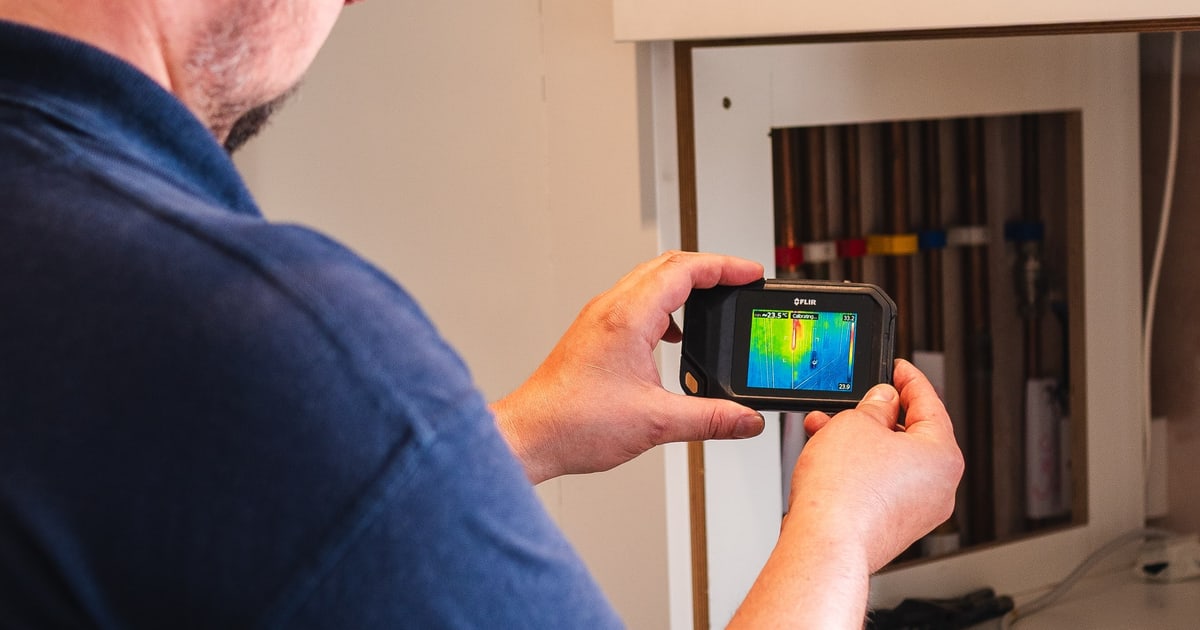
Underground Water Mains Leak Detection in Ipswich
A water mains leak in Ipswich was located using flow metering, pressure testing, tracer gas, and visual inspection, with water mains leak detection confirming the source as a faulty fitting at a historic repair point beneath the driveway in IP3. Found by engineer Ferenc Gulyas.




The original leak detection company, est. 2011
Facts
| Location | Ipswich |
|---|---|
| County | Suffolk |
| Leak Type | Water Mains Leak Detection |
| Property Type | Residential property |
| Detection Method | Flow Metering, Pressure Testing, Tracer Gas, Visual Inspection |
| Outcome | Underground mains leak found beneath driveway, coupling replaced. |
Symptoms
No visible evidence of the leak was present when the engineer arrived. There was no obvious damp, no surface water, and no audible running water.
In a water mains leak detection situation like this, the absence of visible signs is common — underground leaks on mains pipework can run for extended periods without breaking the surface, making systematic testing essential to pinpoint the source.
Methods Used
This approach reflects how water mains leak detection progresses when there is no surface evidence: meter analysis establishes that a leak exists, pressure testing confirms it, and tracer gas narrows the search to a specific ground zone. Paving blocks on the driveway were lifted and the ground excavated based on the gas readings, which led directly to the leak point at a previous repair location in the mains pipework.
Flow Metering. Monitoring the water meter confirmed ongoing flow with the stopcock closed, establishing that a leak was present on the external supply.
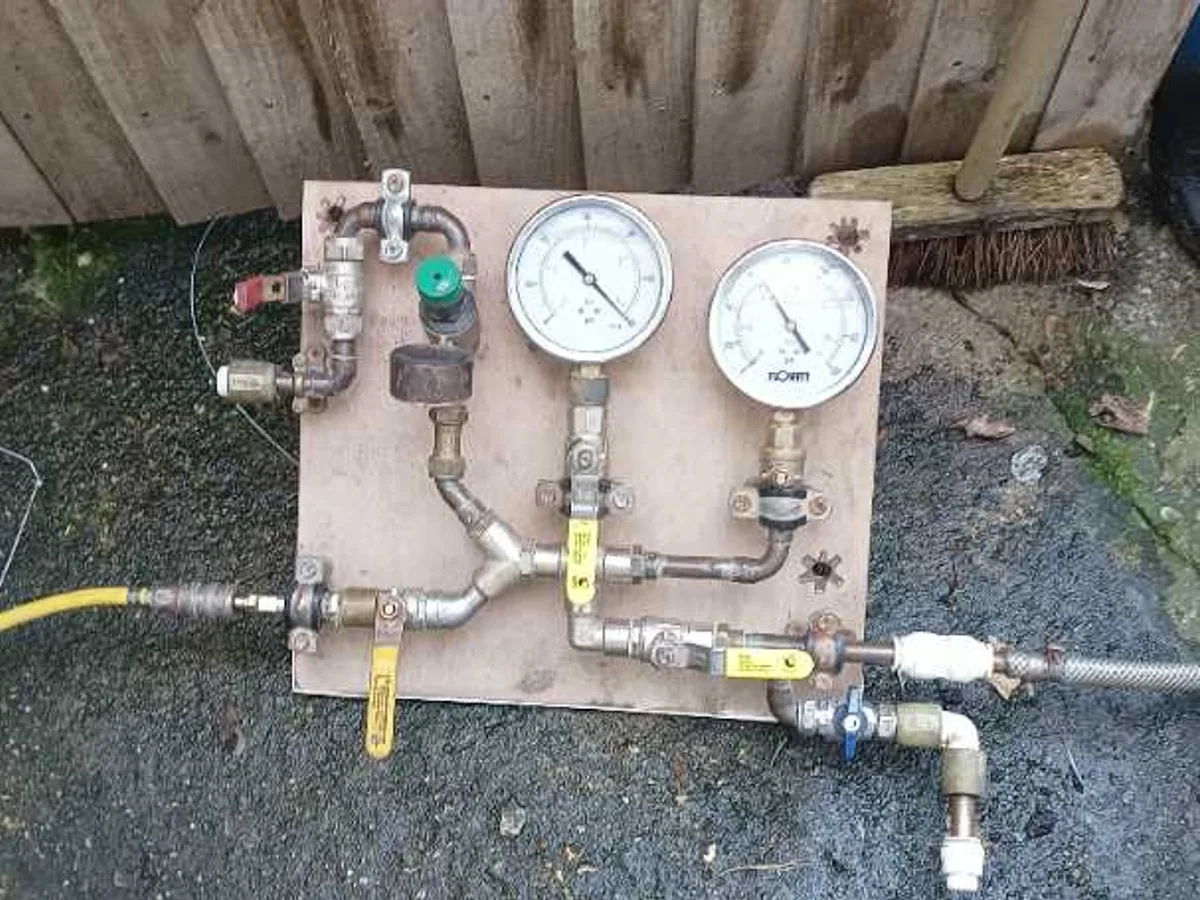
Pressure Testing. A pressure test kit connected directly to the internal stopcock confirmed an active leak within the pipework system.
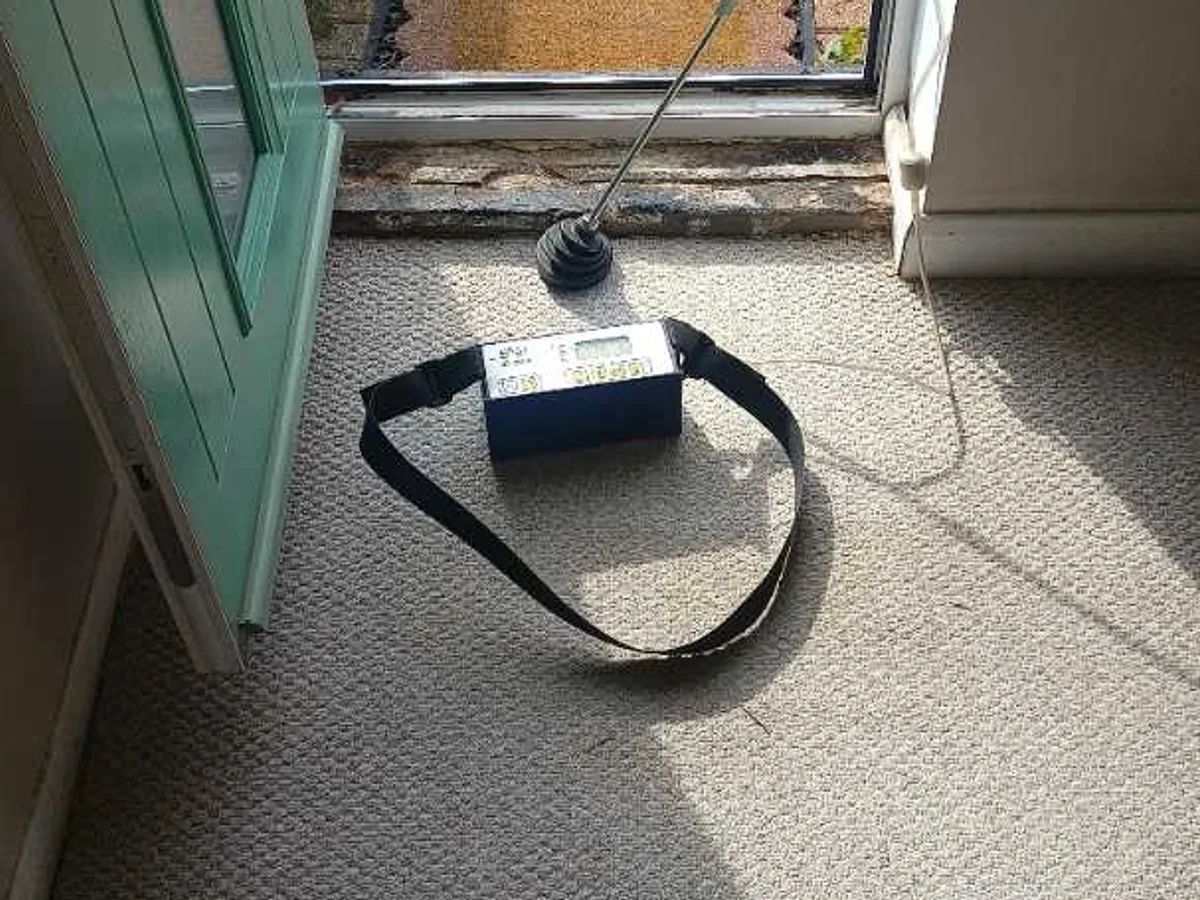
Tracer Gas. Tracer gas was used to trace the leak path through the ground, identifying gas emanating from the driveway area beyond the external brick wall and guiding the excavation to the exact leak point.
Visual Inspection. Once excavated, a direct visual inspection of the exposed pipework identified the faulty Philmac UTC coupling and the incorrectly seated lead pipe as the source of the leak.
Investigation Process
-
1Water meter checked
The water meter in the public footpath was inspected with the internal stopcock closed. Movement on the meter confirmed an active leak on the external mains supply.
-
2Pressure test conducted
A pressure test kit was connected directly to the internal stopcock, confirming the presence of a leak within the system and establishing a baseline for further investigation.
-
3Tracer gas introduced — initial scan
Tracer gas investigation began, with the detector indicating a possible leak location in the main entrance door area. The suspended floor inside the property was carefully exposed, revealing lead pipework beneath.
-
4Leak signal traced to driveway
Further scanning with the tracer gas detector showed gas emanating from the driveway side of the external brick wall, indicating the leak was located outside the building.
-
5Driveway excavated
Paving blocks in the driveway were lifted and the ground excavated at the location indicated by the tracer gas readings.
-
6Leak identified at previous repair point
Excavation revealed two Philmac UTC couplings at a previous repair location. One coupling was leaking because the lead pipework had not been correctly seated within the fitting.
-
7Faulty fitting replaced
The leaking Philmac UTC coupling was removed and replaced with new Philmac UTC couplings and pipework. The repair was then pressure tested and passed with no further leakage detected.
-
8Final meter check and reinstatement
A final water meter investigation on all pipework confirmed no remaining leaks. The suspended floor area inside the property was restored, and the excavated driveway area was backfilled.
Result & Outcome

The property in IP3 was left with the driveway backfilled, the internal suspended floor reinstated, and no active leak on the mains supply. The repair addresses the root cause directly — an incorrectly installed fitting at a historic repair point that had been allowing water to escape into the ground undetected.
Suspect a leak at your property?
ADI Leak Detection specialists investigate leaks like this across the UK every day. No find, no fee terms apply on qualifying jobs.