
External Cold Water Mains Leak Detection in New Marske
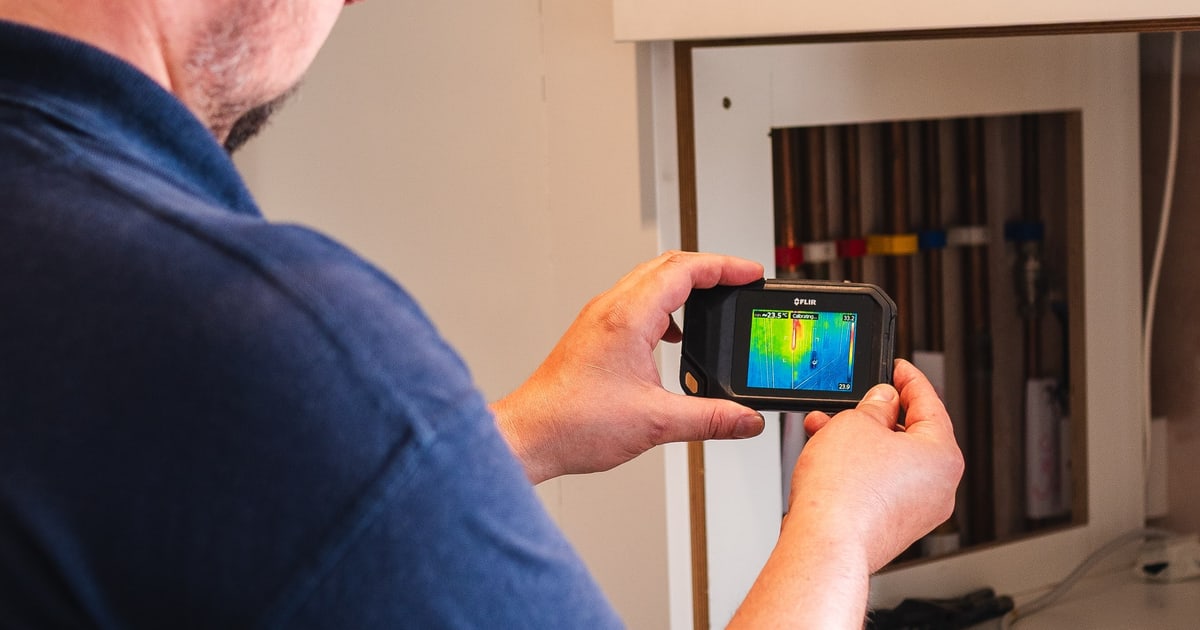
A water mains leak in New Marske was located beneath the kitchen floor using pressure testing, an endoscope camera, acoustic listening, and a damp meter, with water mains leak detection confirming the exact point where the cold water main had been damaged by contact with the floor structure. Found by engineer Robert Gires.




The original leak detection company, est. 2011
Facts
| Location | New Marske |
|---|---|
| Leak Type | Water Mains Leak Detection |
| Property Type | Residential property |
| Detection Method | Pressure Testing, Endoscope Camera, Acoustic Listening, Damp Meter |
| Outcome | Leak found under kitchen floor, mains pipe repaired. |
Symptoms
The property in TS11 is a large semi-detached house where the water meter had been observed spinning continuously and very slowly, indicating a constant draw of water somewhere on the system. This kind of persistent meter movement, even at low speed, points to an active leak rather than normal usage — water was escaping somewhere whether or not any taps or appliances were in use.
To confirm the source was internal to the property rather than a meter fault, an isolation test was carried out. With the internal stopcock isolated, the meter continued to spin.
This ruled out all internal pipework as the sole cause and pointed clearly toward the supply side — the external main cold water pipe feeding the property.
A water mains leak detection visit was required to locate the exact point of failure, as the leaking pipe ran beneath the building with no visible signs at ground level to indicate where the damage had occurred.
Methods Used

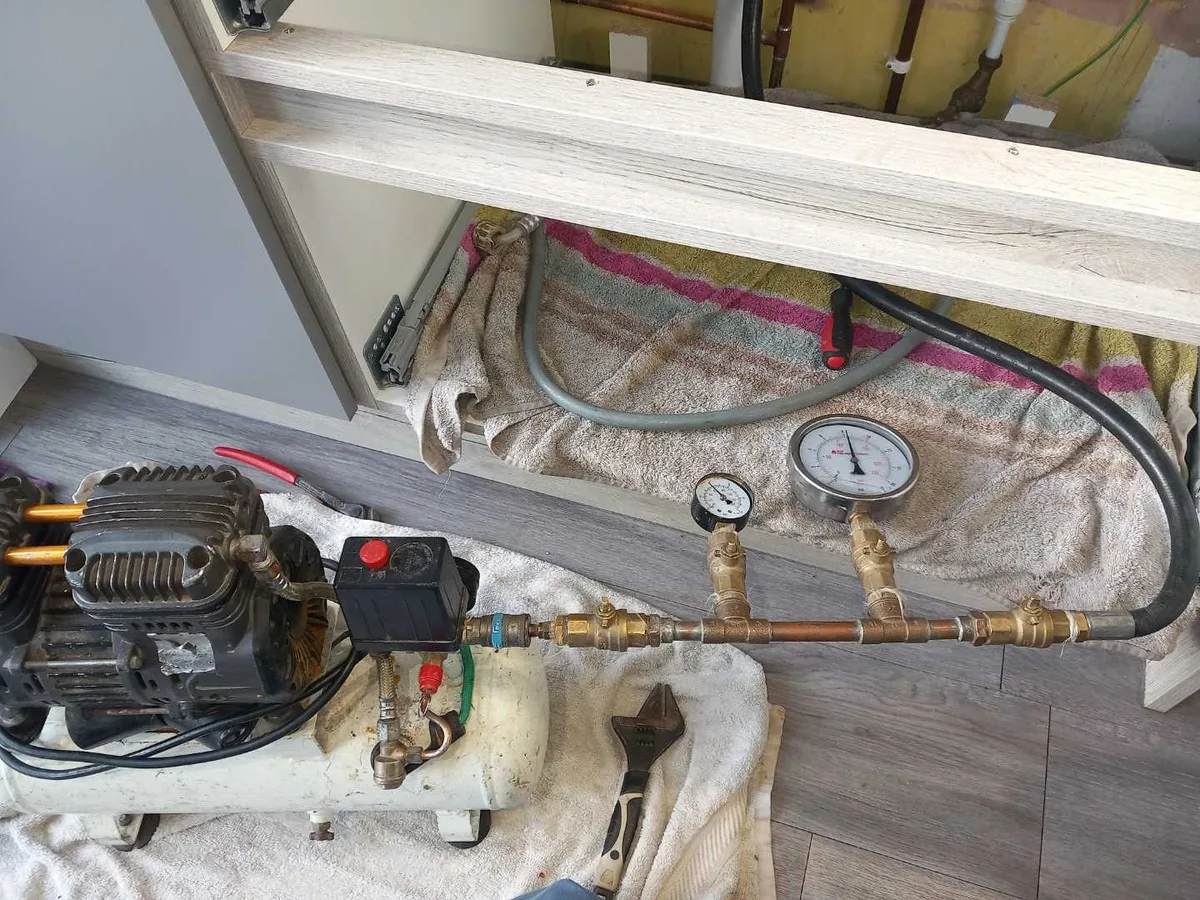
The investigation began with pressure testing to isolate which section of pipework was responsible. The internal cold and hot water pipework was tested at 4 bar for 45 minutes with no pressure loss recorded, confirming those circuits were sound.
The external main cold water pipe was then tested separately at 4 bar and failed within 5 minutes, confirming the fault lay on the mains supply pipe. Audible noise was detected under the kitchen units, which directed the investigation to that area specifically.
With the leak zone identified beneath the kitchen, the unit was removed to gain access. An endoscope camera was used to inspect under the timber floor without unnecessary destruction, and the camera confirmed the external main cold water pipe — an old black plastic pipe — was leaking in the middle of the kitchen floor.
A small section of flooring was then cut to expose and confirm the fault. This methodical approach, combining pressure testing with acoustic observation and visual inspection, is what water mains leak detection requires when pipework is buried beneath a structure.
Pressure Testing. Air pressure at 4 bar was applied separately to the internal pipework and the external cold water main, with the external main failing after five minutes and confirming it as the source of the leak.
Endoscope Camera. The camera was inserted beneath the timber kitchen floor after the unit was removed, allowing the engineer to visually confirm the leaking black plastic mains pipe without cutting the full floor area.
Acoustic Listening. Audible noise detected beneath the kitchen unit directed the investigation to the correct area of the floor before any intrusive work was undertaken.
Damp Meter. Used as part of the on-site survey to assess moisture conditions in the area surrounding the suspected leak beneath the kitchen floor.
Investigation Process
-
1Meter Isolation Test
The internal stopcock was isolated and the water meter was observed. The meter continued to spin, confirming the leak was on the external cold water main rather than the internal system.
-
2Internal Pipework Pressure Test
The internal cold and hot water pipework was pressure tested at 4 bar for 45 minutes. No pressure loss was recorded, clearing the internal circuits entirely.
-
3External Mains Pipe Pressure Test
The external main cold water pipe was pressure tested at 4 bar. The test failed within 5 minutes, confirming the fault was on the mains supply pipe.
-
4Acoustic Observation at Kitchen
Noise was detected beneath the kitchen unit, identifying the kitchen floor area as the location to investigate further.
-
5Kitchen Unit Removed and Endoscope Survey
The kitchen unit was removed to expose the floor, and an endoscope camera was used to inspect beneath the timber floor. The camera confirmed the black plastic mains pipe was leaking in the middle of the kitchen floor.
-
6Floor Cut and Leak Confirmed
A small section of the timber floor was cut to access the pipe directly. The external main cold water pipe, which ran beneath the floor and had been damaged by the timber, was confirmed as leaking at that point.
-
7Repair Carried Out
The repair was completed using a 20 mm coupler and two adaptors to transition from the 20 mm pipe back to the existing black plastic mains pipe, restoring the supply.
Result & Outcome

The leak was located beneath the kitchen floor at the property in TS11, in the middle of the kitchen, where the external main cold water pipe — an old black plastic pipe — had been damaged by contact with the timber floor structure. The precise location was confirmed through pressure testing, acoustic detection, endoscope inspection, and targeted floor access, with no unnecessary destruction of the surrounding floor area.
The repair was carried out on site using a 20 mm coupler and two adaptors to reconnect the supply pipe through the transition to the existing black plastic main. The customer has also been advised to replace the external main cold water pipe in full, as the existing old black plastic pipe presents an ongoing risk and the failure identified is consistent with the material's age and condition.
For a water mains leak detection case like this — where the supply pipe is buried beneath a habitable floor with no external surface signs — the combination of pressure isolation and endoscope access is what makes it possible to pinpoint the fault and complete the repair with minimal disruption to the property.
Suspect a leak at your property?
ADI Leak Detection specialists investigate leaks like this across the UK every day. No find, no fee terms apply on qualifying jobs.