
Internal Underground Mains Leak Detection in Rosedale Abbey
A underground mains leak in Rosedale Abbey was located using thermal imaging, a damp meter, pressure testing, tracer gas, and acoustic listening, with water mains leak detection confirming the leaking pipe running beneath the lounge floor. Found by engineer Matthew Barron.




The original leak detection company, est. 2011
Facts
| Location | Rosedale Abbey |
|---|---|
| Leak Type | Water Mains Leak Detection |
| Property Type | Residential property |
| Detection Method | Thermal Imaging, Damp Meter, Pressure Testing, Tracer Gas, Acoustic Listening Equipment |
| Outcome | Underground mains leak located beneath lounge floor, excavated and repaired. |
Symptoms

The owner of a property in YO18 had been notified by their water supplier of a suspected leak on the water supply. On arrival, the customer also reported an unusual noise coming from the pipework in the kitchen — a common secondary indicator that something was wrong beneath the surface.
The combination of a water supplier alert and audible pipe noise pointed toward a pressurised leak somewhere on the incoming mains supply. In cases like this, the source is rarely visible without investigation — pipes running under floors and through walls can leak silently for some time before any obvious surface signs appear.
Water mains leak detection requires a structured approach to narrow down the location before any excavation is considered.
With the leak unconfirmed and its precise location unknown, a full survey of the property was carried out using multiple methods to identify exactly where the water was escaping.
Methods Used

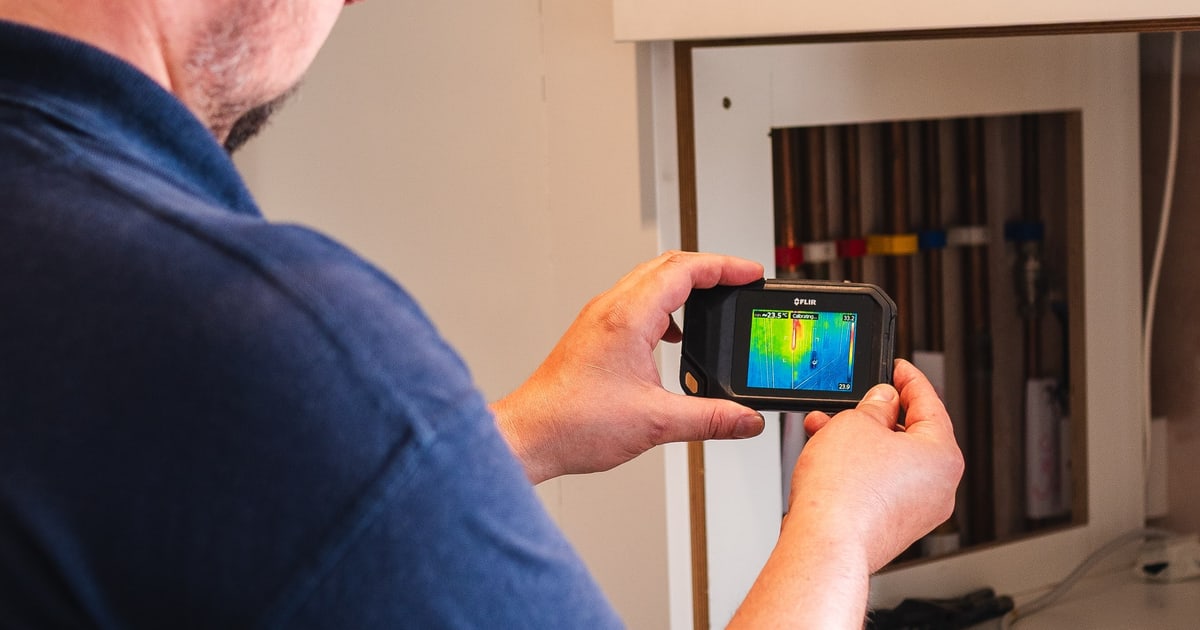
Given that the water supplier had flagged a leak and the mains pressure test failed, the investigation focused on tracing the route of the incoming supply through the property. Thermal imaging was carried out across the lounge floor to detect cold anomalies consistent with water movement beneath the surface, followed by moisture readings to check for elevated damp levels in the same area.
Both returned notable results, establishing the lounge as the primary area of concern.
To confirm the exact leak point, tracer gas was introduced to the external water mains pipe — a standard tool in water mains leak detection when the pipe route runs under solid floors. The property was then inspected for gas escape, with detection confirmed in the lounge.
Acoustic equipment was used to identify the precise point of water movement within that zone, giving a clear target location before any excavation took place.
Thermal Imaging. Used to scan the lounge floor for cold anomalies, which indicated the presence of water beneath the surface.
Damp Meter. Moisture readings were taken across the lounge floor and returned relatively high levels, corroborating the thermal findings.
Pressure Testing. A pressure test was applied to the water mains supply; its failure confirmed an active leak was present on the incoming line.
Tracer Gas. Injected into the external water mains pipe, tracer gas was detected escaping in the lounge, confirming the leak was located beneath that floor.
Acoustic Listening Equipment. Acoustic equipment detected the sound of water movement in the lounge, pinpointing the precise area for excavation.
Investigation Process
-
1Customer report noted
On arrival, the customer described a noise on the kitchen pipework and confirmed the water supplier had notified them of a suspected leak on the supply.
-
2Pressure test carried out
A pressure test was applied to the water mains supply, which failed, confirming an active leak somewhere on the incoming line.
-
3Thermal imaging of lounge floor
A thermal CCTV survey was carried out across the lounge floor and identified cold anomalies consistent with water beneath the surface.
-
4Moisture readings taken
A damp meter was used to take readings across the lounge floor, detecting relatively high moisture levels throughout the area.
-
5Tracer gas test conducted
Tracer gas was introduced to the external water mains pipe and the property was inspected; gas was detected in the lounge, confirming the leak location.
-
6Acoustic survey performed
Acoustic equipment was used in the lounge to detect the sound of water movement, identifying the precise point for excavation.
-
7Floor excavated and leak exposed
With the customer's permission, the lounge floor and ground were excavated to expose the leaking pipework.
-
8Repair completed
Once the leak was exposed, a repair was carried out using 25mm Philmac equal couplers, inserts, and a section of 25mm blue MDPE plastic pipe.
Result & Outcome

Excavation of the lounge floor exposed the leaking section of the water mains supply pipe running beneath it. The repair was completed on site using two 25mm Philmac equal couplers, four 25mm inserts, and a replacement section of 25mm blue MDPE plastic pipe — the standard materials for a durable underground mains repair.
The precision of the result was made possible by running multiple detection methods in sequence. For a water mains leak detection case where the pipe runs under a solid floor with no visible surface break, the combination of failed pressure test, thermal anomalies, elevated moisture, tracer gas detection, and acoustic confirmation left no ambiguity about where to dig.
To address the underlying cause, a full replacement of the main water supply line is recommended. The incoming pressure currently exceeds what the existing pipework can safely handle, presenting an ongoing burst risk. The recommended reroute — connecting the new line via the downstairs bathroom plumbing and capping the original entry point — offers a more efficient solution than a like-for-like replacement. Damage to the lounge floor from the excavation will also need to be made good as part of the reinstatement works.
Suspect a leak at your property?
ADI Leak Detection specialists investigate leaks like this across the UK every day. No find, no fee terms apply on qualifying jobs.