
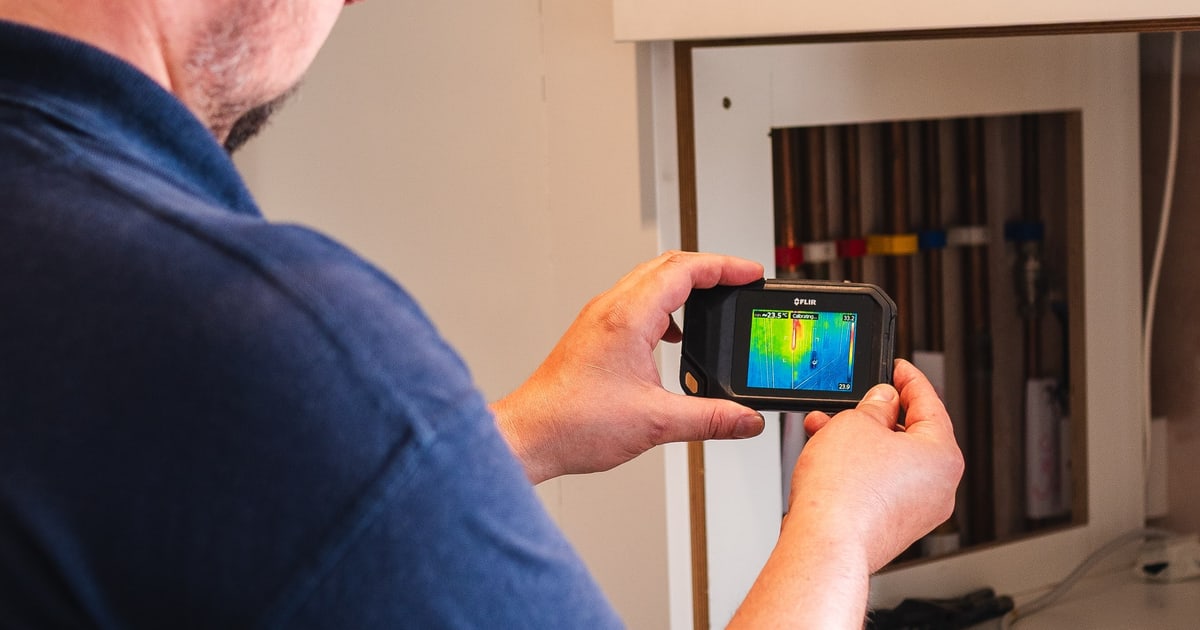
Underground Water Mains Leak Detection in East Dereham
A water mains leak in East Dereham was located using pressure testing, tracer gas, acoustic listening, and visual inspection, completing water mains leak detection on an underground pipe running beneath hard landscaping without unnecessary excavation. Found by engineer Ferenc Gulyas.




The original leak detection company, est. 2011
Facts
| Location | East Dereham |
|---|---|
| County | Norfolk |
| Leak Type | Water Mains Leak Detection |
| Property Type | Residential property |
| Detection Method | Pressure Testing, Tracer Gas, Acoustic Listening Equipment, Visual Inspection |
| Outcome | Underground mains leak located next to drainage manhole, pipe replaced. |
Symptoms
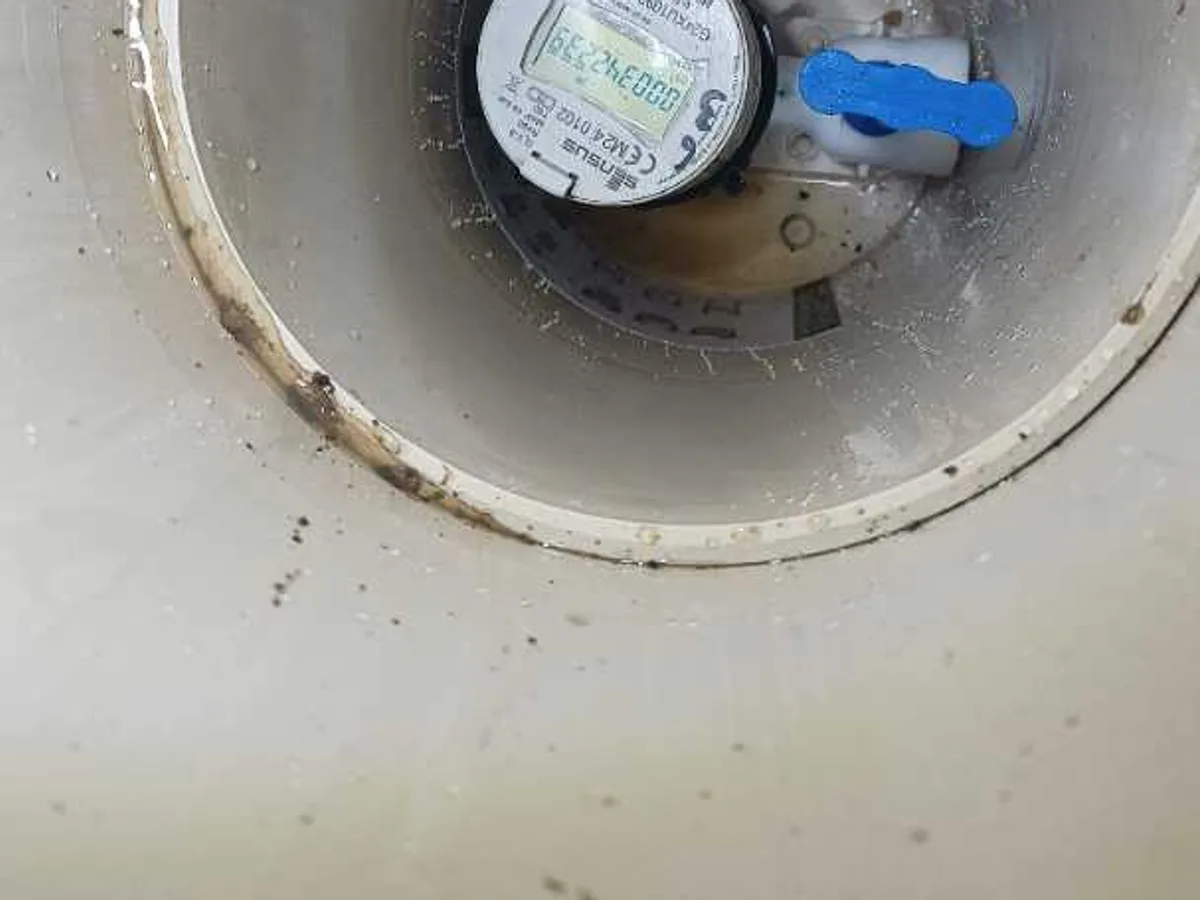
The internal stopcock was found inside the kitchen sink unit, next to the water softener. The external main pipework ran approximately 20 metres in total, including a section beneath an extension, making direct visual inspection impossible.
There was no visible evidence of the leak at surface level — no wet patches, no lifted flags, no obvious signs of where water was escaping.
Methods Used
This combination of methods is standard practice in water mains leak detection when no surface evidence exists and the pipe runs beneath hard landscaping. Each stage reduced the area of uncertainty before any excavation was attempted, meaning digging was confined to the precise location rather than a broad exploratory trench.
Pressure Testing. The pressure test kit was connected directly to the external main pipework with the internal stopcock removed, confirming a leak was present on the external supply pipe before any ground was broken.
Tracer Gas. Tracer gas was introduced into the pipework and a gas detector was used to identify the general leak location, pointing to the area next to the drainage manhole.
Acoustic Listening Equipment. Acoustic equipment was applied after the tracer gas indicated the zone, pinpointing the precise leak location to allow a targeted excavation.
Visual Inspection. Once the driveway blocks were lifted and the area exposed, the pipe was visually inspected, confirming a crack in the 25mm black poly pipe where it ran against the manhole concrete wall.
Investigation Process
-
1Pressure test on external main
The internal stopcock was removed and the pressure test kit was connected directly to the external main pipework. The test confirmed a leak was present somewhere on the external supply.
-
2Tracer gas investigation
Tracer gas was introduced into the isolated pipework and a gas detector was used to survey the ground surface. The detector identified the leak location in the area next to the drainage manhole.
-
3Acoustic pinpointing
Acoustic equipment was deployed at the indicated zone to pinpoint the exact leak position before any excavation began.
-
4Customer informed
The customer was briefed on the findings — the suspected leak location and the proposed solution — before any digging took place.
-
5Excavation of driveway
Driveway blocks were lifted and the ground was excavated at the pinpointed location to expose the pipework.
-
6Leak identified and assessed
One leak was found on the 25mm black poly pipe. The pipe had cracked where it ran alongside the concrete wall of the drainage manhole.
-
7Pipe section replaced
The cracked section of pipework was cut out and replaced using Philmac fittings and inserts with new 25mm MDPE pipe.
-
8Retest passed
A pressure retest was carried out on the repaired pipework and passed, confirming no further leaks were present.
-
9Reinstatement and restoration
The excavated area was backfilled, the driveway blocks were relaid, and water pressure was restored throughout the property.
Result & Outcome

For a water mains leak detection job of this type — an underground pipe with no surface evidence and a complex route beneath hard landscaping — the staged approach meant that the cause of a 300-litre-per-day loss was accurately located and resolved in a single visit without unnecessary excavation.
Suspect a leak at your property?
ADI Leak Detection specialists investigate leaks like this across the UK every day. No find, no fee terms apply on qualifying jobs.