
Internal Toilet Leak Detection in Sherborne
An internal cold mains leak in Sherborne was located using pressure testing, a damp meter, an endoscope camera, and tracer gas, with water mains leak detection confirming the leaking connector as the source and explaining why moisture had been travelling along the damp proof course into the utility kitchen walls. The work was carried out by engineer Gabor Weber.




The original leak detection company, est. 2011
Facts
| Location | Sherborne |
|---|---|
| County | Dorset |
| Leak Type | Water Mains Leak Detection |
| Property Type | Residential property |
| Detection Method | Pressure Testing, Damp Meter, Endoscope Camera, Tracer Gas |
| Outcome | Leak found at flexible pan connector behind toilet, replaced. |
Symptoms

All plumbing systems in the property — cold feed, hot feed, external mains, and the heating system — were considered as potential sources. On the other side of the utility kitchen wall sat a toilet with a basin, making that area an obvious focus once the pipe pressure tests had been worked through.
The task was to determine whether an active leak was responsible for the moisture being driven into the wall.
Methods Used

This approach — working through each system methodically before committing to invasive inspection — is standard practice in internal leak detection. Once the camera confirmed a leak at the flexible pan connector, the toilet back panel was cut open to allow direct access and visual confirmation of the damage.
Investigation Process
-
1Customer Briefing
On arrival, the engineer was informed that a damp proof survey had already been completed and had found no fault with the damp proof course, leaving the source of the wall damp unexplained.
-
2Cold Feed Pressure Test
A pressure test was carried out on the cold feed pipework. It passed, indicating no leaks on that circuit.
-
3External Mains Pressure Test
A pressure test was carried out on the external mains pipework. It passed, ruling out any leak on the incoming supply.
-
4Hot Feed Pressure Test
A pressure test was carried out on the hot feed pipework. It passed, clearing that circuit as a source.
-
5Heating System Check
The heating system was checked and found to be holding pressure with no drop, confirming it was not leaking.
-
6Damp Readings Taken
High damp readings were recorded in the utility kitchen walls using a damp meter, confirming active moisture was present.
-
7Endoscope Camera Deployed
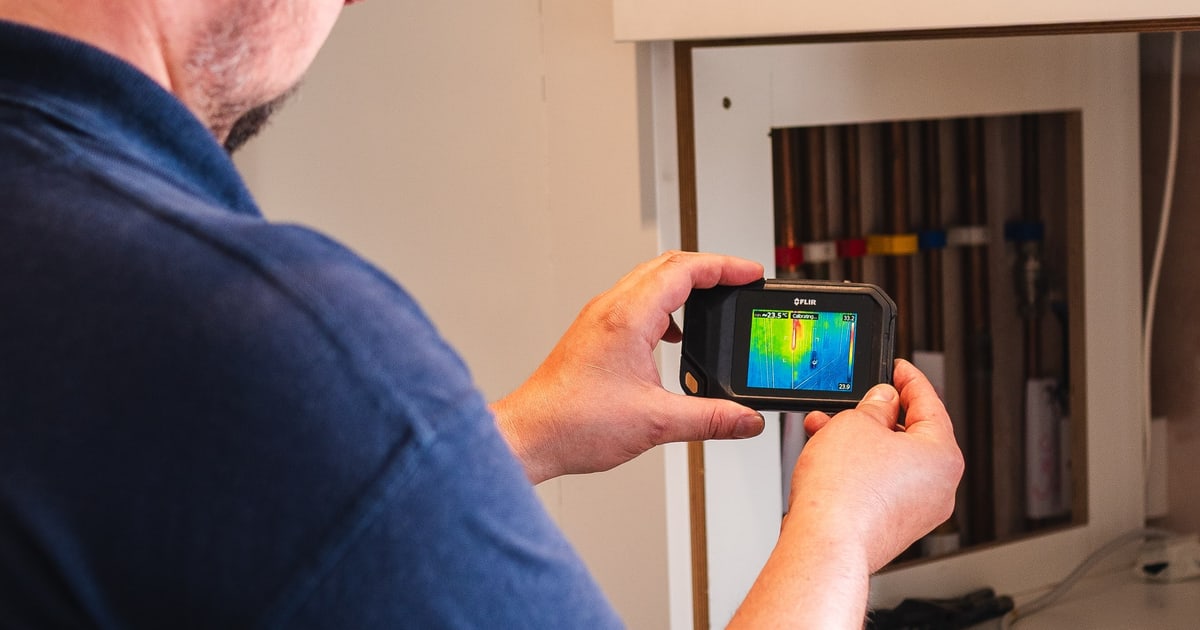
With the toilet room identified as the likely source area — directly behind the damp wall — a tracer camera was used and detected the flexible pipe to the toilet leaking.
-
8Back Panel Removed
The silicone seal was cut and the toilet back panel removed, revealing a flexible pan connector with multiple holes.
-
9Flexible Pan Connector Replaced
The damaged flexible pan connector was replaced and tested following installation, with the repair passing the post-works test.
Result & Outcome

The engineer noted that water from the leaking connector may have been travelling along the damp proof course and rising up into the utility kitchen walls, which would explain why the earlier damp proof survey found no fault with the DPC itself — the DPC was not the cause, it was simply the pathway. The engineer has recommended forwarding the report to the insurance company.
Suspect a leak at your property?
ADI Leak Detection specialists investigate leaks like this across the UK every day. No find, no fee terms apply on qualifying jobs.