
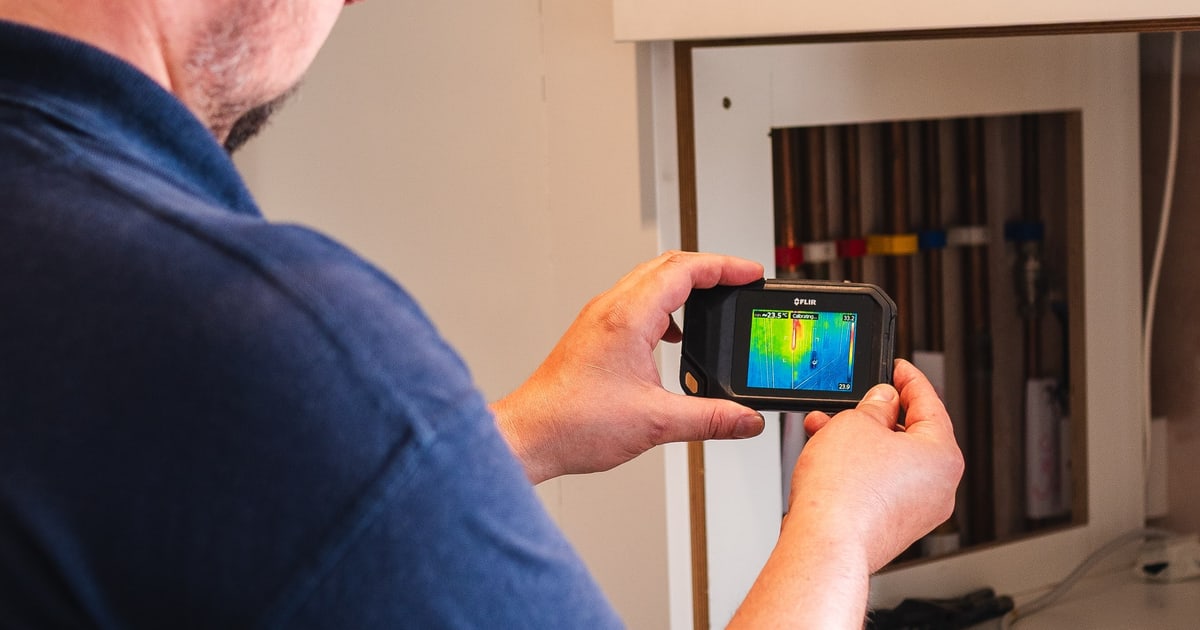
Water Mains Leak Detection in Melbourne
An internal cold mains leak in Melbourne was located using acoustic listening, visual inspection, sectional isolation, and pressure testing as part of a water mains leak detection investigation, identifying a continuously running urinal flush cistermiser and a dripping tap as the sources of water loss. Found by engineer Paul Hope.




The original leak detection company, est. 2011
Facts
| Location | Melbourne |
|---|---|
| Leak Type | Water Mains Leak Detection |
| Property Type | Residential property |
| Detection Method | Acoustic Listening Equipment, Visual Inspection, Sectional Isolation, Pressure Testing |
| Outcome | Continuous water loss traced to failed urinal cistermiser, no pipe leak found. |
Symptoms
A property in DE73 was showing continuous water usage on the external meter, registering approximately two and a half litres per minute. This level of consumption, sustained without any deliberate water use, indicated that one or more supplies were running unchecked somewhere within the building.
The internal stopcock was located but could not be fully closed, which ruled it out as an immediate means of isolation and added complexity to the investigation.
The scope of internal leak detection at this property was broad from the outset. The building contained an unvented cylinder, a pressurised heating system with an automatic filler, multiple toilet facilities including urinals, bar supplies, and ice machines — each representing a potential source of uncontrolled water loss.
A methodical approach was required to work through each system in turn and account for every drop of consumption shown at the meter.
Methods Used
The investigation began with a review of the plant room, assessing the plumbing systems and construction before any survey work began. The heating system was checked for pressure loss and the pressure relief valves were inspected at the tundishes — neither was found to be passing water, which directed attention firmly toward the cold and domestic hot water supplies.
An acoustic survey was then carried out across all accessible pipework, with signal profiles monitored to identify any area of elevated acoustic activity. This pointed toward the gents toilet, where a visual check of all toilets and urinals then confirmed the source.
With the primary source isolated, further sectional isolation of all remaining supplies — toilets, ice machines, and bar equipment — was used to account for residual consumption. A pressure test was then applied to the pipework to determine whether any concealed pipe leak remained once the identified sources had been removed.
Internal leak detection at this property required moving through acoustic, visual, isolation, and pressure testing in sequence to build a complete picture of all losses.
Acoustic Listening Equipment. Used to survey all accessible pipework and build a signal profile that pointed toward elevated acoustic activity in the area of the gents toilet.
Visual Inspection. Applied to all toilets and urinals once the acoustic profile indicated the gents toilet, directly identifying the failed cistermiser and the continuously flushing urinal.
Sectional Isolation. Each supply — urinals, toilets, ice machines, bar taps — was isolated in turn to measure the remaining meter consumption and confirm all sources of loss were accounted for.
Pressure Testing. Three bar was applied to the pipework for 45 minutes after all identified sources were isolated; no pressure drop was recorded, confirming no concealed pipe leak was present.
Investigation Process
-
1Plant room assessment
The plumbing systems and construction were assessed in the plant room. The unvented cylinder and pressurised heating system with automatic filler were checked — no pressure loss on heating was found and no pressure relief valves were passing water into the tundishes.
-
2Internal stopcock checked
The internal stopcock was located but found not to close fully, meaning it could not be used to isolate the supply for testing purposes.
-
3Acoustic survey carried out
An acoustic survey was performed across all accessible pipes. The signal profile became strong in the area of the gents toilet, directing the next stage of the investigation there.
-
4Urinal fault identified
A visual check of all toilets and urinals in the gents toilet revealed that the automatic urinal flush cistermiser had stopped working and was continuing to fill and flush continuously. The urinal supply was isolated and meter usage dropped from approximately two and a half litres per minute to three litres per hour.
-
5Remaining supplies isolated
Isolation valves to all toilets, ice machines, and other supplies were closed in turn. Usage at the meter fell to less than one litre per hour, and a dripping hot tap behind the bar was also identified and isolated.
-
6Pressure test performed
With all identified sources isolated, the pipework was pressure tested at three bar for 45 minutes. No pressure drop occurred, confirming there was no concealed pipe leak present at this time.
-
7Supplies reinstated
The valve feeding the urinal was reopened very slightly to maintain basic function, and all other supplies were reinstated. A basin waste on the first floor was also noted to be dripping onto the floor during the works.
Result & Outcome
The primary source of water loss was the automatic urinal flush cistermiser in the gents toilet, which had failed and was running continuously. Isolating this single unit caused meter consumption to fall from around two and a half litres per minute to three litres per hour — a reduction that immediately confirmed it as the dominant source. A dripping hot tap behind the bar was also identified as a secondary contributor to overall consumption.
Once all identified sources were isolated, a 45-minute pressure test at three bar showed no drop, which rules out any concealed pipe leak in the supply network at this time. The internal leak detection process at this property therefore produced a clear result: the losses were fixture-based rather than from a buried or concealed pipe, which significantly simplifies the repair scope.
The cistermiser requires replacement or repair as a priority. The leaking bar tap and the basin waste on the first floor, which was found dripping onto the floor during the survey, also need attention. None of these repairs involve excavation or access to concealed pipework.
Suspect a leak at your property?
ADI Leak Detection specialists investigate leaks like this across the UK every day. No find, no fee terms apply on qualifying jobs.