
Internal Cold Mains Leak Detection in Highworth
A cold mains leak in Highworth was located using a damp meter, thermal imaging, acoustic listening, pressure testing, and tracer gas as part of water mains leak detection, pinpointing a pinhole in a copper pipe beneath the utility room floor. Found by engineer Kyle Storkey.




The original leak detection company, est. 2011
Facts
| Location | Highworth |
|---|---|
| County | Wiltshire |
| Leak Type | Water Mains Leak Detection |
| Property Type | Residential property |
| Detection Method | Damp Meter, Thermal Imaging, Acoustic Listening Equipment, Pressure Testing, Tracer Gas |
| Outcome | Pinhole leak found on copper pipe in utility room floor. |
Symptoms
A property in SN6 was experiencing water damage across both the kitchen and utility room, with moisture affecting the walls and floors of both spaces. When the lino flooring in the utility room was lifted by a plumber, pooling water was found on the concrete slab beneath — yet no leak source was identified at that stage, leaving the cause unresolved.
With visible water damage present but no clear origin found through initial inspection, an internal leak detection survey was required to trace the source. The situation pointed to a concealed leak within the pipework running through the floor or walls, requiring specialist equipment to locate it without unnecessary further disruption to the property.
Given the extent of moisture across two rooms and water collecting beneath the floor covering, it was clear the leak had been ongoing for some time. Internal leak detection was the appropriate next step to pinpoint the fault before any remedial drying or reinstatement work could be planned.
Methods Used

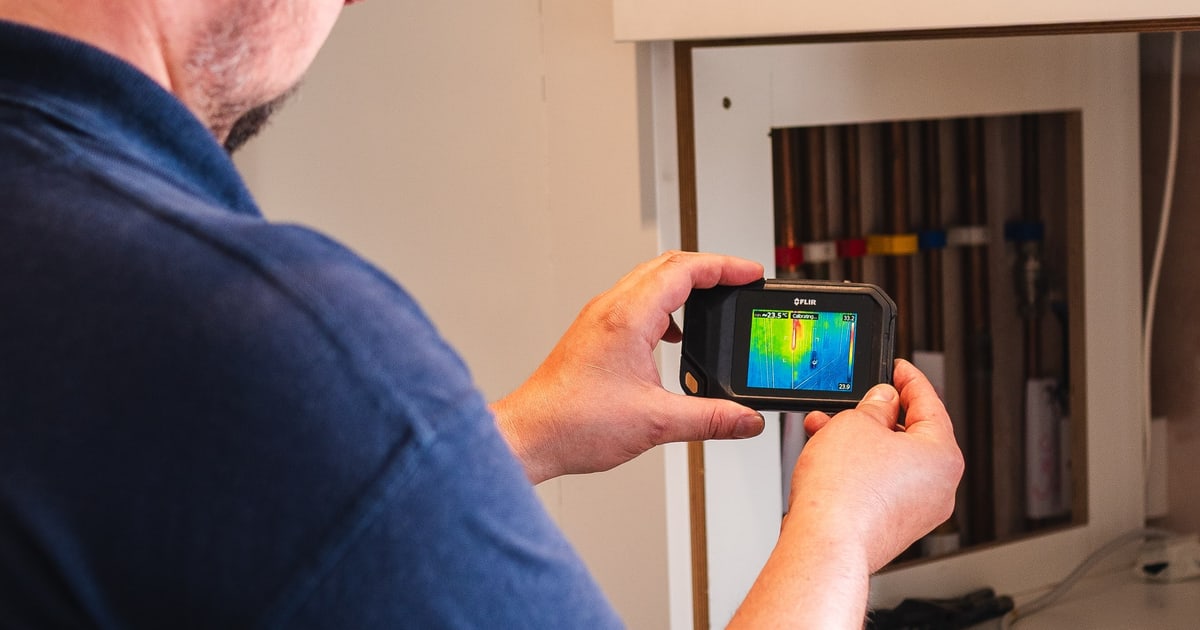
The investigation began with moisture mapping across the kitchen and utility room to establish the extent of water damage and identify where elevated readings were concentrated. Thermal imaging was then used to trace the network of water pipework running through both rooms, providing a clear picture of the pipe routes without opening up any fabric of the building.
With the pipe network mapped, acoustic equipment was applied to the hot and cold water pipework and returned audible evidence pointing to the cold water supply as the leak source. A pressure test confirmed a drop in pressure consistent with a leak.
Tracer gas was then introduced into the cold water pipework — with the hot water cylinder isolated — and an electronic gas sensor was used to monitor the property for escaping gas. Large concentrations of gas were detected at the floor of the utility room, directing the access works to a precise location.
This methodical approach, characteristic of thorough internal leak detection, avoided unnecessary excavation across both rooms.
Damp Meter. Used to moisture map the kitchen and utility room walls and floor, identifying where elevated readings were concentrated and establishing the spread of water damage.
Thermal Imaging. Traced the network of hot and cold water pipework running through the kitchen and utility room without requiring any opening up of the structure.
Acoustic Listening Equipment. Applied to the hot and cold water pipework to listen for audible evidence of a leak, which pointed to the cold water supply as the fault.
Pressure Testing. A pressure test was carried out on the pipework and recorded a pressure drop, confirming that an active leak was present.
Tracer Gas. Introduced through the cold water pipework in the utility room with the hot water cylinder isolated; escaping gas was detected in large quantities at the utility room floor, pinpointing the leak location.
Investigation Process
-
1Moisture Mapping
Elevated moisture readings were recorded to the walls and floor of the kitchen and utility room, confirming the extent of water damage across both areas.
-
2Thermal Imaging
Thermal imaging was carried out to map the hot and cold water pipework network running through the kitchen and utility room.
-
3Acoustic Survey
Acoustic equipment was applied to the hot and cold water pipework; audible evidence was found indicating the leak source was on the cold water supply.
-
4Pressure Test
A pressure test was carried out and a drop in pressure was recorded, confirming an active leak within the pipework.
-
5Tracer Gas Survey
The hot water cylinder was isolated and tracer gas was introduced into the cold water pipework via the utility room. An electronic gas sensor detected large amounts of escaping gas at the utility room floor.
-
6Access and Leak Found
Access works were carried out to the utility room floor at the location indicated by the gas survey, exposing a pinhole leak on the copper pipe.
-
7Temporary Repair
A temporary repair was carried out using 15mm plastic fittings and pipe to make the cold water supply serviceable pending a permanent repair.
Result & Outcome

Access works to the utility room floor uncovered a pinhole leak on a copper pipe — the source of the water damage affecting both the kitchen and utility room. The leak was confirmed at the floor level of the utility room, consistent with where the tracer gas had concentrated and where pooling had been found beneath the lino.
A temporary repair was carried out using 15mm plastic fittings and pipe to restore the cold water supply while a permanent solution is arranged. The recommendation is for the copper pipework to be permanently repaired or rerouted. This internal leak detection survey has given the customer a precise, confirmed location for the fault, meaning no further speculative opening up is required.
Stripping out and drying of the water-damaged walls and floors in both rooms will need to follow before reinstatement and redecoration can take place. The scope of remedial work is now clearly defined.
Suspect a leak at your property?
ADI Leak Detection specialists investigate leaks like this across the UK every day. No find, no fee terms apply on qualifying jobs.