
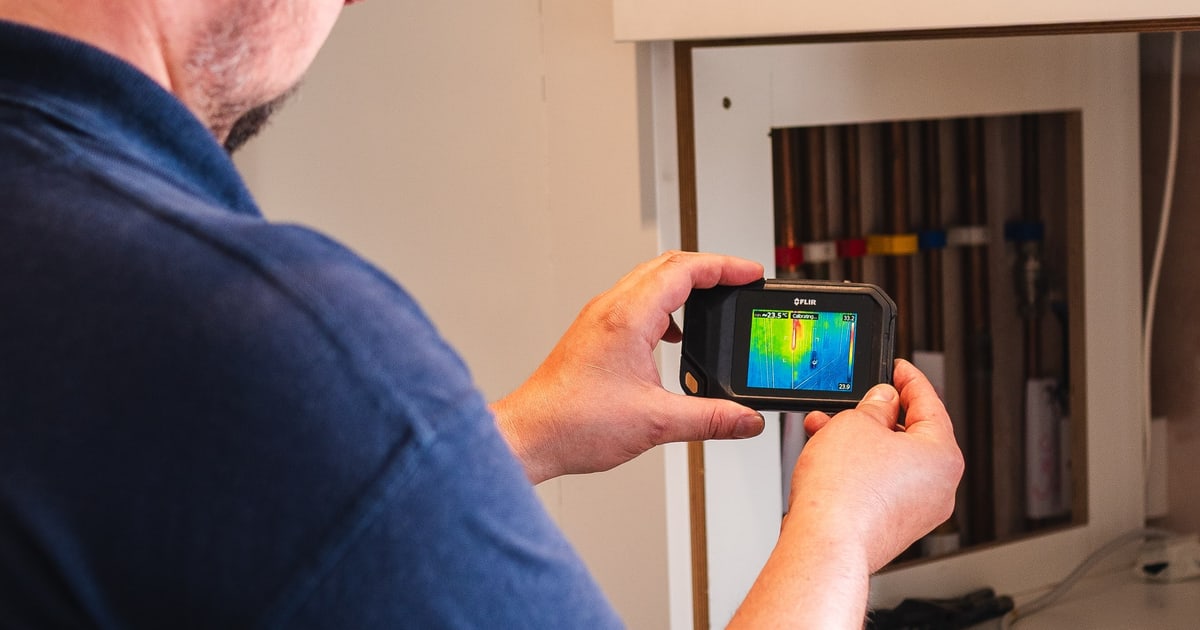
Water Mains Leak Detection in Cockermouth
A water mains leak in Cockermouth was located using tracer gas, pressure testing, and visual inspection, completing water mains leak detection at the boundary between the pavement and the property where a failed connection coupling on the incoming copper mains pipe was confirmed. Found by engineer Paul Hope.




The original leak detection company, est. 2011
Facts
| Location | Cockermouth |
|---|---|
| County | Cumbria |
| Leak Type | Water Mains Leak Detection |
| Property Type | Residential property |
| Detection Method | Tracer Gas, Pressure Testing, Visual Inspection |
| Outcome | Underground mains leak located at property boundary, coupling replaced. |
Symptoms
A property in CA13 was losing water through an undetected underground leak on the incoming mains supply. With all internal stopcocks closed, the water meter was registering a continuous flow of approximately 15 litres per minute — a clear sign that water was escaping somewhere between the meter and the property.
No visible damp patches or surface damage were present at the time of inspection.
The absence of any surface symptoms made this a subsurface investigation from the outset. Water mains leak detection in circumstances like these — where the meter is the only initial indicator and there is nothing visible above ground — requires a systematic approach using pressure testing and tracer gas to locate the failure point before any excavation takes place.
Methods Used
Following isolation of the water meter, the incoming mains pressure was measured at 4 bar. The system was then purged of water using a compressor, and tracer gas was introduced at 3.5 bar.
A pressure drop from 3.5 bar to 3 bar over 10 minutes confirmed the presence of a slow leak. Gas pressure was increased to 4 bar and a continuous sweep of the property was carried out, with tracer gas detected at the water meter and along the boundary line between the pavement and the property edge.
An excavation was agreed to precisely expose the pipe. The pipework was traced to the point of failure, confirming the value of tracer gas as a primary tool in water mains leak detection.
Tracer Gas. Tracer gas was introduced to the purged pipework at 3.5 bar, then increased to 4 bar, and detected escaping at the water meter and along the pavement-to-property boundary line, guiding the excavation point.
Pressure Testing. A pressure test at 3.5 bar confirmed a slow leak via a drop to 3 bar over 10 minutes, and a subsequent 45-minute retest at 4 bar with no pressure drop verified the repair.
Visual Inspection. A visual inspection on arrival confirmed no surface damp or damage, establishing that the leak had no above-ground indicators.
Investigation Process
-
1Meter Reading on Arrival
On arrival, the water meter was observed registering approximately 15 litres per minute with all internal stopcocks closed, confirming an active leak on the supply pipe.
-
2Meter Isolation and Pressure Measurement
The water meter was isolated and the incoming mains pressure was measured at 4 bar.
-
3System Purged and Tracer Gas Introduced
A compressor was connected, water was purged from the pipework, and tracer gas was introduced at 3.5 bar for a pressure test.
-
4Pressure Drop Confirms Slow Leak
The pressure dropped from 3.5 bar to 3 bar over 10 minutes, consistent with a slow leak in the system.
-
5Tracer Gas Sweep at 4 Bar
Gas pressure was increased to 4 bar and a continuous sweep of the property was carried out. Tracer gas was detected at the water meter and along the dividing line between the pavement and the property boundary.
-
6Excavation Agreed and Pipe Exposed
An excavation was agreed to precisely locate the leak. The pipe was exposed and traced to the point of failure.
-
7Failed Coupling Found and Replaced
A connection coupling was found to have failed at the leak point and was replaced using a Philmac transitional coupling.
-
8Repair Retested at 4 Bar
The repaired section was pressure tested at 4 bar for 45 minutes with no observed pressure drop, confirming a successful repair.
-
9Water Supply Reinstated and Backfill
The water supply was reinstated and the excavation was carefully backfilled.
Result & Outcome
The leak was located at the boundary line between the pavement and the property, where a connection coupling on the incoming copper mains pipe had failed. The failure was pinpointed through tracer gas detection, with the excavation confirming the precise location identified during the gas sweep.
The failed coupling was replaced with a Philmac transitional coupling and the repair was verified by a 45-minute pressure test at 4 bar with no pressure drop recorded. Water supply was then reinstated and the excavation backfilled. For water mains leak detection jobs, this outcome demonstrates the value of tracer gas in avoiding unnecessary trial excavations.
The customer is advised to review their building insurance for Trace and Access cover, which may contribute to the costs incurred. Given the existing pipework is copper, any future driveway renovation work would be a practical opportunity to replace this section of mains pipe.
Suspect a leak at your property?
ADI Leak Detection specialists investigate leaks like this across the UK every day. No find, no fee terms apply on qualifying jobs.