
Internal Cold Mains Leak Detection in Carlisle
A cold mains leak in Carlisle was located using pressure testing, tracer gas, acoustic listening, thermal imaging, a damp meter, and a borescope, with water mains leak detection confirming the fault beneath a concrete kitchen floor before any excavation took place. Found by engineer Hamaad Janjua.




The original leak detection company, est. 2011
Facts
| Location | Carlisle |
|---|---|
| County | Cumbria |
| Leak Type | Water Mains Leak Detection |
| Property Type | Residential property |
| Detection Method | Pressure Testing, Tracer Gas, Acoustic Listening Equipment, Thermal Imaging, Damp Meter, Borescope |
| Outcome | Leaks found beneath kitchen floor on both feeds, repaired. |
Symptoms

The property in CA4 is a two-storey dwelling that had developed a mains water leak. At the point of booking, it was unclear whether the source was internal or external, so internal leak detection was required to establish this before any remedial work could be planned.
The situation was complicated by the layout of the property. The internal stopcock was located behind the toilet, making it less than straightforward to access, and there were no other isolation points for the hot or cold feeds anywhere in the property.
Without knowing the leak's location, the full extent of the problem — and what would be needed to fix it — remained unknown.
With water loss ongoing and no obvious visible source, a structured multi-method investigation was necessary to pinpoint where the failure had occurred and whether it involved one pipe or more.
Methods Used

The investigation followed a logical sequence, beginning with supply isolation to determine whether the leak was internal or external. With that confirmed as internal, pressure testing was applied to the internal mains, which failed, narrowing the search to the pipework inside the property.
Internal leak detection of this kind relies on combining multiple methods to triangulate a precise location rather than relying on any single result.
From there, tracer gas, acoustic equipment, thermal imaging, and a damp meter were all deployed in the kitchen utility area, where positive results converged. With the leak's location identified beneath the concrete floor and the customer's agreement obtained, the floor was excavated to expose the pipework directly.
This confirmed leaks on both the cold and hot feeds at that location.
Pressure Testing. Applied to the internal mains after supply isolation confirmed the leak was internal; the pipe failed the test, directing the search inside the property.
Tracer Gas. Introduced to the pipework and detected with a positive result in the kitchen utility area, pointing to the leak location beneath the floor.
Acoustic Listening Equipment. Used to detect the acoustic signature of escaping water, returning positive results in the same kitchen utility area as the gas test.
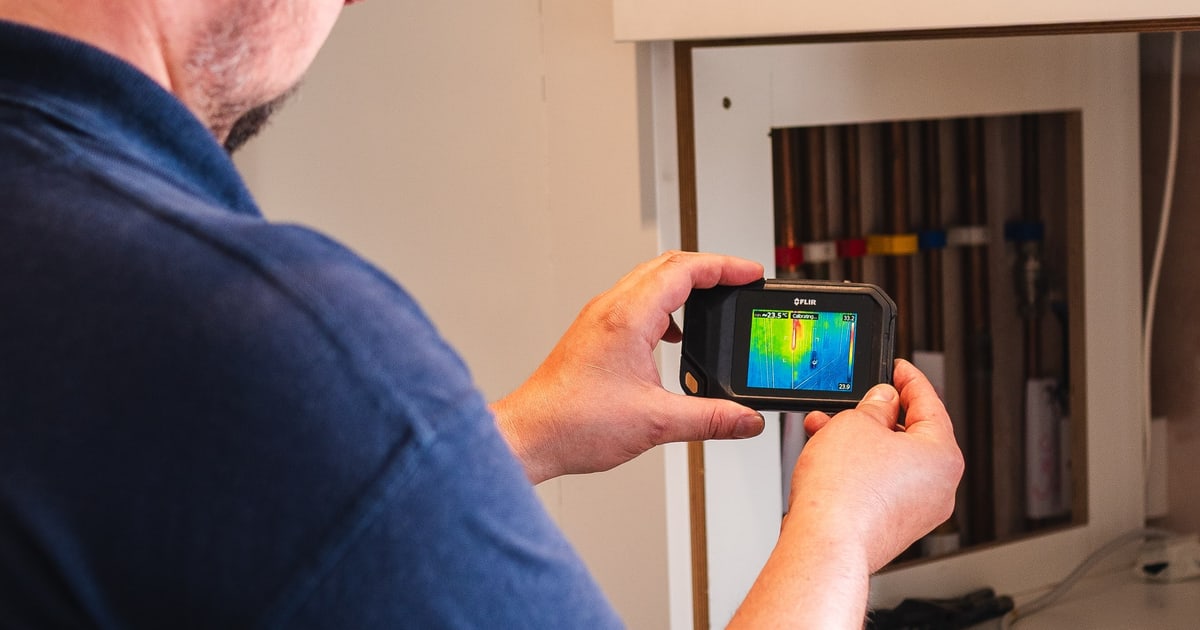
Thermal Imaging. Used to identify thermal anomalies at floor level consistent with water escaping from the buried pipework in the kitchen utility area.
Damp Meter. Moisture readings taken in the kitchen utility area returned elevated levels, corroborating the findings from the gas and acoustic tests.
Borescope. Available as part of the equipment set to assist with visual inspection where direct access was otherwise limited.
Investigation Process
-
1Stopcock located and accessed
The internal stopcock was found behind the toilet. Access was gained to operate it as part of the initial isolation process.
-
2Supply isolated at the meter
The mains supply was turned off at the meter. Usage stopped immediately, confirming the leak was internal rather than external.
-
3Pressure test applied to internal mains
A pressure test was carried out on the internal mains pipework. The pipe failed the test, confirming a fault within the internal supply.
-
4Tracer gas, acoustic, and damp meter tests conducted
Tracer gas was introduced and a positive result was detected in the kitchen utility area. Acoustic testing and moisture meter readings in the same location also returned positive results, converging on a consistent leak position.
-
5Thermal imaging carried out
Thermal imaging was used across the floor area to identify temperature anomalies associated with water loss beneath the surface.
-
6Concrete floor excavated
With the customer's permission, the concrete floor in the kitchen utility area was excavated to expose the buried pipework, revealing active leaks on both the cold and hot feeds.
-
7Washing machine repositioned
The washing machine power cable was cut to allow the appliance to be moved — the kitchen unit had been fitted around it, leaving no way to remove the plug conventionally.
-
8Repairs completed and service valve installed
Two sections of pipework were cut out and replaced with new elbows, fittings, and replacement pipework. A service valve was installed on both feeds, as there were no other isolation points in the property and accessing the stopcock required removing toilet units.
-
9Repair retested — all tests passed
Following completion of the repair, the system was retested. All tests passed at the time of the visit.
Result & Outcome

The leaks were found beneath the concrete floor in the kitchen utility area, affecting both the cold and hot feeds at the same location. The convergence of tracer gas, acoustic, thermal imaging, and damp meter results before excavation meant the dig was targeted and the exposed pipework confirmed exactly what the testing had indicated.
Repairs were completed during the same visit. Two sections of pipework were removed and replaced, with new elbows, fittings, and service valves installed. The service valves were a practical addition given that — prior to this work — the property had no accessible isolation points for the hot or cold supplies other than the stopcock behind the toilet. For any future maintenance, isolation can now be achieved without dismantling bathroom furniture.
This outcome is consistent with what internal leak detection is designed to deliver: a confirmed location and a completed repair rather than an open-ended investigation. The customer was advised not to reinstate the concrete in the small excavated section so that the new service valves remain accessible, and the retest confirmed the repair was holding at the time of the visit.
Suspect a leak at your property?
ADI Leak Detection specialists investigate leaks like this across the UK every day. No find, no fee terms apply on qualifying jobs.