
Hot Water System Leak Detection in Knaphill
A hot water system leak in Knaphill was located using thermal imaging, a damp meter, pressure testing, and acoustic listening, confirming hot water leak detection across ground floor pipework where two cracks were found in close proximity. Found by engineer Gabor Weber.




The original leak detection company, est. 2011
Facts
| Location | Knaphill |
|---|---|
| County | Surrey |
| Leak Type | Hot Water Leak Detection |
| Property Type | Residential property |
| Detection Method | Thermal Imaging, Damp Meter, Pressure Testing, Acoustic Listening Equipment |
| Outcome | Two hairline cracks found and repaired beneath lobby floor. |
Symptoms

The lobby wall and the adjoining utility kitchen wall both showed heavy damp, reinforcing that water had been migrating through the structure. A job requiring hot water leak detection of this kind — where pressure loss is absent but thermal and moisture indicators are present — calls for a multi-method approach to pinpoint the source without unnecessary excavation.
Methods Used

This multi-tool approach is standard practice in hot water leak detection where the pipe runs beneath a solid floor. Each method independently pointed to the same area, giving high confidence before excavation began.
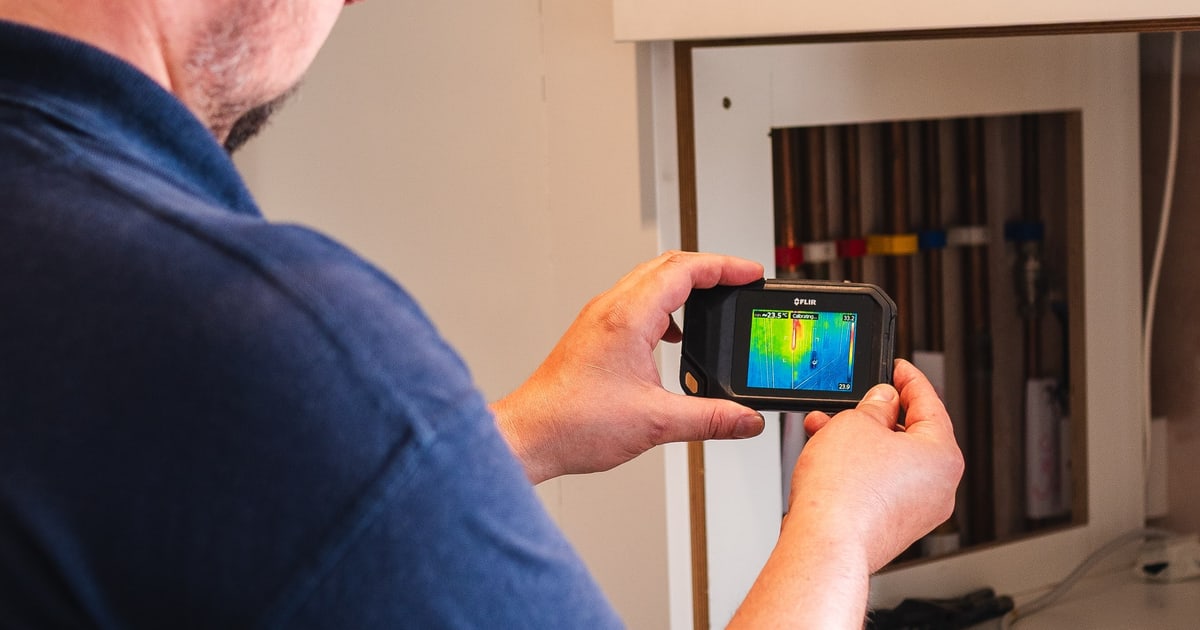
Thermal Imaging. Traced the pipe route beneath the lobby floor and identified a localised hot spot indicating where heat was escaping from the pipework.
Damp Meter. Confirmed elevated moisture readings on the lobby floor and walls, corroborating the thermal anomaly in the same area.
Pressure Testing. A pressure test on the cold feed passed with no leak indicated; a separate test on the hot feed failed, confirming the fault was on the hot water pipework.
Acoustic Listening Equipment. Detected an acoustic anomaly at the same location as the thermal hot spot, further narrowing the target area before floor excavation.
Investigation Process
-
1Initial observations on arrival
The engineer noted bubbling paintwork on the lobby wall, a warm floor, and heavy damp on both the lobby and utility kitchen walls. The heating system showed no pressure loss.
-
2Thermal imaging survey
Thermal imaging was carried out across the lobby floor. The camera identified the pipe route and located a distinct hot spot consistent with a subsurface hot water leak.
-
3Damp meter readings
High damp readings were recorded in the same area as the thermal anomaly, confirming moisture migration through the floor and wall structures.
-
4Pressure testing — cold feed
A pressure test was applied to the cold feed pipework. The test passed, indicating no leaks on that circuit.
-
5Pressure testing — hot feed
A pressure test was applied to the hot feed pipework. This test failed, confirming a leak on the hot water side.
-
6Acoustic survey
Acoustic equipment was deployed and detected an anomaly at the same location already identified by thermal imaging and damp readings.
-
7Floor exposed and first leak found
The lobby vinyl and concrete floor were opened up. A hairline crack was found on a 15mm copper pipe. The damaged section was replaced, but a retest failed — indicating a second leak remained.
-
8Second leak located and repaired
A second leak was found approximately 15cm from the first. Both sections were replaced with copper pipe and fittings with lagging.
-
9Final pressure retest
On completion of both repairs, the pipework was pressure tested at 4 bar for 20 minutes. The test passed, indicating no further leaks at the time of testing.
Result & Outcome

The engineer noted that the ground floor pipework is in poor condition and recommended full replacement. This is consistent with two cracks being found in close proximity — the repaired sections are sound, but the wider pipework remains a risk.
Suspect a leak at your property?
ADI Leak Detection specialists investigate leaks like this across the UK every day. No find, no fee terms apply on qualifying jobs.