
Hot Water System Leak Detection in Carlisle
A hot water system leak in Carlisle was located using pressure testing, tracer gas, a damp meter, thermal imaging, an endoscope camera, and visual inspection, with hot water leak detection pinpointing a damaged section of pipework beneath the kitchen floor. Found by engineer Hamaad Janjua.




The original leak detection company, est. 2011
Facts
| Location | Carlisle |
|---|---|
| County | Cumbria |
| Leak Type | Hot Water Leak Detection |
| Property Type | Residential property |
| Detection Method | Pressure Testing, Tracer Gas, Damp Meter, Thermal Imaging, Endoscope Camera, Visual Inspection |
| Outcome | Leak found beneath kitchen floor, damaged pipe section replaced. |
Symptoms

A property in Carlisle with a combi boiler system was flagged for investigation after the water utility company reported excessive water usage, pointing to a leak somewhere within the property. The heating system showed no pressure loss, so attention turned to the hot water supply.
On inspection, the kitchen flooring had begun to bulge — a clear sign that water had been accumulating beneath the surface over an extended period.
The laminate flooring was found to be heavily saturated, with moisture spreading beneath the surface and dampness tracking up the adjoining walls. The scale of the saturation suggested the leak had been ongoing for some time before it became visually apparent.
A hot water leak detection investigation was required to establish the exact source before any remedial work could begin.
Because the leak was concealed beneath the flooring, its precise location could not be determined by visual inspection alone. Specialist detection methods were needed to trace the source without unnecessary and excessive exposure of the floor.
Methods Used

The investigation began with pressure testing, which confirmed a leak on the hot water feed. Tracer gas was then introduced into the pipework, and gas detection across the kitchen area pinpointed the leak's location with precision.
Moisture meter readings were taken across the kitchen flooring to map the extent of dampness and support the tracer gas findings.
With the leak location established and the customer's permission obtained, the affected area was exposed to allow direct access to the pipework. A damaged section of pipe was identified as the source.
This methodical approach — pressure testing first, tracer gas to localise, moisture mapping to confirm spread — is standard practice in hot water leak detection where the source is concealed beneath a finished floor.
Pressure Testing. Confirmed that the hot water feed was losing pressure, identifying the circuit on which the leak was present.
Tracer Gas. Introduced into the pipework and detected at surface level in the kitchen, pinpointing the precise location of the leak beneath the floor.
Damp Meter. Used to take moisture readings across the kitchen flooring, confirming significant saturation and mapping how far dampness had spread.
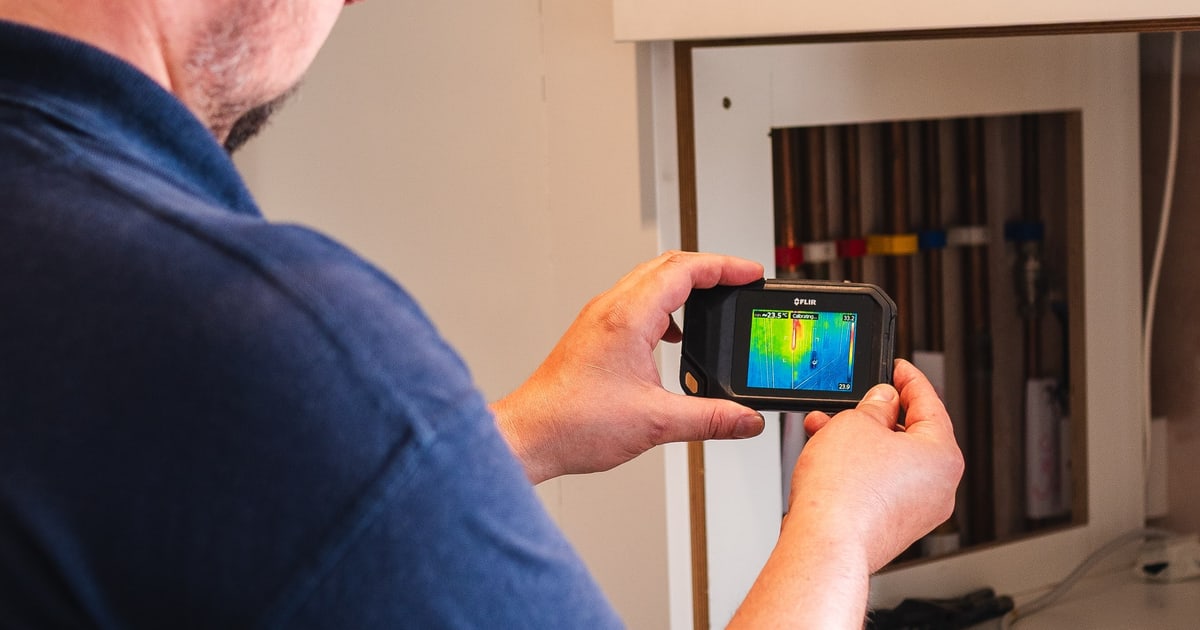
Thermal Imaging. Applied to identify temperature differentials across the floor and wall surfaces consistent with concealed water movement.
Endoscope Camera. Used to support visual inspection of concealed areas during the investigation.
Visual Inspection. Identified the bulging and saturated flooring and dampness tracking up the adjoining walls on arrival at the property.
Investigation Process
-
1Initial Assessment
The engineer attended the property in Carlisle and carried out a visual inspection. The kitchen flooring was found to be bulging, with the laminate heavily saturated and dampness tracking up the adjoining walls. The heating system showed no pressure loss.
-
2Pressure Testing
The system was pressure tested, which identified a leak on the hot water feed and confirmed the heating circuit was not the source.
-
3Tracer Gas Testing
Tracer gas was introduced into the hot water pipework. Detection equipment confirmed the presence of gas in the kitchen area, localising the leak to a specific point beneath the floor.
-
4Moisture Meter Survey
Damp meter readings were taken across the kitchen flooring, confirming significant dampness throughout and supporting the tracer gas location findings.
-
5Exposure of Affected Area
With the customer's permission, the identified area was exposed to allow direct access. A damaged section of pipework was confirmed as the source of the leak.
-
6Pipe Repair
The defective section of pipe was removed and cut back. A new section of copper pipe was installed with appropriate fittings and soldered into place.
-
7Retest and Sign-Off
The system was re-pressurised and retested. No further leaks were detected and all results were satisfactory at the time of completion.
Result & Outcome

The leak was traced to a damaged section of pipework beneath the kitchen floor, located with precision using tracer gas after pressure testing had confirmed the fault was on the hot water feed. Once exposed, the defective pipe section was removed, cut back, and replaced with a new copper pipe section soldered into place with appropriate fittings. The system was re-pressurised and retested, returning satisfactory results with no further leaks detected.
The extent of water damage to the kitchen flooring was significant, with saturation throughout the laminate and dampness in the adjoining walls. For a hot water leak detection job of this nature — where water has been escaping undetected beneath a finished floor — addressing the structural damage is as important as completing the repair. The flooring and affected wall areas will require remediation to prevent ongoing damp issues and the risk of mould developing over time.
To reduce the risk of recurrence, it is recommended that the newly installed pipe section is not re-embedded in concrete. Flooring should be laid over the top to keep the pipework accessible. A longer-term upgrade of the hot and cold feed pipework is also advised.
Suspect a leak at your property?
ADI Leak Detection specialists investigate leaks like this across the UK every day. No find, no fee terms apply on qualifying jobs.