
Hot Water Leak Detection in Maidenhead
A hot water system leak in Maidenhead was located using acoustic listening, a damp meter, pressure testing, tracer gas, and thermal imaging, with hot water leak detection confirming the fault within the hot supply pipework running beneath the kitchen floor. Found by engineer Darren Smith.




The original leak detection company, est. 2011
Facts
| Location | Maidenhead |
|---|---|
| County | Berkshire |
| Leak Type | Hot Water Leak Detection |
| Property Type | Residential property |
| Detection Method | Acoustic Listening, Damp Meter, Pressure Testing, Tracer Gas, Thermal Imaging |
| Outcome | Hot supply pipe leak found and repaired beneath kitchen floor. |
Symptoms
A property in SL6 was experiencing significant water damage to the kitchen floor and walls. A number of floor tiles had lifted due to sustained damp, and moisture readings throughout the kitchen floor were high. The skirting boards showed clear signs of water ingress.
The property had a system boiler serving a radiator circuit, alongside an unvented hot water softener cylinder. There had been no reports of the boiler needing to be regularly re-pressurised, which helped narrow the source.
With visible damage spreading across the kitchen, hot water leak detection was needed to identify the origin before further structural harm occurred.
The audible sound of water moving within pipework could clearly be heard near the cylinder — a strong early indicator that the leak was on the hot water side of the system.
Methods Used
The investigation began with a moisture survey of the kitchen floor and walls, confirming elevated damp levels consistent with an active leak beneath the floor. Acoustic listening equipment picked up the sound of water movement near the cylinder, and isolating the cold feed to the cylinder caused the sound to cease — pointing clearly to the hot supply pipework.
A pressure test was carried out across both the cold mains and hot supply pipework, confirming a leak on the hot side. Tracer gas was then introduced into the hot supply pipework.
A large gas trace was detected almost immediately in the kitchen, with audible bubbling confirming the leak's approximate position. This methodical approach — working from acoustic indication through pressure testing to tracer gas — is standard practice in hot water leak detection and allowed the leak to be pinpointed before any excavation began.
Acoustic Listening. Used to detect the sound of water moving within the pipework near the cylinder, and to confirm the leak stopped when the cold feed was isolated.
Damp Meter. Used to measure high moisture levels across the kitchen floor and around the skirting boards, establishing the extent of water damage.
Pressure Testing. Applied to both the cold mains and hot supply pipework to isolate and confirm the leak was present on the hot supply side.
Tracer Gas. Introduced into the hot supply pipework after pressure testing; a large trace detected almost immediately in the kitchen, with audible bubbling pinpointing the leak location beneath the floor.
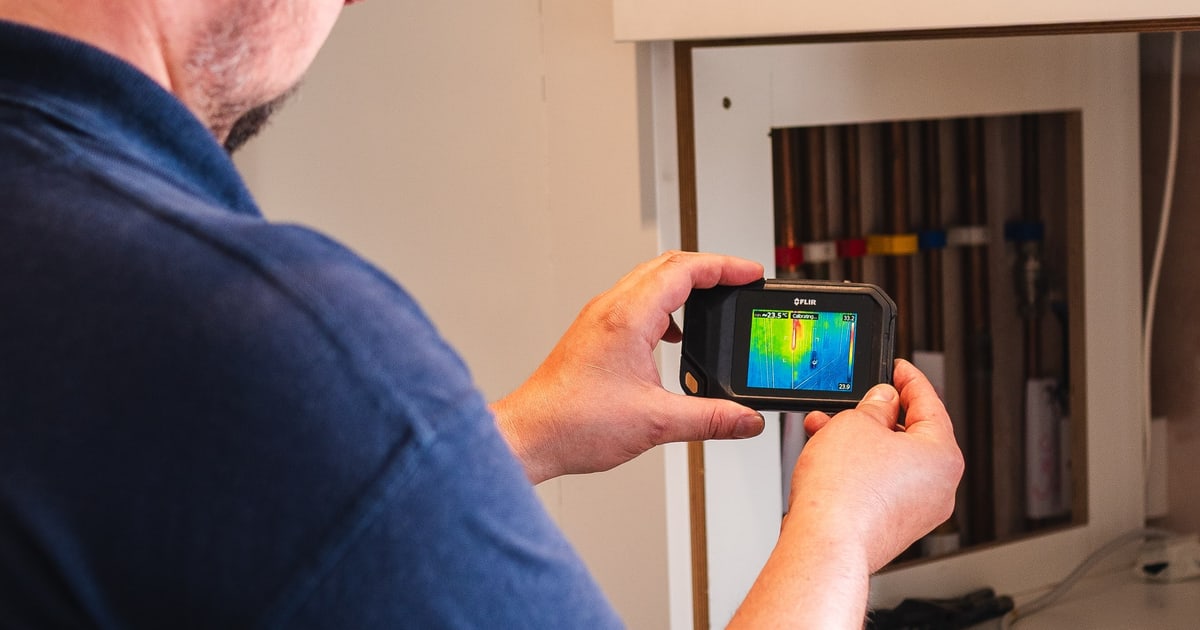
Thermal Imaging. Used during the investigation of the kitchen floor to assist in identifying temperature differentials associated with the escaping hot water beneath the tiles.
Investigation Process
-
1Moisture survey of kitchen
High levels of moisture were recorded throughout the kitchen floor and walls using a damp meter. Multiple floor tiles had lifted as a result of the sustained damp.
-
2Acoustic listening near cylinder
The sound of water moving within the pipework was clearly audible near the unvented hot water cylinder. Closing the cold feed to the cylinder caused the sound to stop, indicating the hot supply pipework as the source.
-
3Pressure test to confirm leak side
Pressure tests were carried out on both the cold mains and hot supply pipework. The cold mains held; the hot supply failed, confirming the leak was on the hot side.
-
4Tracer gas introduced into hot supply
Tracer gas was introduced into the hot supply pipework. A large gas trace was detected almost immediately in the kitchen, with audible bubbling clearly confirming the leak location beneath the kitchen floor.
-
5Kitchen unit removed and floor excavated
A kitchen unit was removed to gain access, and the tiled floor was excavated. The leaking section of hot supply pipework was exposed and identified.
-
6Leaking pipework cut out and replaced
The leaking section of hot supply pipework was cut out and renewed. During the excavation, a heating pipe was also damaged and was subsequently cut out and replaced.
-
7Pressure test following repair
Both the hot supply pipework and the heating pipework were pressure tested at 2 bar for 60 minutes, confirming successful repair of both circuits.
-
8Systems reinstated
The heating circuit was filled and vented, and the hot water supply was reinstated and returned to service.
Result & Outcome
The leak was located in the hot supply pipework running beneath the kitchen floor. Tracer gas pinpointed the position with sufficient precision to allow targeted excavation — a kitchen unit was removed, the floor tiles were lifted, and the leaking section of pipe was exposed and cut out. During the excavation, a heating pipe was incidentally damaged and was also cut out and replaced.
Both the repaired hot supply pipework and the repaired heating pipework were then pressure tested at 2 bar for 60 minutes. Both circuits held, confirming the integrity of the repairs before reinstatement. The heating was filled and vented, and the hot water supply was returned to service.
For a job of this type, the value of hot water leak detection lies in establishing the exact location before any work begins. The combination of acoustic listening, pressure testing, and tracer gas avoided unnecessary widespread excavation and ensured the repair was carried out on precisely the right section of pipework.
Suspect a leak at your property?
ADI Leak Detection specialists investigate leaks like this across the UK every day. No find, no fee terms apply on qualifying jobs.