
Hot Water System Leak Detection in Blandford Forum
A hot water system leak in Blandford Forum was located using damp meter readings, thermal imaging, tracer gas, leak dye, and visual inspection, with hot water leak detection confirming the source beneath a solid floor to a precise point. Found by engineer Kyle Storkey.




The original leak detection company, est. 2011
Facts
| Location | Blandford Forum |
|---|---|
| County | Dorset |
| Leak Type | Hot Water Leak Detection |
| Property Type | Residential property |
| Detection Method | Damp Meter, Thermal Imaging, Tracer Gas, Leak Dye, Visual Inspection |
| Outcome | Hot water pipe leak found beneath utility room floor. |
Symptoms
With moisture continuing to spread and no obvious source identified after the condensate repair, a professional hot water leak detection survey was arranged. The central heating system was holding steady, pointing toward the cold or hot water supply pipework as the likely source of the ongoing damage.
Methods Used

With the system pressurised, an electronic gas sensor was used to monitor the property for escaping gas. Large concentrations were detected at the utility room floor.
Access was made through the tile work and into the concrete slab, exposing the leak source on the hot water pipe. Leak dye was applied to the pipe to confirm the location, and opening the hot water within the property caused the leak to worsen — verifying the finding.
This type of hot water leak detection, combining tracer gas with dye confirmation, is well suited to concealed pipework beneath solid floors.
Damp Meter. Used to moisture map the affected rooms, identifying elevated readings that confirmed active dampness across multiple areas.
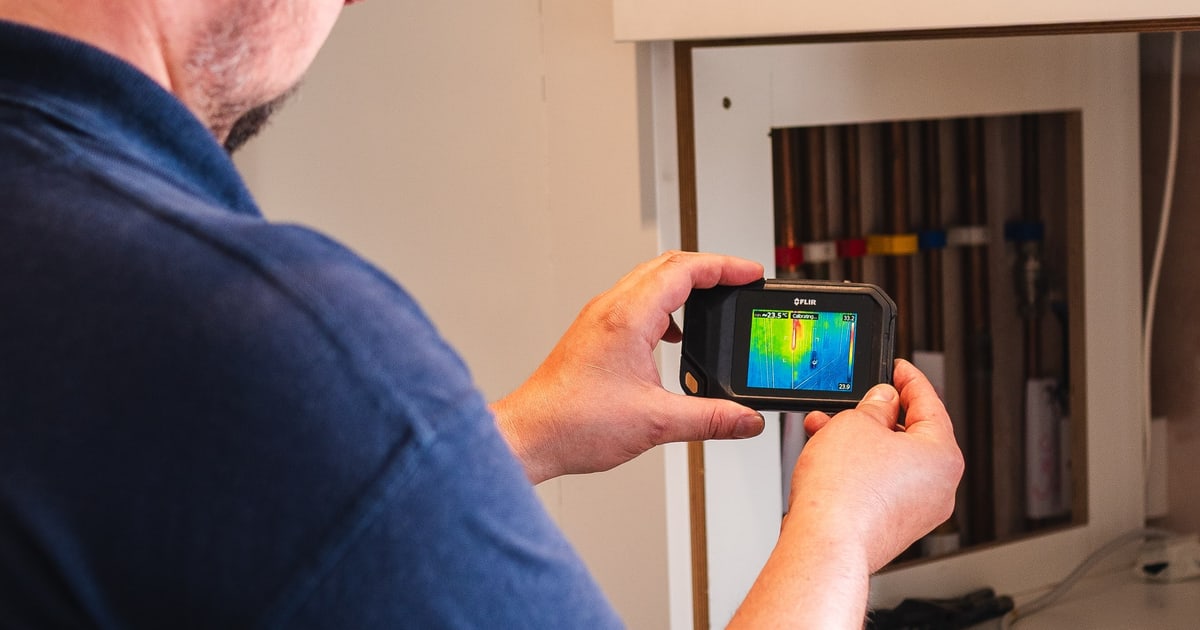
Thermal Imaging. Carried out to trace the layout of the pipework network beneath the structure, though no thermal anomalies indicating a leak were found.
Tracer Gas. Introduced through the garden tap in the garage and pressurised to 2 bar, then monitored across the property to locate escaping gas at the utility room floor.
Leak Dye. Applied directly to the exposed hot water pipe to mark the leak point and confirm the source when the hot water supply was opened.
Visual Inspection. Carried out at the water meter to identify movement indicating an active leak, and at the exposed pipe to assess the leak following access through the floor.
Investigation Process
-
1Moisture Mapping
A damp meter survey was carried out across the affected rooms, finding elevated moisture readings throughout.
-
2Thermal Imaging Survey
Thermal imaging traced the pipework network beneath the property but found no anomalies indicating a leak location.
-
3Water Meter Inspection
The water meter was inspected and found to be moving with no water in use, confirming an active leak on the supply pipework.
-
4Tracer Gas Introduction
Tracer gas was introduced into the internal pipework through the garden tap in the garage and the system was pressurised to 2 bar.
-
5Electronic Gas Sensor Monitoring
The property was monitored using an electronic gas sensor, with large amounts of escaping gas detected at the utility room floor.
-
6Floor Access and Leak Exposure
Tiles and the concrete slab were accessed in the utility room, exposing the hot water pipe and the leak source beneath the floor.
-
7Dye Confirmation
Leak dye was applied to the pipe and the hot water supply was opened, causing the leak to worsen and confirming the exact location.
Result & Outcome

For a hot water leak detection case of this nature, pinpointing the leak beneath a solid floor to a precise location means remedial work can be targeted rather than speculative. The recommendations now in place cover full strip out of the affected rooms, installation of a drying programme, and reinstatement once the structure has dried. Repair to the exposed pipe section using 15mm plastic fittings and pipe can be carried out as part of that process.
Suspect a leak at your property?
ADI Leak Detection specialists investigate leaks like this across the UK every day. No find, no fee terms apply on qualifying jobs.