
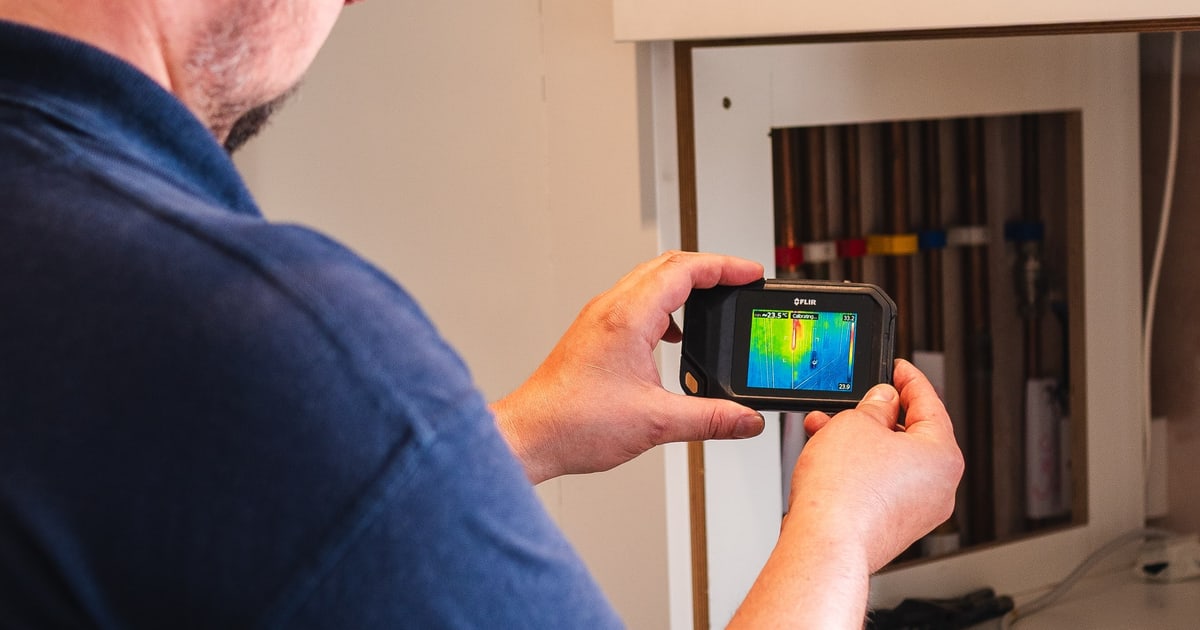
Central Heating Leak Detection in Stafford
A central heating leak in Stafford was located using pressure testing, tracer gas, and visual inspection, with central heating leak detection confirming a perforation in the buried pipework beneath the hallway floor. Found by engineer Phillip Whitehouse.




The original leak detection company, est. 2011
Facts
| Location | Stafford |
|---|---|
| County | Staffordshire |
| Leak Type | Central Heating Leak Detection |
| Property Type | Residential property |
| Detection Method | Pressure Testing, Tracer Gas, Visual Inspection |
| Outcome | Leak found beneath hallway floor, pipe replaced and system retested. |
Symptoms
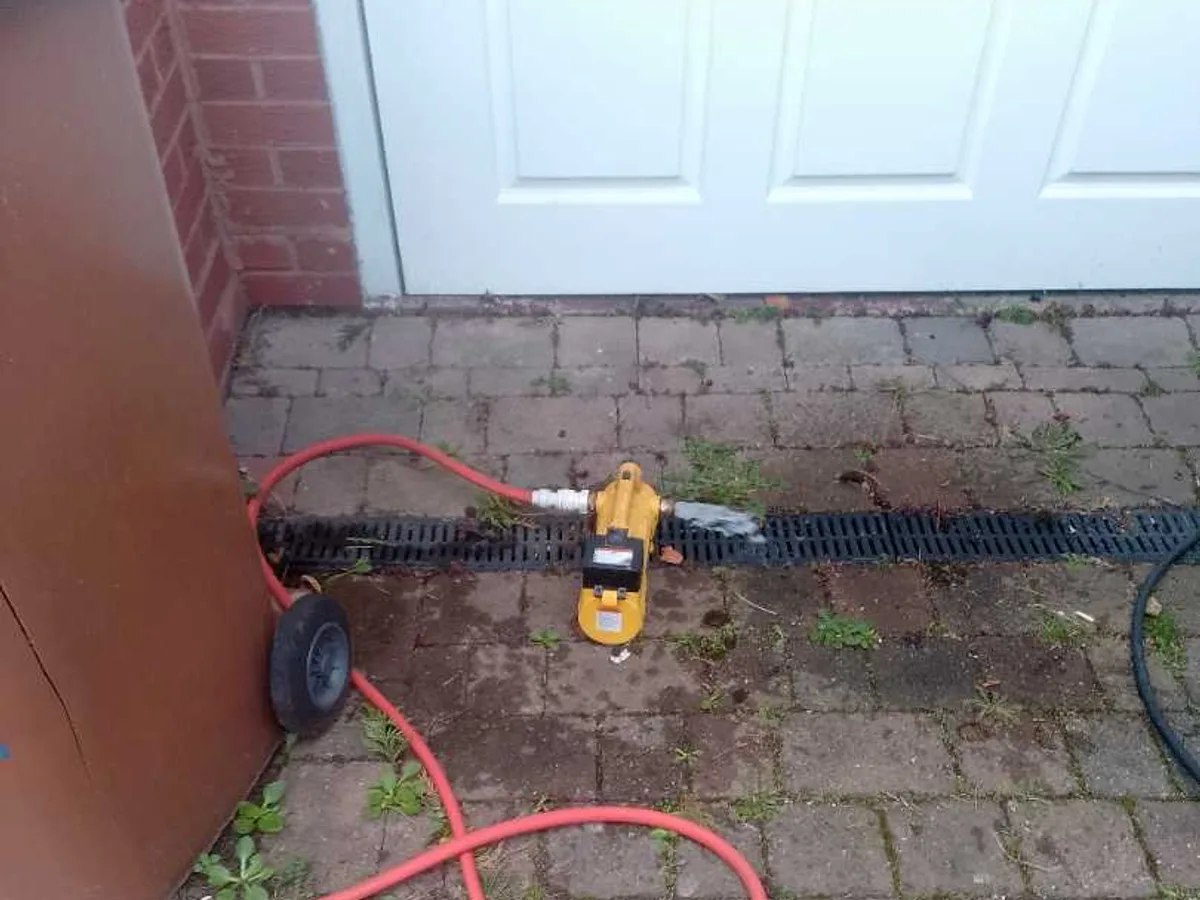
The property in Stafford is a detached house running both a pressurised heating system and a gravity-fed hot water system. The occupant noticed the heating system was losing pressure — a clear sign that water was escaping somewhere within the sealed circuit.
Without identifying and fixing the source, the system would continue to lose pressure, require repeated manual topping up, and risk further damage to pipework or components.
A drop in system pressure on its own does not pinpoint a leak location. The pipe could be anywhere — concealed beneath floors, hidden within walls, or running underground.
This is precisely the scenario where central heating leak detection is required: methodical pressure testing to confirm the leak exists and quantify its rate, followed by tracer gas to narrow the source down to a specific point without unnecessary disruption.
Methods Used
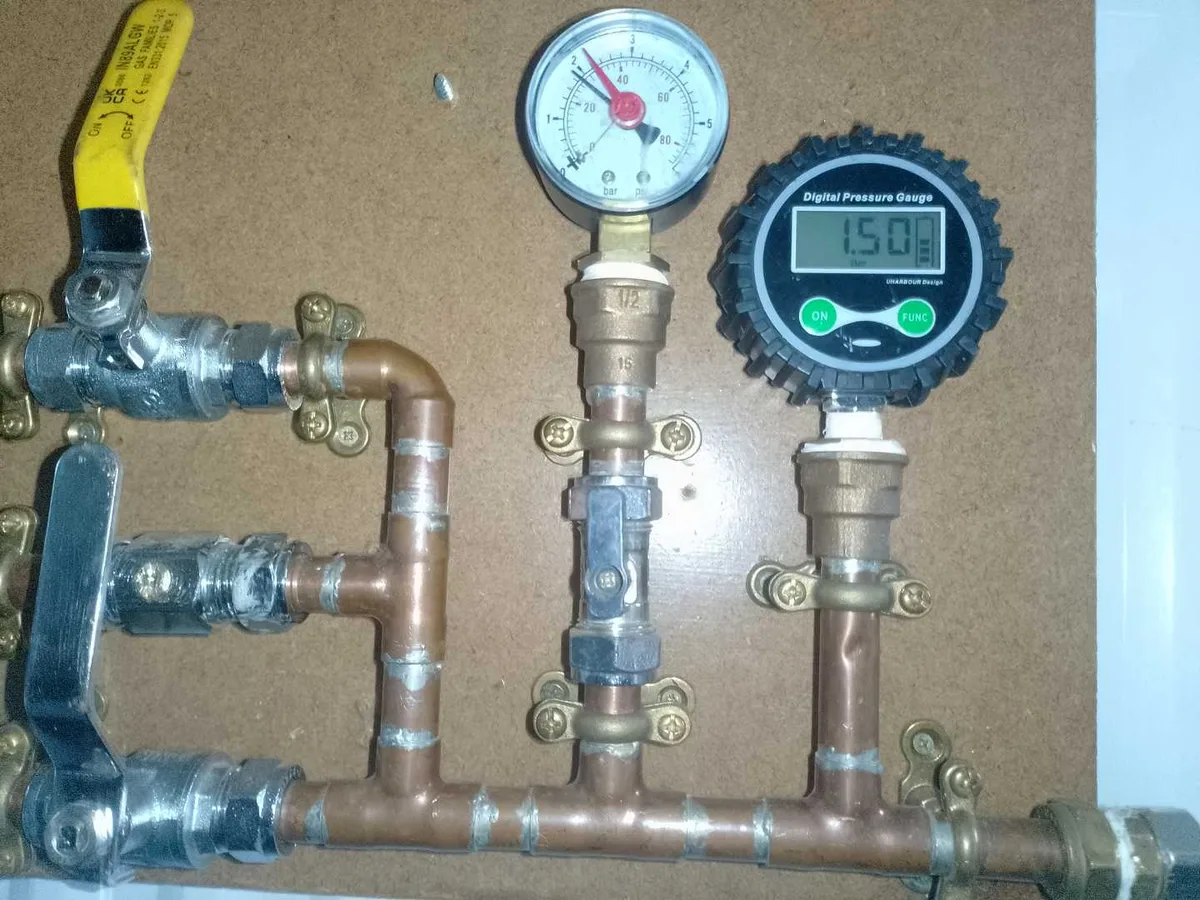
The heating system was fully drained before any testing began. Pressure testing equipment was connected to a radiator in the hallway, and the system was charged to 1.5 bar.
The observed drop of 0.1 bar over 10 minutes confirmed an active leak in the system. With the leak confirmed, tracer gas was introduced into the drained pipework.
The gas, being lighter than air, escapes through any breach and rises to the surface where it can be detected. Strong readings were recorded in the hallway, directing the investigation to a specific area of the floor.
This approach is standard practice in central heating leak detection: pressure testing establishes that a leak is present and rules out other causes of pressure loss, while tracer gas identifies the precise location without requiring wholesale floor or wall removal. Once the gas readings pointed to the hallway floor, targeted excavation was authorised and carried out.
Pressure Testing. The system was pressurised to 1.5 bar via a radiator connection in the hallway, and a 0.1 bar drop over 10 minutes confirmed an active leak within the sealed circuit.
Tracer Gas. Tracer gas was introduced into the drained heating system and detected at the surface, producing strong readings in the hallway that pinpointed the leak location beneath the floor.
Visual Inspection. Once excavation exposed the pipework in the hallway, a direct visual inspection confirmed a small perforation in the pipe at the leak point identified by the gas readings.
Investigation Process
-
1System drained
The pressurised heating system was fully drained prior to testing to allow safe introduction of pressure testing equipment and tracer gas.
-
2Pressure test conducted
Testing equipment was connected to a hallway radiator and the system was pressurised to 1.5 bar. A consistent drop of approximately 0.1 bar over 10 minutes confirmed an active leak.
-
3Tracer gas introduced
Tracer gas was fed into the drained system and leak detection was carried out across the property. Strong readings were identified in the hallway, directing the investigation to that area of the floor.
-
4Floor removed and excavation carried out
With the client's authorisation, the hallway floor was carefully lifted and excavation was performed to expose the buried pipework beneath.
-
5Leak located and identified
Visual inspection of the exposed pipework revealed a small perforation in the pipe at the location indicated by the tracer gas readings.
-
6Repair completed
The damaged section was isolated and replaced with a 12-inch length of new pipe, secured using a compression coupling and a press-fit elbow.
-
7System re-pressurised and retested
The system was recharged to 1.5 bar and monitored for approximately one hour with no further pressure loss observed, confirming the repair was sound.
Result & Outcome

The leak was located beneath the hallway floor, where a small perforation had formed in the buried heating pipework. Tracer gas readings had concentrated directly above this point, allowing excavation to be confined to the specific affected area rather than exposing a wider section of floor.
The damaged section was cut out and replaced with a 12-inch length of new pipe. A compression coupling and press-fit elbow were used to tie the new section into the existing pipework, providing a reliable, pressure-rated repair. The system was returned to 1.5 bar and held at that pressure for approximately one hour with no further drop recorded.
For central heating leak detection jobs of this type — where the pipe runs below a solid floor — precise location matters significantly. The accuracy of the tracer gas method meant the repair could be completed with minimal disruption to the floor. The client was also advised to monitor system pressure regularly, as the remaining unlagged pipework may be susceptible to similar issues in future.
Suspect a leak at your property?
ADI Leak Detection specialists investigate leaks like this across the UK every day. No find, no fee terms apply on qualifying jobs.