
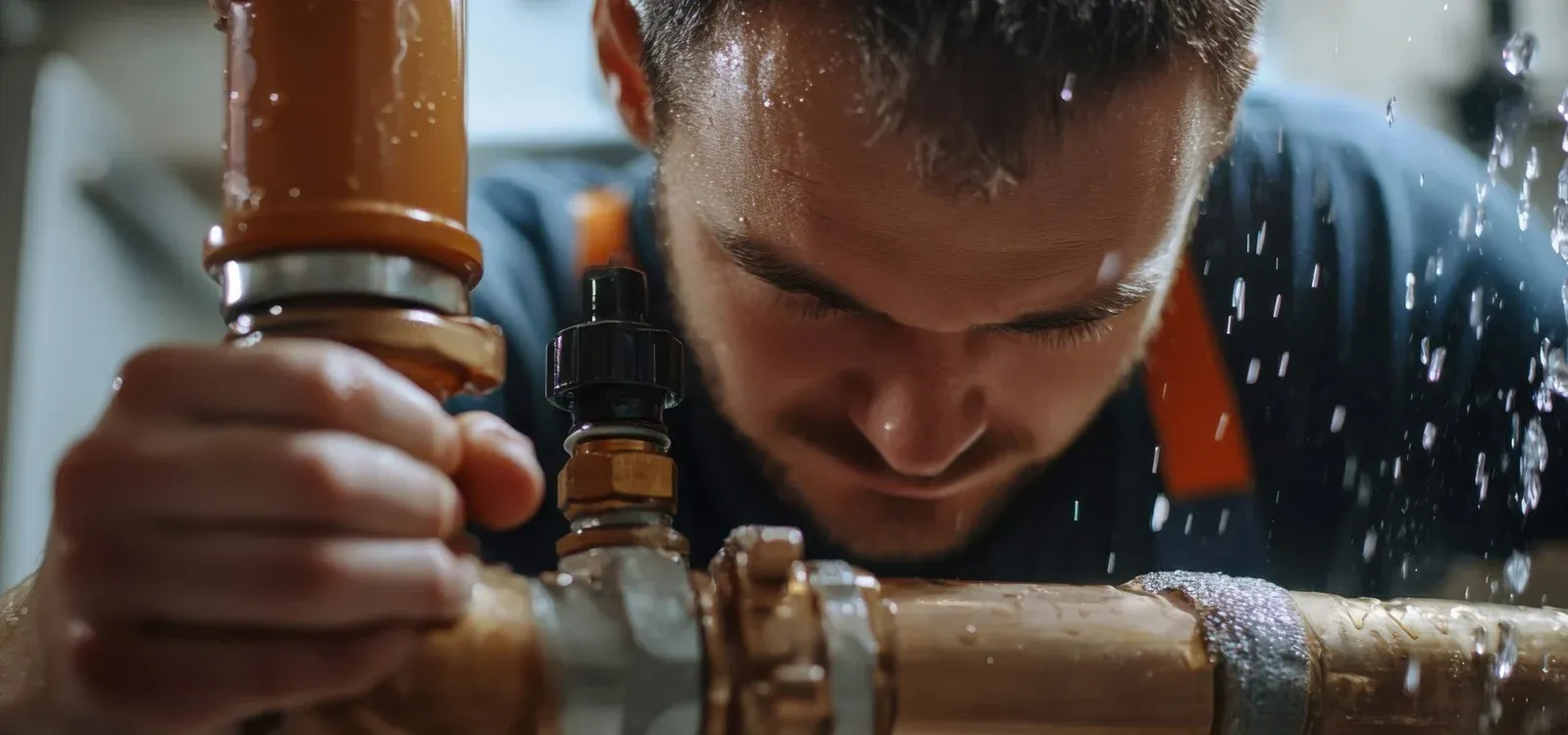
Central Heating Leak Detection in Southampton
A central heating leak in Southampton was located using a thermal imaging camera, tracer gas, damp meter, and pressure testing, with central heating leak detection confirming the fault beneath the dining room floor at a compression tee piece in the pipework. Found by engineer Aaron Baker.
 CIPHE accredited
 WIAPS member


Facts
| Location | Southampton |
|---|---|
| County | Hampshire |
| Leak Type | Central Heating Leak Detection |
| Property Type | Residential property |
| Detection Method | Thermal Imaging Camera, Tracer Gas, Damp Meter, Pressure Testing |
| Outcome | Underground leak found beneath dining room floor, compression fitting replaced. |
Symptoms
The property in Hedge End is a bungalow with the boiler located in the loft space. The central heating system had been losing pressure, and the tenant had already topped up the system that morning before the engineer arrived.
On arrival, the pressure was reading over 1 bar — indicating ongoing loss despite the top-up.
The situation was further complicated by the fact that plumbers had previously attended the property and introduced leak sealer into the system approximately three weeks prior. Despite that intervention, pressure loss had continued, suggesting the sealer had not resolved the underlying fault.
No visible signs of damage or moisture were apparent anywhere in the property on arrival.
This type of persistent pressure drop — particularly where a previous repair attempt has failed — is a clear indicator that central heating leak detection is needed to locate the source precisely rather than attempt further speculative repairs.
Methods Used
Given that there were no visible signs of damage and that leak sealer had already been used, a methodical approach was required. The engineer first used a thermal imaging camera to trace all accessible heating pipework throughout the property, looking for temperature anomalies that might indicate where water was escaping.
No anomalies were identified thermally, which pointed to a leak beneath a concealed or insulated surface.
With thermal imaging ruled out as a means of pinpointing the fault, the boiler was isolated and tracer gas was introduced into the central heating system. This is a well-established technique in central heating leak detection for locating leaks that are not visible or detectable by surface methods.
After several hours of systematic gas detection across the property, elevated readings were identified in the vicinity of the dining room radiator, directing the excavation work precisely.
Thermal Imaging Camera. Used to trace all heating pipework throughout the bungalow, checking for temperature anomalies that might reveal a leak — no anomalies were found, ruling out accessible pipework as the source.
Tracer Gas. Introduced into the isolated central heating system and detected across the property over several hours, with elevated readings confirming the leak location beneath the dining room floor.
Damp Meter. Used to assess moisture levels at surface level as part of the broader survey of the property.
Pressure Testing. Used to confirm the system was losing pressure and to verify that no further leaks were present after the repair was completed.
Investigation Process
-
1Arrival and initial assessment
The engineer arrived at the property in SO18 and noted system pressure was over 1 bar. The tenant confirmed they had already topped up the pressure that morning and that leak sealer had been used by a previous plumber around three weeks earlier.
-
2Thermal imaging survey
The thermal imaging camera was used to trace all heating pipework visible throughout the bungalow. No temperature anomalies were detected, indicating the leak was not accessible at surface level.
-
3Boiler isolation and tracer gas introduction
The boiler was isolated and tracer gas was introduced into the central heating system in preparation for underground detection work.
-
4Gas detection survey
The engineer carried out a systematic gas detection survey across the property over several hours. Elevated tracer gas readings were identified in the vicinity of the dining room radiator.
-
5Floor excavation
The floor in the dining room was excavated at the location indicated by the gas readings, exposing the pipework beneath. A leaking compression tee piece was found at this point.
-
6Repair carried out
The faulty compression tee piece was removed and replaced with a soldered fitting using flux, solder, and gas.
-
7System retest and sign-off
The system was retested following the repair. No further leaks were detected, and both the central heating and hot water systems were confirmed to be fully operational.
Result & Outcome
The leak was located beneath the dining room floor, at a compression tee piece in the central heating pipework. The tracer gas readings concentrated in this area with sufficient precision to allow a targeted excavation, avoiding unnecessary disruption elsewhere in the property. The faulty fitting was removed and replaced with a soldered joint — a more reliable repair than a compression fitting in an underground application.
Following the repair, the system was pressure tested and retested for tracer gas. No further leaks were detected, and both central heating and hot water were confirmed to be working correctly. For a job like this — where a previous repair attempt with leak sealer had failed and no surface signs were present — central heating leak detection using tracer gas was the only reliable method for identifying the fault location.
One further observation was noted: the bleed nipple on the dining room radiator is currently inoperable and should be replaced, though this is unrelated to the pressure loss issue. No other works are required in relation to the central heating system.
Suspect a leak at your property?
ADI Leak Detection specialists investigate leaks like this across the UK every day. No find, no fee terms apply on qualifying jobs.