
Central Heating Leak Detection in Nettleham
A central heating leak in Nettleham was located using thermal imaging, a damp meter, pressure testing, and acoustic listening, with central heating leak detection confirming the fault and informing recommendations for a power flush and installation of an isolation valve to address both the immediate issue and the longer-term condition of the system. Found by engineer Robert Gires.




The original leak detection company, est. 2011
Facts
| Location | Nettleham |
|---|---|
| Leak Type | Central Heating Leak Detection |
| Property Type | Residential property |
| Detection Method | Thermal Imaging, Damp Meter, Pressure Testing, Acoustic Listening Equipment |
| Outcome | Leak found beneath kitchen floor, faulty solder fitting repaired. |
Symptoms
Central heating leak detection was required to trace the buried pipework and identify the source of the pressure loss without unnecessary disruption to the building fabric. High damp meter readings recorded in the kitchen and living room, including an adjacent wall, pointed to active water ingress beneath the floor in that area.
The condition of the water discharged from the system during investigation — heavily degraded and contaminated — indicated the leak had been present for some time.
Methods Used

Acoustic testing was carried out in the area identified by thermal imaging and damp meter readings, and detected evidence of a leak at that same location. Throughout the central heating leak detection process, each method corroborated the last, narrowing the fault to a specific point beneath the kitchen and living room floor.
When the system was partially drained using the air compressor, the discharged water was found to be in very poor condition, indicating significant internal contamination across the wider heating circuit.
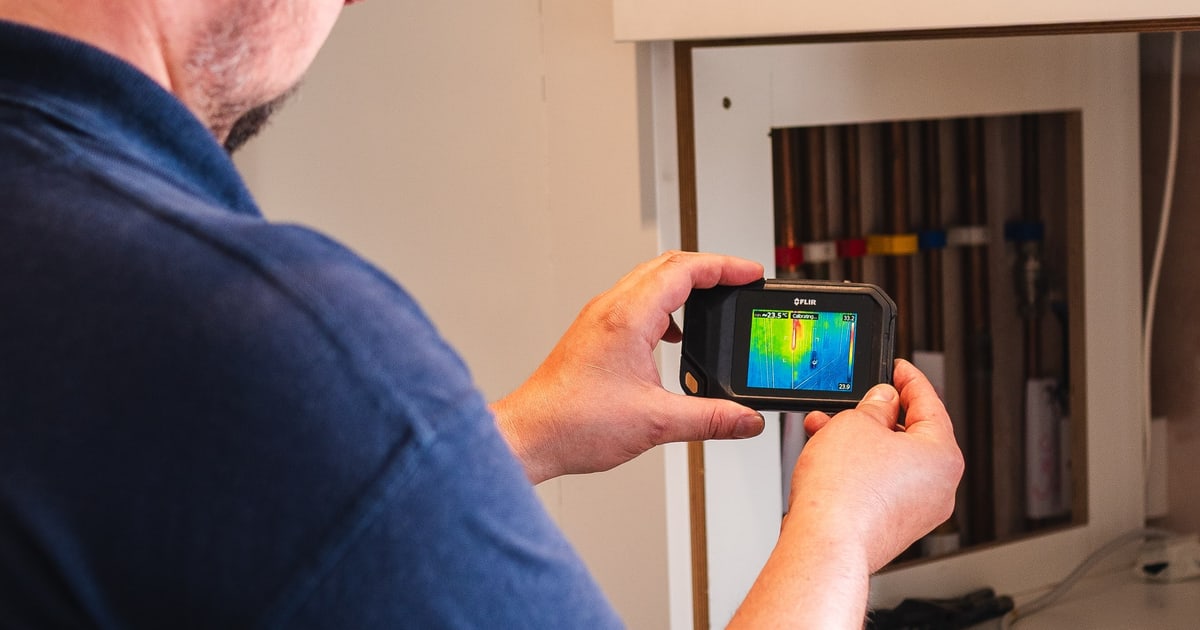
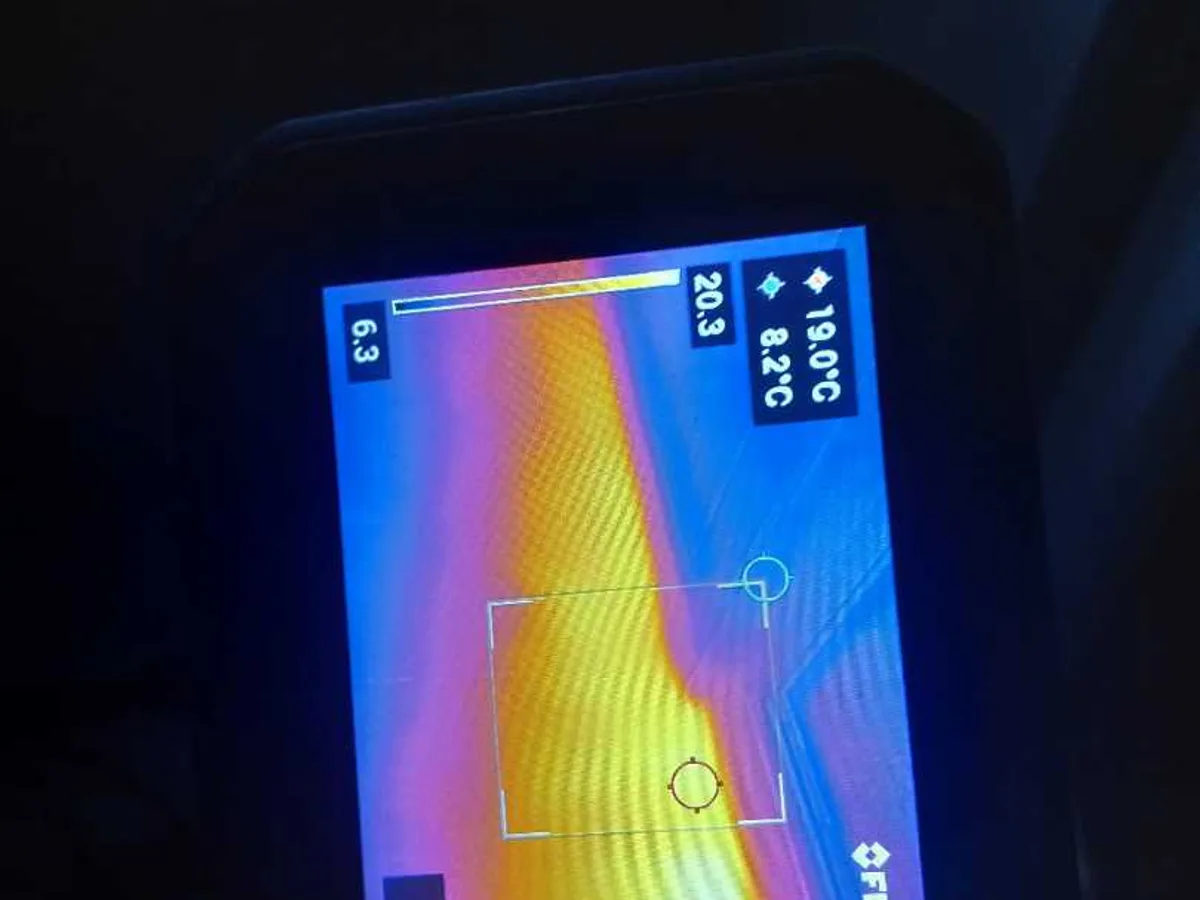
Thermal Imaging. Used to trace the route of the underfloor heating pipework and identify a thermal anomaly beneath the kitchen and living room floor.
Damp Meter. Recorded very high moisture readings in the kitchen floor, living room floor, and an adjacent wall, confirming active water ingress in that zone.
Pressure Testing. The heating system was pressurised to 2 bar for 10 minutes using an air compressor; the system failed to hold pressure, confirming an active leak.
Acoustic Listening Equipment. Detected the acoustic signature of an escaping leak at the precise location already flagged by thermal imaging and damp meter readings.
Investigation Process
-
1Thermal imaging survey
Thermal imaging was used to trace the layout of the underfloor pipework and identified an anomaly beneath the kitchen and living room floor.
-
2Damp meter readings taken
Damp meter readings were recorded as very high in the kitchen floor, the living room floor, and the adjacent wall, consistent with prolonged water ingress.
-
3System drained and water condition assessed
An air compressor was used to remove water from the heating system pipework. The discharged water was in very poor condition, indicating significant contamination and degradation within the system.
-
4Pressure test carried out
The heating system was pressurised to 2 bar for 10 minutes. The system failed to hold pressure, confirming an active leak in the pipework.
-
5Acoustic testing conducted
Acoustic testing was carried out over the area identified by thermal imaging and the damp meter, and detected evidence of a leak at that same location.
-
6Floor excavated and leak exposed
With the owner's agreement, tiles were removed and the concrete floor was excavated to expose the pipework. A soldered fitting was found to be faulty and leaking very badly.
-
7Leak repaired
A short section of pipe and copper end caps were used to repair the faulty soldered fitting and reinstate the pipework.
Result & Outcome

It is also recommended that an isolation valve be installed on the ground floor pipework, so that the underfloor circuit can be isolated independently if required in future. These two measures — the power flush and the isolation valve — address both the immediate fault and the longer-term condition of the system.
Suspect a leak at your property?
ADI Leak Detection specialists investigate leaks like this across the UK every day. No find, no fee terms apply on qualifying jobs.