
Central Heating Leak Detection in Welwyn
A central heating leak in Welwyn was located using thermal imaging, a damp meter, acoustic listening, and pressure testing, with central heating leak detection confirming the fault beneath the living room floor without the need for broad excavation. The work was carried out by engineer Gabor Weber.




The original leak detection company, est. 2011
Facts
| Location | Welwyn |
|---|---|
| Leak Type | Central Heating Leak Detection |
| Property Type | Residential property |
| Detection Method | Thermal Imaging, Damp Meter, Pressure Testing, Acoustic Listening Equipment |
| Outcome | Leak found beneath living room floor, pipe replaced and system retested. |
Symptoms

The occupants of a property in AL6 noticed a loss of pressure in their central heating system. No visible signs of a leak were apparent at the time — no obvious wet patches, no exposed pipework showing damage, and no external indicators pointing to where the fault might lie.
The system was losing pressure without a clear cause, which is a common presentation when a leak is concealed beneath a floor or within a wall.
This type of situation calls for systematic central heating leak detection to establish whether the pressure drop is attributable to a leak in the pipework, and if so, to locate it precisely without unnecessary disruption to the property.
Although the leak gave no obvious visual clues on the surface, the pressure loss indicated something was wrong within the heating circuit. The challenge was to identify the source with accuracy before any remedial work could be planned.
Methods Used

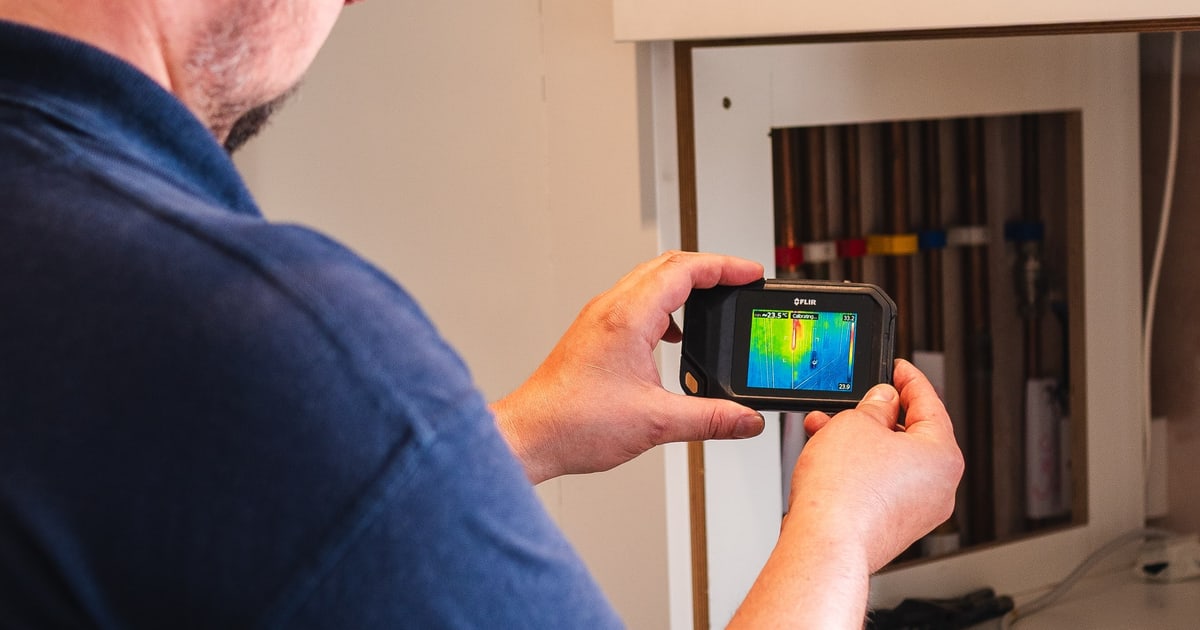
The investigation began with thermal imaging to trace the pipework routes and identify any thermal anomalies that might indicate a leak. No thermal anomalies were detected on the pipework.
A damp survey was then carried out, which returned high damp readings beneath the stair cupboard and on the living room floor near a radiator — pointing to an area of concern even without visible surface damage.
The heating system was drained using an air compressor and a pressure test was performed on the pipework, which confirmed a loss of pressure consistent with a leak. Acoustic equipment was deployed on the living room floor and detected an anomaly directly corresponding to the area of high damp readings.
This combination of damp survey data and acoustic listening gave sufficient confidence to lift the mosaic wooden flooring in that area, exposing the concrete subfloor beneath. As central heating leak detection goes, this was a methodical progression from non-invasive surveying through to targeted access — only lifting the floor once the evidence from multiple methods aligned on a specific point.
Thermal Imaging. Used to trace the pipework routes throughout the property; no thermal anomalies were detected on the pipework during this survey.
Damp Meter. Identified high damp readings beneath the stair cupboard and on the living room floor near a radiator, directing the investigation to a specific area.
Pressure Testing. Applied to the drained heating system pipework to confirm a pressure loss, verifying that a leak was present within the circuit.
Acoustic Listening Equipment. Detected an acoustic anomaly on the living room floor that corresponded precisely with the area of elevated damp readings, pinpointing the leak location.
Investigation Process
-
1Initial Assessment
On arrival, the heating system was inspected and the customer's reported pressure loss was noted. No visible evidence of a leak was present at this stage.
-
2Thermal Imaging Survey
Thermal imaging was used to trace the pipework routes across the property. No thermal anomalies were detected on the pipework.
-
3Damp Survey
A damp survey was conducted and returned high readings beneath the stair cupboard and on the living room floor near a radiator, identifying a zone of moisture accumulation.
-
4System Drained and Pressure Tested
The heating system was drained using an air compressor and a pressure test was performed on the pipework. The test indicated a loss of pressure, confirming a leak within the heating circuit.
-
5Acoustic Detection
Acoustic equipment was used on the living room floor and detected an anomaly directly corresponding to the area of high damp readings, providing a precise target location.
-
6Floor Lifted and Leak Exposed
The mosaic wooden flooring in the living room was carefully lifted to expose the concrete subfloor, where a leak on a 15mm copper pipe was identified.
-
7Repair Carried Out
The leaking section of 15mm copper pipe was replaced with new copper pipe and fittings. The Automatic Air Vent (AAV) was also replaced at this stage.
-
8System Refilled and Retested
The heating system was refilled and treated with inhibitors. A post-repair pressure test was held for one hour at 2 bar, which passed with no further loss of pressure detected.
Result & Outcome

The leak was located on a 15mm copper pipe beneath the mosaic wooden flooring in the living room, directly above the concrete subfloor. The combination of damp meter readings and acoustic listening allowed access to be made at a single, precise point rather than requiring broad excavation or removal of large floor areas. The leaking section of pipe was cut out and replaced with new copper pipe and fittings.
Following the repair, the system was refilled, dosed with inhibitors, and pressure tested at 2 bar for one hour. The test passed, indicating no further leaks were present at the time of testing. The AAV was also replaced as part of the repair works.
For central heating leak detection cases of this type — where the leak is concealed under a solid floor with no surface evidence — the multi-method approach is what makes a precise, targeted repair possible. The customer has been advised to keep the exposed area open until it is fully dry, and to contact their insurance provider regarding trace and access cover for any remedial reinstatement works.
Suspect a leak at your property?
ADI Leak Detection specialists investigate leaks like this across the UK every day. No find, no fee terms apply on qualifying jobs.