
Central Heating Leak Detection in Edinburgh
A central heating leak in Edinburgh was located using thermal imaging, a damp meter, pressure testing, tracer gas, and a borescope, carrying out central heating leak detection that also revealed significant sludge build-up in the pipework system. Found by engineer Hamaad Janjua.




The original leak detection company, est. 2011
Facts
| Location | Edinburgh |
|---|---|
| County | Midlothian |
| Leak Type | Central Heating Leak Detection |
| Property Type | Residential property |
| Detection Method | Thermal Imaging, Damp Meter, Pressure Testing, Tracer Gas, Borescope |
| Outcome | Leak found at radiator pipe connection in upstairs bedroom, repaired. |
Symptoms

Because the pressure loss was inconsistent and no obvious source could be identified by sight, a full central heating leak detection process was required to locate the fault. Cases like this — where the system loses pressure without any visible wet patch or dripping — often indicate a small leak concealed behind structure or at a fitting that only releases under system pressure.
Methods Used

This combination of methods is standard practice in central heating leak detection where the leak is not immediately apparent. Each stage narrowed down the location — from identifying a damp area in the kitchen ceiling through thermal imaging, to isolating the exact fault point in the upstairs bedroom through tracer gas.
Following the repair, the system was pressure tested again to confirm no further loss.
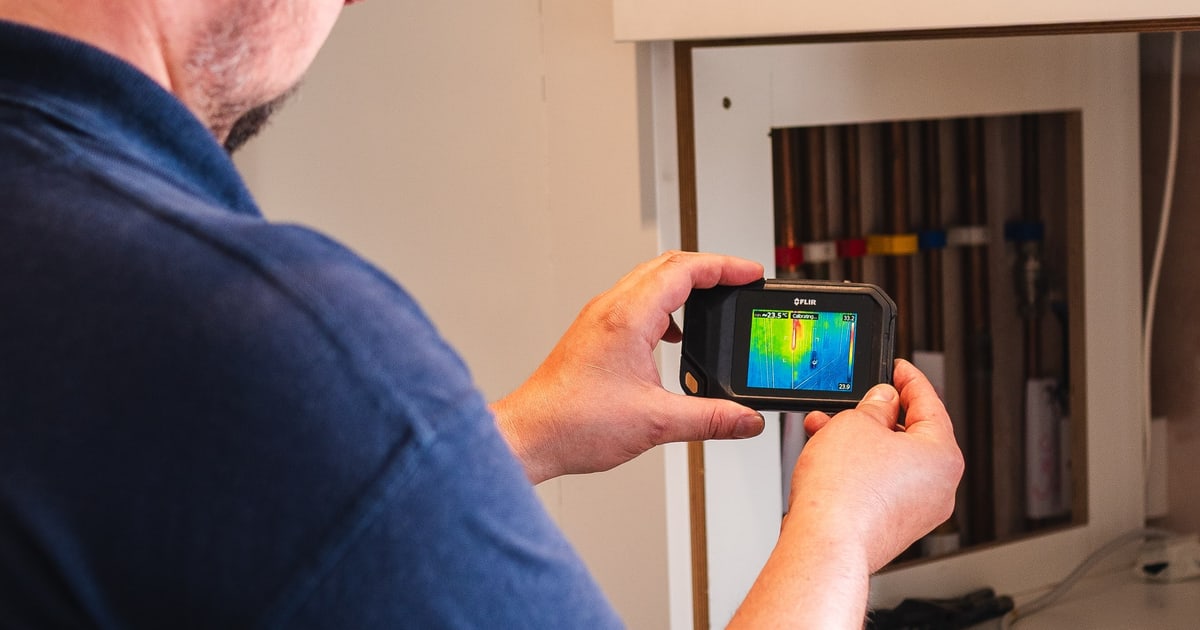
Thermal Imaging. Identified a damp area in the kitchen ceiling by detecting temperature variation in the building fabric consistent with moisture.
Damp Meter. Confirmed elevated moisture readings in the kitchen ceiling area flagged by the thermal imaging camera.
Pressure Testing. Applied to the central heating system and failed, providing confirmation that an active leak was present within the pipework.
Tracer Gas. Introduced to the system after the pressure test failure and produced a positive result in the upstairs bedroom, directing the investigation to the radiator connection in that room.
Borescope. Used during further investigation to assist in examining concealed pipework and fittings as part of the fault-finding process.
Investigation Process
-
1Initial Inspection
The property in EH12 was inspected. Nine radiators and a combi boiler were present. No visible signs of a leak were found, making non-invasive detection methods necessary.
-
2Thermal Imaging
Thermal imaging was conducted throughout the property. A damp area was identified in the kitchen ceiling, indicating moisture within the building fabric.
-
3Moisture Meter Readings
A damp meter was used to take readings in the kitchen ceiling area. Elevated moisture levels were confirmed at the location flagged by thermal imaging.
-
4Pressure Test
A pressure test was carried out on the central heating system. The system failed, confirming an active leak was present.
-
5Tracer Gas Testing
Tracer gas was introduced to the system. A positive result was detected in the upstairs bedroom, directing attention to that area.
-
6Leak Located
Further investigation in the upstairs bedroom identified the leak at the pipe connection to a radiator. The fault was at the fitting rather than within the main pipework run.
-
7Repair Carried Out
The affected section of pipework was cut back and replaced. A new radiator blanking plug, radiator tail, and lockshield valve were installed.
-
8Post-Repair Pressure Test
The system was pressure tested again following the repair. It passed with no further pressure loss detected.
-
9Recommissioning and Additional Findings
Upon refilling and recommissioning, three radiators were found not to be heating. Inspection confirmed these radiators — in the living room and the toilet towel rail — were heavily blocked with sludge.
Result & Outcome

The sludge build-up is a separate but significant issue. It is particularly associated with microbore pipework systems and, if left untreated, will continue to restrict circulation and reduce system efficiency. A full power flush is strongly advised to address this before further damage or heating failure occurs.
Suspect a leak at your property?
ADI Leak Detection specialists investigate leaks like this across the UK every day. No find, no fee terms apply on qualifying jobs.